Between 4 and 6 months, your puppy experiences big shifts in behavior and growth that shape their future. You’ll notice increased hesitation around new people, animals, or environments, which is normal as they become more aware. Proper socialization now is vital to prevent future challenges, so continue exposing your puppy to positive experiences gradually. Understanding these changes helps you guide their development smoothly. Keep exploring to learn more about supporting your puppy through this pivotal stage.
Key Takeaways
- Puppies become more cautious and socially hesitant, requiring gentle, positive exposure to new environments and people.
- This stage is critical for effective socialization to prevent future behavioral issues.
- Recognizing normal behavioral changes helps in tailoring training and managing expectations.
- Monitoring physical and mental growth ensures activities are appropriate and promote healthy development.
- Consistent socialization, patience, and positive reinforcement build confidence during this transformative period.
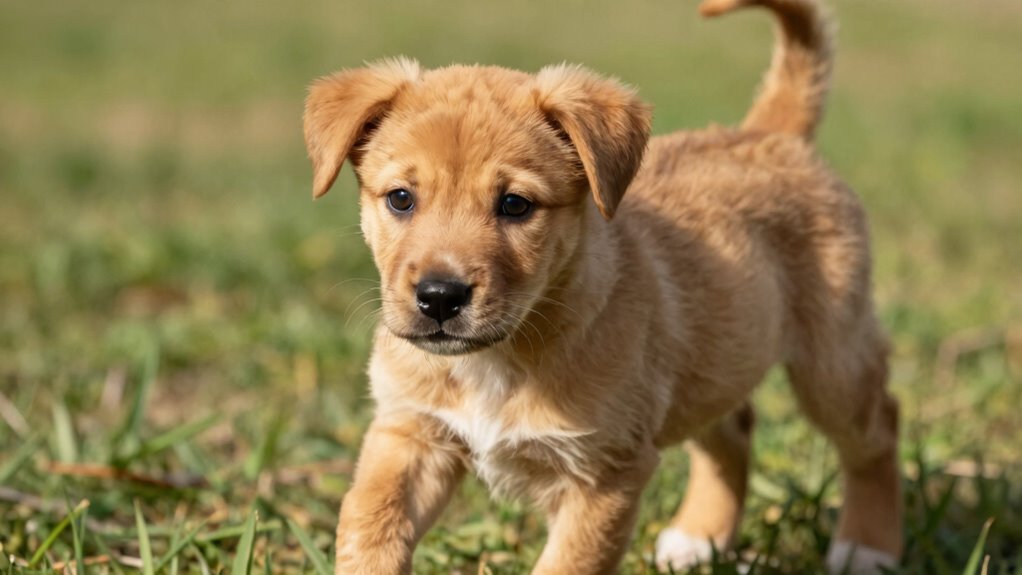
As your puppy enters the 4-6 month age range, you’ll notice significant changes in their behavior, size, and development. This period often feels like a whirlwind of new challenges and surprises. One of the most noticeable shifts is in their socialization. Your puppy might seem more cautious or hesitant around new people, animals, or environments. This can be a natural part of their growing awareness, but it also means you need to be extra attentive to their socialization needs. You may encounter socialization challenges, where your puppy becomes shy or reactive if they haven’t been exposed to diverse situations earlier. It’s essential to continue positive, controlled interactions, helping them build confidence without overwhelming them. This stage is vital because poor socialization now can lead to behavioral issues later. Keep exposing your puppy to different sights, sounds, and gentle social settings, always ensuring they feel safe and comfortable. Proper socialization early in development is crucial for fostering a well-adjusted adult dog. Consistency and patience are key to helping them develop a well-adjusted personality. Additionally, understanding puppy behavior stages can help you tailor your training approach to their evolving needs. Recognizing normal puppy behaviors can help you respond with patience and understanding during this challenging phase. Moreover, being aware of their mental and physical growth can guide you in providing appropriate activities and care to support their development.

Multipet Lamb Chop Dog Plush Toy – Squeaky Toy for All Dogs – Extra Soft Plush – Stuffed Animal Dog Toy for Cuddling & Playing – Cute Pet Toy (6", Cream)
- Includes built-in squeaker: Squeaker inside for fun
- Made with soft polyester: Durable and plush material
- Compact 6-inch size: Perfect for small dogs
As an affiliate, we earn on qualifying purchases.
As an affiliate, we earn on qualifying purchases.
Frequently Asked Questions
How Should I Handle My Puppy’s Emerging Independence?
To handle your puppy’s emerging independence, set consistent boundaries and use crate training to create a safe space. Encourage socialization strategies by exposing your puppy to different people, environments, and gentle challenges, fostering confidence while maintaining control. Stay patient and firm, reinforcing good behavior with praise. This approach helps your puppy develop independence healthily, knowing boundaries are consistent and trust is built through positive experiences.
Are There Specific Training Methods Best Suited for This Age?
Think of this phase as a building block in your puppy’s development. Focus on positive reinforcement, using crate training to create a safe space and socialization strategies to boost confidence. Consistency is key; reinforce good behaviors and set clear boundaries. Incorporate short, engaging training sessions that challenge your pup while respecting their independence. This approach helps your puppy grow into a well-behaved, confident companion.
How Do I Prevent Behavioral Regressions During This Phase?
To prevent behavioral regressions during this phase, focus on consistent training and ongoing puppy socialization. Reinforce good habits daily, keeping routines predictable. Expose your puppy to new environments, people, and other dogs gradually to build confidence. Avoid punishment, and instead, reward positive behaviors. This steady approach helps your puppy feel secure, reducing the chance of regressions and promoting long-term good behavior as they grow.
When Should I Start Introducing My Puppy to Other Dogs?
You should start introducing your puppy to other dogs around 8 to 12 weeks old, once their socialization timing window is open. Make sure they’re fully vaccinated according to your vet’s vaccination requirements before meeting new dogs. Start in controlled environments, like quiet parks or with vaccinated, friendly dogs. Socialization helps prevent behavioral issues later, so gradual, positive experiences now set the foundation for confident, well-adjusted social skills.
What Are Common Health Concerns at This Stage?
At this stage, your puppy’s health concerns are like a ticking clock. Keep an eye on diet considerations to guarantee proper growth, avoiding overfeeding or harmful treats. Stick to vaccination schedules to protect against common illnesses like parvovirus or distemper. Regular vet check-ups help catch issues early. Watch for signs of parasites or infections, and maintain good hygiene. Your proactive care now sets the foundation for a healthy, happy lifelong companion.
Conclusion
As your puppy hits this essential 4-to-6-month mark, remember that patience and consistency are your best allies. This phase may feel like a rollercoaster, but it’s also a chance to lay a strong foundation for lifelong behavior. Keep your eyes on the prize, knowing that every challenge is a stepping stone toward a well-behaved and happy companion. Stay the course—you’re shaping a bond that will stand the test of time.