
Before you start running with your young dog, ask your vet about their age and development. Puppies have delicate joints, so high-impact activities should be introduced gradually and only when they’re physically ready. Be mindful of their growth stage, breed traits, and overall fitness to prevent future joint problems. Careful planning now will lead to safer, more enjoyable runs. If you want to learn more about safe training tips, keep exploring these important considerations.
Key Takeaways
- Consult a veterinarian to determine if your young dog is physically ready for running activities.
- Avoid high-impact running until the dog is fully grown and joints are developed.
- Introduce running gradually, starting with short, low-intensity sessions appropriate for their age.
- Monitor for signs of discomfort, fatigue, or joint issues during and after exercise.
- Tailor routines based on your dog’s breed, growth stage, and individual physical capabilities.
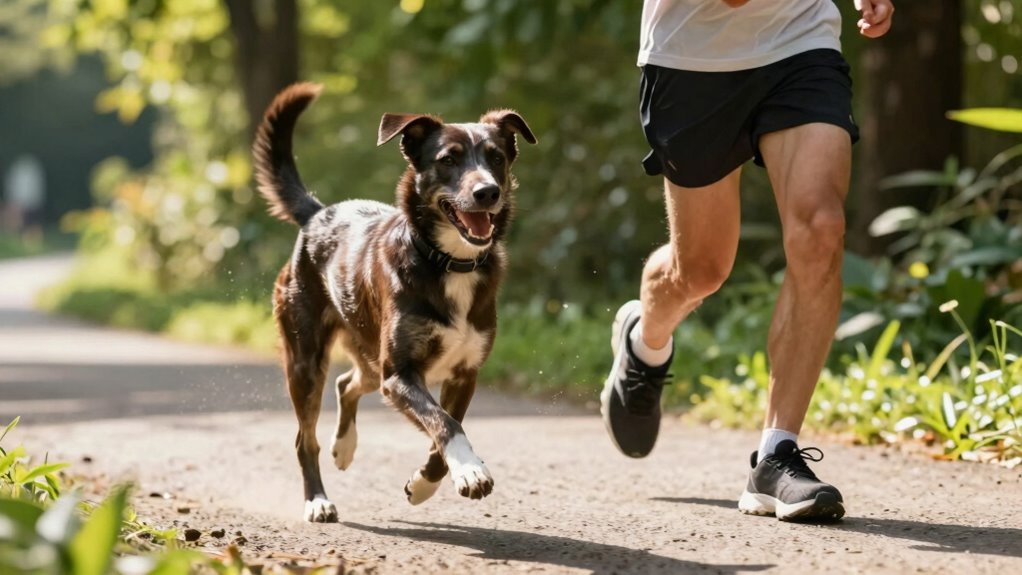
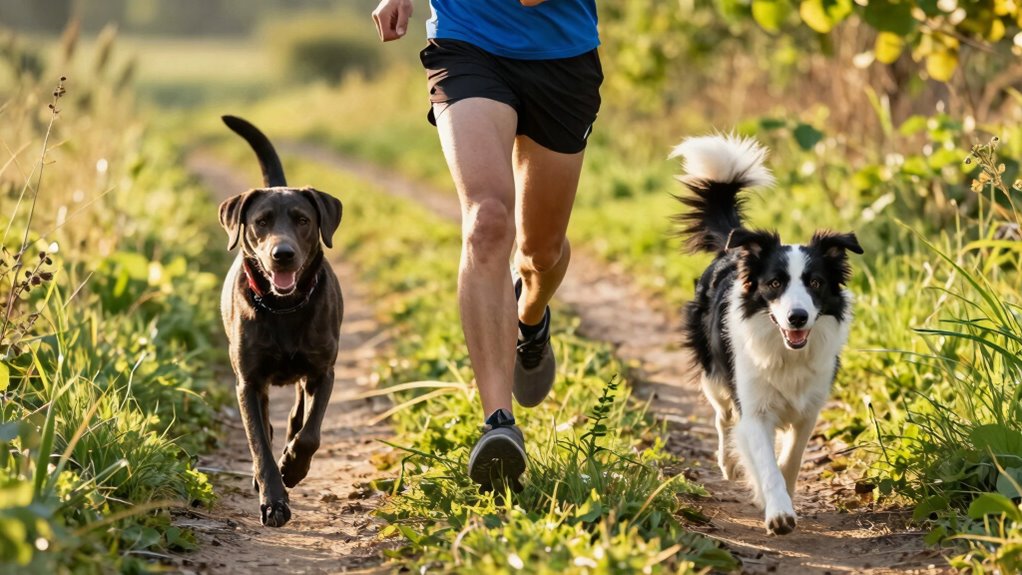
Running with young dogs can be a rewarding experience, but it requires careful preparation and awareness of your pup’s age and fitness level. Before hitting the pavement, it’s imperative to consider your dog’s development, especially their age and joint health, to guarantee a safe and enjoyable run. Puppies are still growing, and their joints are delicate, so high-impact activities like running should be introduced gradually. While it’s tempting to start early, consult your veterinarian to determine if your puppy is ready for running sessions. They can advise you on the appropriate age and help you gauge your pup’s physical readiness. Remember, forcing a young dog into strenuous activity too soon can lead to joint issues later in life.
Puppy socialization plays an essential role in preparing your young dog for running adventures. Well-socialized puppies tend to be more confident and less reactive, making outdoor activities more enjoyable for both of you. Socialization involves exposing your pup to various environments, people, and other animals in a controlled way. This helps them develop good manners and reduces behavioral issues that could interfere with running. As you work on puppy socialization, incorporate leash training tips to guarantee your dog walks calmly beside you. Proper leash training is fundamental for safety and control, especially when running through busy areas or places with distracting sights and sounds. Use positive reinforcement to teach your pup to stay close and walk politely on the leash. Short, frequent training sessions work best, and always reward your dog for good behavior to build confidence. Additionally, understanding your dog’s growth stage and physical development can help set realistic expectations and goals for your running routine. Recognizing your dog’s physical capabilities at each stage ensures you avoid overexertion and promote healthy growth. Being aware of your dog’s breed-specific traits can also influence their stamina and suitability for running activities.
When it comes to running with young dogs, start slow and keep sessions brief. Gradually increase the duration as your dog grows and becomes more accustomed to physical activity. Pay attention to signs of fatigue or discomfort, such as lagging behind, limping, or panting excessively. If your puppy seems tired, give them a break and resume later. Hydration is also key—bring water and offer it regularly during your run. As your pup matures, you can build up to longer runs, but always prioritize their health and well-being. Incorporating regular exercise into their routine can support their overall development and prevent future health issues. Remember, every dog is different, so tailor your running routine to your puppy’s individual needs. Additionally, being mindful of their joint health and development stages can help prevent future issues. With patience and proper training, your young dog can become a happy, healthy running partner, but the foundation of good socialization, leash skills, and understanding their physical limits is essential for a safe and successful experience.

VetIQ Glucosamine Hip & Joint Supplement for Dogs, 180 Soft Chews, Joint Support Supplement with MSM and Krill, Dog Health Supplies Large & Small Breed, Chicken Flavored Chewables
- Supports Dog Mobility and Comfort: Helps dogs stay active and comfortable
- Enhances Joint and Bone Health: Supports hip mobility and bone strength
- High-Quality Ingredients: Contains omegas, glucosamine, and MSM
As an affiliate, we earn on qualifying purchases.
As an affiliate, we earn on qualifying purchases.
Frequently Asked Questions
How Can I Tell if My Dog Is Ready to Run?
You can tell if your dog is ready to run by observing their energy levels and overall health. Make sure their dog nutrition supports active lifestyles, and check for signs of joint stiffness or discomfort. Start on softer running surface options like grass or dirt to protect their joints. Always begin with short runs, and if your dog maintains enthusiasm without hesitation, they’re likely ready to hit the pavement more confidently.
Are There Breed-Specific Considerations for Running With Young Dogs?
Picture your young dog as a sprouting tree—some breeds grow quickly, while others take their time. Breed-specific considerations matter because breed growth and genetic concerns influence when your dog can safely run. Larger breeds like retrievers or shepherds need more patience, as their joints develop slower and are prone to issues. Smaller breeds may handle running earlier, but always consider their unique growth patterns and consult your vet first.
What Are the Signs of Overexertion in Young Dogs?
You should watch for signs of overexertion in your young dog, like excessive panting, limping, or fatigue. If their growth plates are still developing, too much activity can cause damage. Keep an eye on their hydration needs—make sure they drink enough water, especially after running. If your dog seems tired or shows discomfort, it’s best to stop and give them time to rest to prevent injury.
How Often Should I Schedule Running Sessions for My Puppy?
You should schedule running sessions for your puppy 3 to 5 times a week, ensuring training consistency while avoiding overexertion. Keep sessions short—about 5 to 10 minutes—and gradually increase duration. Pay attention to your puppy’s nutritional needs by providing a balanced diet to support joint health and energy levels. Always monitor for signs of fatigue or discomfort, and consult your vet for personalized guidance.
What Safety Gear Is Recommended for Running With Dogs?
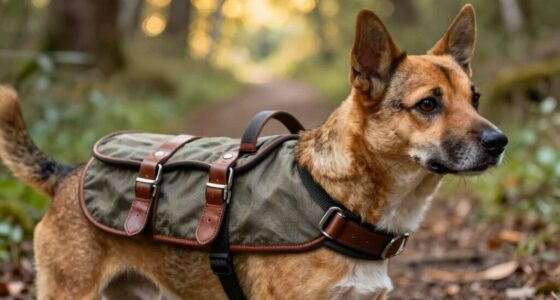
Think of safety gear as your dog’s running armor. You should have a well-fitting harness or collar, reflective gear for visibility, and sturdy shoes for you both. Keep a water bottle handy for dog hydration during breaks, and choose running surfaces with safety in mind—avoid hot pavement or uneven terrain. This gear and awareness create a smooth, safe path, keeping your furry friend protected on every stride.
Conclusion
Remember, running with young dogs is like planting seeds — patience and proper care guarantee they grow into strong, joyful companions. Always consider their age and joint health first, listening closely to their signals. When you’re cautious and attentive, you’re steering their path toward a lifetime of happy adventures. So, step out with confidence, knowing you’re nurturing a bond that’s as resilient and vibrant as the open road ahead.