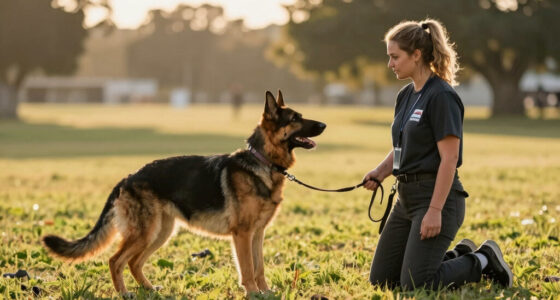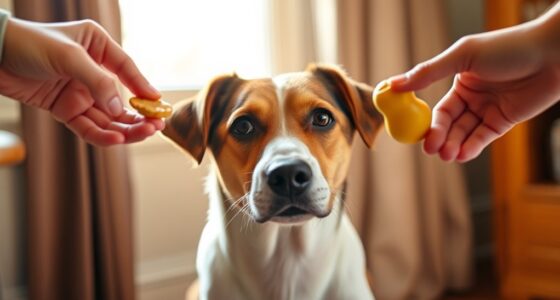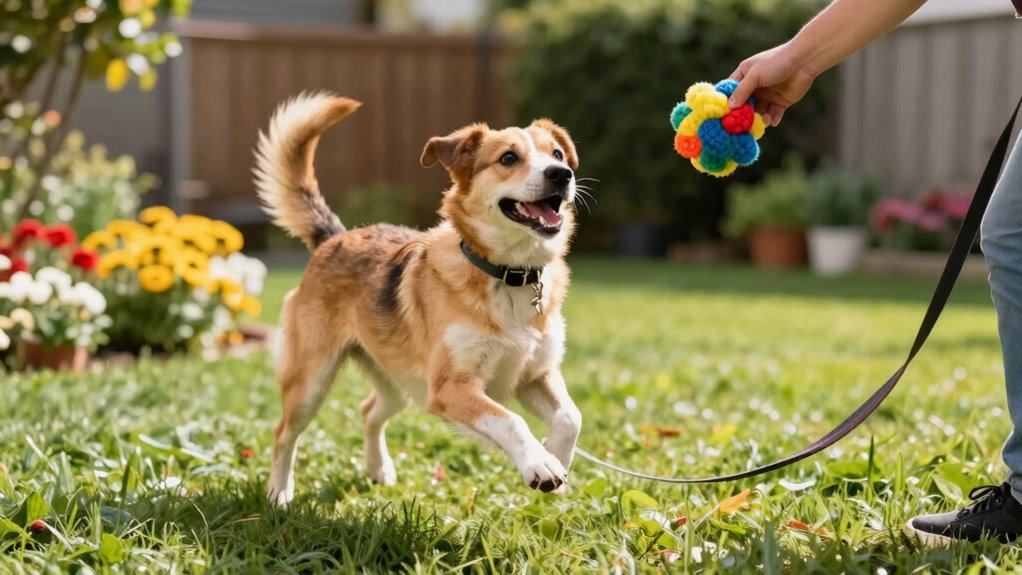

Use variable rewards after your dog masters basic commands and behaviors, as unpredictability keeps them motivated and engaged. Start with consistent rewards to build a solid foundation, then gradually introduce variability to boost persistence and enthusiasm. Reserve variable reinforcement for advanced training stages, not for initial instruction. Proper timing and gradual implementation help prevent confusion and promote long-term reliability. If you want to discover more effective strategies, keep going for essential tips you can apply today.
Key Takeaways
- Use variable rewards after foundational behaviors are well learned to maintain motivation and prevent complacency.
- Start with consistent rewards to establish clear associations before introducing randomness.
- Apply variable rewards during advanced training to reinforce reliability under unpredictable circumstances.
- Reserve variable rewards for behaviors that require sustained effort and enthusiasm over time.
- Combine variable rewards with consistent cues and timing for balanced, effective dog training.
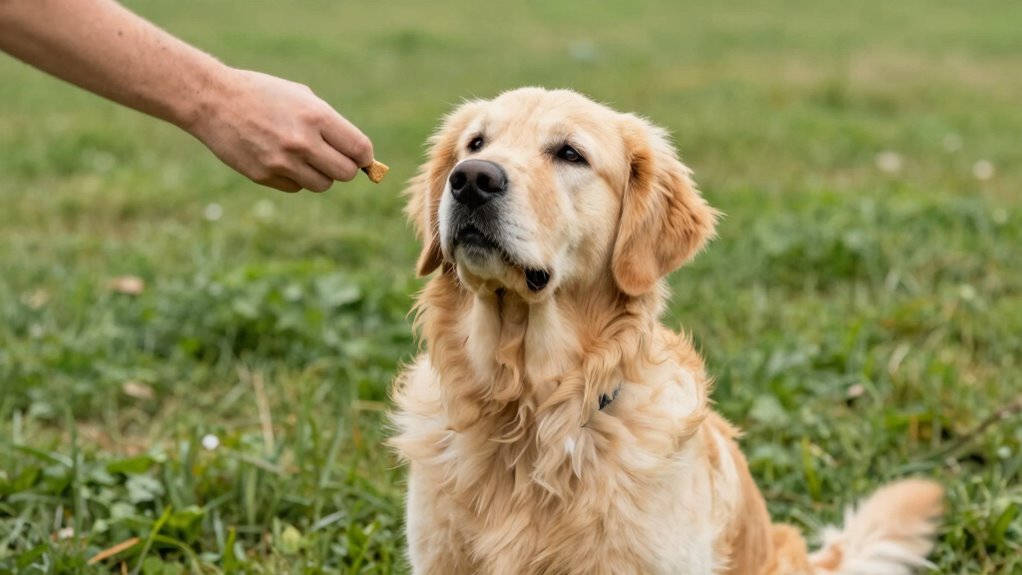
When training your dog, using variable rewards can considerably enhance learning and motivation. Unlike predictable reinforcement, variable rewards keep your dog guessing, which can strengthen their engagement and speed up the learning process. To make this work effectively, you need to focus on training consistency. Consistency is key because it helps your dog understand what behaviors are expected and which ones will be rewarded. When you’re consistent with your commands and the way you deliver rewards, your dog quickly makes the connection between actions and consequences. It’s important to establish a clear routine initially, where rewards are given immediately after the desired behavior. This immediate feedback helps your dog associate the action with the reward, reinforcing good habits. As your dog becomes more proficient, you can gradually introduce variability in the rewards, but always maintain consistent training cues and expectations.
Reward timing is equally crucial when using variable rewards. You don’t want to wait too long to give the reward, as delay can cause confusion about what behavior is being reinforced. Proper timing means delivering the reward within a second or two of the correct action, so your dog clearly links the two. When you switch to variable rewards, it’s best to start with consistent timing for a few repetitions to establish a firm behavioral foundation. Once your dog reliably performs, you can introduce randomness in the reward schedule, such as sometimes giving treats immediately, other times after a few seconds, or occasionally offering praise without a treat. This unpredictability keeps your dog motivated and eager to perform, as they never know exactly when the next reward will come. Incorporating training variability effectively can also prevent your dog from becoming complacent, encouraging sustained effort over time. Understanding reinforcement schedules is fundamental to effectively using variable rewards. Recognizing the importance of behavioral reinforcement helps you tailor your approach to maximize motivation and learning. Additionally, being aware of how reward predictability influences your dog’s response can help you fine-tune your training strategy for better results. However, it’s important to remember that variable rewards should be used strategically. Not every behavior warrants this approach; it’s most effective once your dog has learned the basics and understands the commands clearly. During initial training phases, stick to consistent rewards and precise timing to build a strong foundation. Once your dog demonstrates good understanding, you can switch to variable rewards to maintain their interest and enthusiasm. This method encourages persistence and improves their ability to perform reliably even when rewards are inconsistent. Ultimately, combining training consistency with thoughtfully timed and varied rewards creates a balanced training approach that fosters trust, motivation, and long-term learning success. A solid understanding of training principles can help ensure that your training remains effective and engaging for your dog.

Buddy Biscuits Trainers Training Bites Soft & Chewy Dog Treats, Bacon, 10 oz. Pouch
- Flavor: Highly palatable with pork liver
- Quantity: 500 treats per bag
- Calories: Only 1.5 calories per treat
As an affiliate, we earn on qualifying purchases.
As an affiliate, we earn on qualifying purchases.
Frequently Asked Questions
Can Variable Rewards Replace Consistent Training Commands Entirely?
No, variable rewards can’t replace consistent training commands entirely. They are a motivational strategy that enhances reinforcement techniques, keeping your dog engaged and enthusiastic to learn. While variable rewards are effective for maintaining interest and encouraging good behavior, consistent commands establish clear expectations. You need both to train effectively; variable rewards complement your commands, but they shouldn’t be the sole method, ensuring your dog understands what’s expected while staying motivated.
How Do I Prevent My Dog From Becoming Overly Dependent on Variable Rewards?
To prevent your dog from becoming overly dependent on variable rewards, stay alert to over reliance pitfalls. Keep reward inconsistency in check by mixing training methods and occasionally withholding treats. This suspense keeps your dog guessing, preventing reliance on rewards alone. By balancing consistency with unpredictability, you build a resilient, confident dog who follows commands because of your leadership, not just the promise of rewards.
Are There Specific Breeds That Respond Better to Variable Rewards?
Yes, some breeds respond better to variable rewards due to breed-specific motivation. For example, working breeds like Border Collies thrive on mental challenges and reward personalization, while retrievers often love praise and treats. Tailoring rewards to your dog’s breed and individual preferences keeps training engaging. Observe what excites your dog most, and incorporate those specific rewards, ensuring they stay motivated and enthusiastic to learn through effective variable reward strategies.
How Should I Adjust Rewards for Different Dog Ages or Temperaments?
Imagine tailoring a colorful palette for each dog’s unique personality. For puppies, use high-value, frequent rewards to match their curiosity and energy. Older dogs benefit from age-specific motivation, like treats or praise that resonate with their preferences. For dogs with calm temperaments, gentle praise might work best, while energetic dogs respond better to varied, exciting rewards. Modifying rewards based on age and temperament ensures training remains engaging and effective for every dog.
What Are Common Mistakes to Avoid When Implementing Variable Rewards?
You should avoid incorrect timing and inconsistent application when using variable rewards. If you reward too early or too late, your dog may get confused about what behavior earned the reward. Be consistent in when and how you reward, so your dog clearly associates the behavior with the reward. This consistency helps build trust and understanding, making training more effective and enjoyable for both of you.
Conclusion
Using variable rewards keeps your dog engaged, motivated, and enthusiastic to learn. It builds anticipation, fosters trust, and strengthens your bond. When you reward unpredictably, you encourage your dog to stay attentive, curious, and excited for what’s next. Remember, timing and consistency matter. So, stay patient, stay consistent, and let the unpredictability of rewards turn training into a joyful journey for both of you. Your dog’s happiness, your progress, and your bond depend on it.