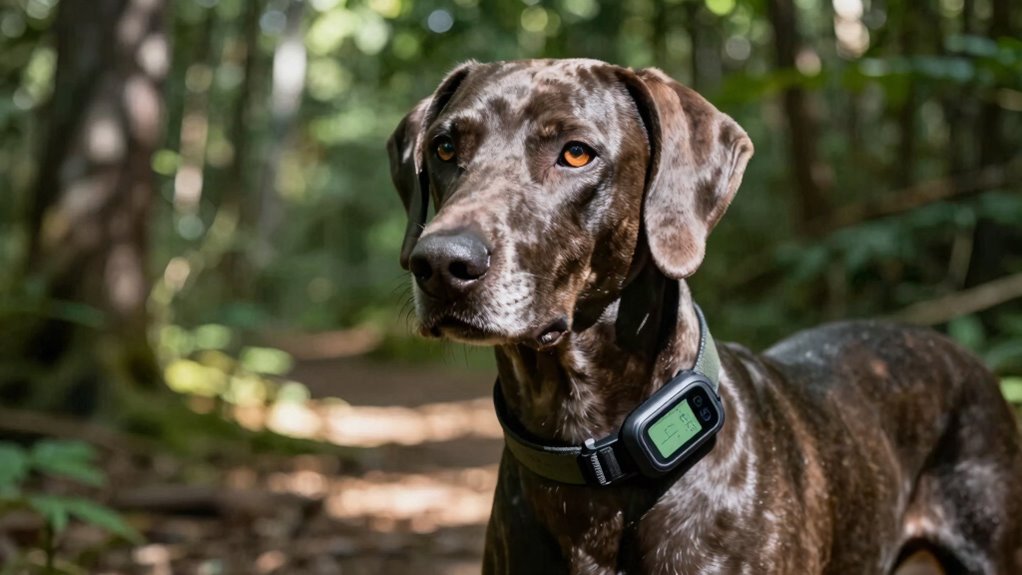
Using GPS trackers with scent hounds boosts their tracking abilities by giving you real-time location updates, making hunts safer and more accurate. The devices help you quickly find your dog if they get off-course or face tough terrain. They also allow you to monitor your dog’s progress and improve training techniques. When combined with their natural instincts, GPS technology creates a powerful tool for outdoor adventures, ensuring success and safety every time—there’s plenty more to discover about this effective pairing.
Key Takeaways
- GPS trackers enhance safety by providing real-time location updates during tracking and outdoor adventures.
- They help monitor scent hounds’ progress, ensuring they stay on trail and recover quickly if they go off course.
- Combining GPS data with training improves understanding of tracking behavior and environmental impacts.
- GPS technology allows for better management of long or complex scent trails over rugged terrain.
- The integration of GPS trackers complements scent hounds’ natural abilities, making tracking more efficient and reliable.
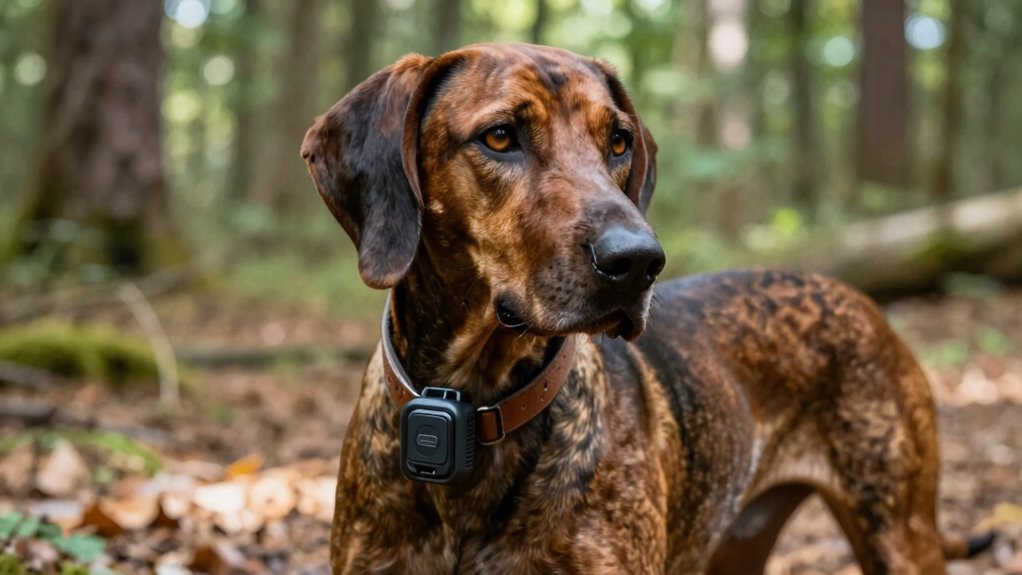
Scent hounds are renowned for their incredible tracking abilities, making them ideal companions for hunting and outdoor adventures. Their keen noses and relentless determination mean they can follow a scent trail for miles, even through dense woods or rugged terrain. But to harness their full potential, you need to understand effective training techniques. Training a scent hound involves consistent, patient methods that focus on scent trail analysis. You want your dog to learn how to interpret and follow scent cues accurately, which means starting with simple trails and gradually increasing complexity. Use positive reinforcement to encourage precise tracking, rewarding your hound when they stay on the scent trail without wandering off. Over time, this helps sharpen their instincts and builds confidence in following even faint or complex scents. Analyzing scent trails is vital because it allows you to better understand how your hound tracks and what cues they respond to most. You’ll notice that scent trail analysis involves paying close attention to how your dog interacts with different terrains and scent conditions. For instance, a trail on damp ground might be more distinct than on dry, rocky surfaces. As you observe your dog, you’ll learn to identify subtle signs of scent detection, such as nose work, tail position, or body language. This insight enables you to adjust your training techniques accordingly, whether that means selecting more challenging trails or providing additional scent work exercises. Incorporating scent trail analysis into your training helps optimize your dog’s natural abilities and adapt to varying environmental conditions. Using GPS trackers with scent hounds offers a significant advantage, especially during longer hunts or in challenging environments. These devices provide peace of mind, letting you keep tabs on your dog’s location without constantly calling or searching. When you pair GPS trackers with your training efforts, you can quickly identify if your dog is losing the trail or if they’ve wandered off course. This feedback loop helps you refine your training techniques by analyzing how your dog responds to different scent trails and terrain. Additionally, understanding environmental factors that influence scent detection can improve your training results and your dog’s performance in diverse conditions. Recognizing how weather conditions impact scent trails can help you plan and adapt your training sessions more effectively. Furthermore, incorporating environmental awareness into your training routine can help your dog become more resilient in various outdoor conditions. Incorporating technology like GPS trackers not only enhances safety but also provides valuable data to fine-tune your training approach. Over time, you’ll develop a better understanding of their tracking style and improve their accuracy. Plus, GPS technology allows you to stay connected, even in dense woods or remote areas, making outdoor adventures safer and more enjoyable for both of you. In essence, combining expert training techniques, scent trail analysis, and GPS technology creates a powerful synergy. You’re not only enhancing your scent hound’s innate abilities but also ensuring their safety and your peace of mind. This partnership makes outdoor pursuits more rewarding, knowing you can trust your dog’s tracking skills while staying connected and aware of their position at all times.
As an affiliate, we earn on qualifying purchases.
Frequently Asked Questions
How Do GPS Trackers Affect a Scent Hound’s Natural Hunting Instincts?
GPS trackers don’t substantially affect a scent hound’s natural hunting instinct because they’re designed to complement, not replace, the dog’s innate skills. However, some tracker interference might occur if the device distracts your dog or alters its focus during a hunt. To minimize this, make certain the tracker is lightweight, unobtrusive, and used as an aid rather than a substitute for your dog’s instinctual tracking abilities.
Are GPS Trackers Suitable for All Types of Scent Hounds?
GPS trackers are suitable for many scent hounds, but breed compatibility and training adjustments matter. Some breeds, like beagles and bloodhounds, naturally excel with GPS devices because they’re easier to train and track. Others may require more training to adapt to the technology. You should assess your dog’s temperament and training needs to guarantee the device complements their hunting instincts without interfering.
What Is the Average Battery Life of GPS Trackers Used on Scent Hounds?
You’ll find that the average battery life of GPS trackers for scent hounds ranges from 12 to 24 hours, depending on usage. Look for devices with good battery longevity to avoid frequent recharging. Also, consider device durability, as rugged trackers withstand outdoor adventures. Regularly charging the tracker guarantees your scent hound’s safety, and choosing a model with long-lasting battery life helps you stay connected during extended tracking sessions.
Can GPS Trackers Be Used During Scent Training Exercises?
Like a modern Odysseus steering uncharted waters, you can certainly use GPS trackers during scent training exercises. They enhance tracking accuracy and offer trainer convenience, allowing you to monitor your hound’s progress in real-time. This technology helps you fine-tune training, guaranteeing your scent hound learns efficiently. Just make certain the tracker’s signal remains strong in outdoor environments, so you’re always aware of your dog’s location during these essential exercises.
Do GPS Trackers Interfere With a Scent Hound’s Sense of Smell?
No, GPS trackers don’t interfere with a scent hound’s sense of smell because tracking technology works externally, not affecting their olfactory system. Your dog can still pick up scent trails naturally while wearing a GPS device. The tracker simply provides location data without scent interference, making it a useful tool for owners who want to monitor their hound’s whereabouts without impacting their natural scent-based tracking abilities.
Conclusion
By pairing scent hounds with GPS trackers, you create a safer, more efficient way to enjoy outdoor adventures together. Did you know that GPS collars can increase the chances of finding a lost dog by up to 95%? This powerful combo not only keeps your scent hound close but also gives you peace of mind. It’s a game-changer for responsible pet ownership, making every outing safer and more enjoyable for both of you.