
TL;DR
Thorsten Meyer AI has published World Model Readiness, an early diagnostic framework for judging whether an operation is prepared for AI systems that predict outcomes and act. The tool is not a world model; it is a readiness check tied to a fast-moving field where major labs are testing models for simulation, robotics and spatial reasoning.
Thorsten Meyer AI has published World Model Readiness, an early-stage diagnostic framework intended to help operators evaluate whether their data, processes, infrastructure and oversight are ready for AI systems that predict outcomes and take actions, rather than only generate text.
The confirmed development is the publication of a diagnostic, not a working world model. Thorsten Meyer AI describes the tool as a mirror for organizations: a structured way to check whether they have the data, process maps, governance and vendor flexibility needed for a class of AI that can model changing environments and plan actions.
The framework highlights five readiness areas: world data beyond text, processes represented as changing states, oversight for systems that act, provider-agnostic infrastructure and risk literacy around calibration gaps. In the illustrative profile published with the release, most operations are described as still being built for AI that suggests, not AI that acts.
The article frames world models as systems that predict the next state of an environment rather than the next word in a sequence. That framing is a claim about the direction of AI research, not proof that such systems are ready for broad enterprise deployment.
World Model Readiness — are you ready for AI that acts?
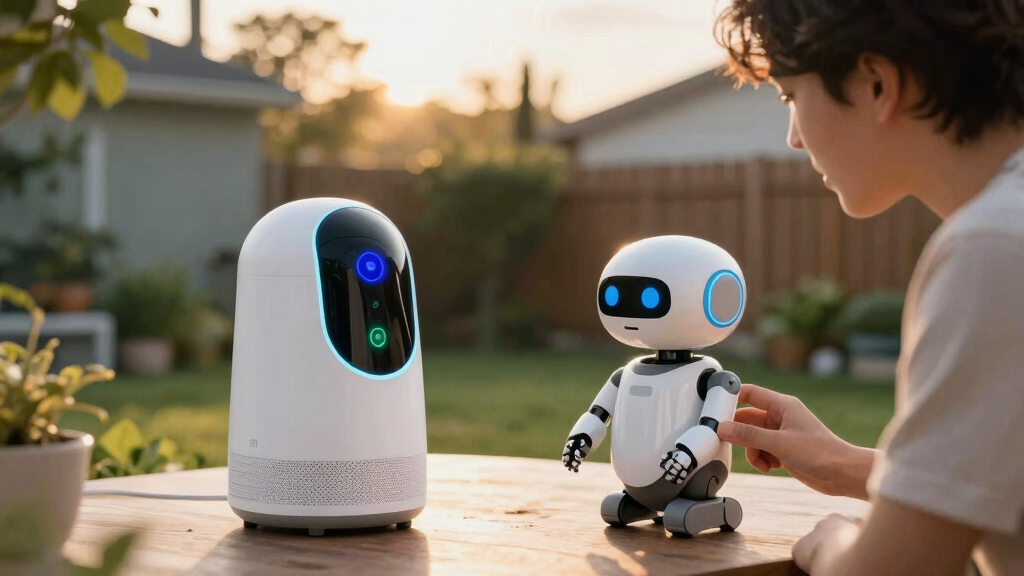
LLMs describe. World models predict and act. The next AI shift isn’t “have we adopted a chatbot” — it’s whether you’d know what to do with a model that anticipates consequences.
Independent commentary, produced with AI assistance under human editorial oversight. The views are the author’s own and may change. World Model Readiness is an early, positioning-stage diagnostic — an assessment framework, not a prediction, guarantee, or technical advice; its conclusions depend on the framework’s assumptions. “World models” are an emerging, rapidly-evolving area of AI; statements about the field reflect publicly reported developments as of mid-2026 and may quickly date. References to companies, labs, and products describe public reporting and imply no affiliation, endorsement, or verification. Product, model, and company names are trademarks of their respective owners.
Acting AI Changes Operations
The release matters because many organizations have treated generative AI as a productivity layer: write, summarize, search, classify, draft and answer. World models point to a different operating problem. If AI systems can simulate outcomes, plan steps or control tools in changing environments, the key question becomes whether the organization can govern action.
That changes the practical checklist. Text data alone may not be enough; teams may need telemetry, video, simulations, logs and state-rich process records. Approval flows built for human review of chatbot output may not match systems that can recommend or initiate actions. Vendor choices also become more exposed if a company has tied its AI stack to one model type or provider.
For readers, the direct consequence is planning risk. The organizations least prepared for acting AI may not be the ones that lack chatbots. They may be the ones whose work cannot be represented cleanly, whose data sits outside usable systems, or whose oversight only starts after an action has already affected customers, operations or physical assets.

ANCEL AD310 Classic Enhanced Universal OBD II Scanner Car Engine Fault Code Reader CAN Diagnostic Scan Tool, Read and Clear Error Codes for 1996 or Newer OBD2 Protocol Vehicle (Black)
- Popular and Recommended: Trusted by Scotty Kilmer for diagnostics
- Easy Code Reading and Clearing: Diagnose and reset check engine lights
- Comprehensive Data Display: View live data, freeze frame, and more
As an affiliate, we earn on qualifying purchases.
As an affiliate, we earn on qualifying purchases.
Labs Push World Models
The diagnostic arrives as world models have become a prominent AI research theme. Thorsten Meyer AI cites reported industry moves including Yann LeCun leaving Meta in late 2025 to found Advanced Machine Intelligence Labs, with public reports saying the company raised about $1 billion to pursue alternatives to text-first model architectures.
Google DeepMind announced Genie 3 in August 2025, saying it can generate interactive environments from prompts at 24 frames per second and maintain consistency for a few minutes. Meta released V-JEPA 2 in June 2025 as a video-trained world model for understanding, prediction and planning, while also publishing benchmarks for physical reasoning. World Labs, associated with Fei-Fei Li, describes its work as spatial intelligence for models that can perceive, generate, reason and interact with 3D worlds.
Those developments do not mean world models are mature across business uses. The source material itself warns that the field is real, early and heavily hyped, with many visible gains still concentrated in games, simulation, robotics research and controlled demonstrations.
“LLMs describe. World models predict and act.”
— Thorsten Meyer AI
Readiness Claims Need Proof
It is not yet clear how World Model Readiness will be validated outside the author’s portfolio. The source describes it as an early, positioning-stage diagnostic whose results depend on the framework’s assumptions.
It is also unclear how quickly world models will affect day-to-day operations beyond research labs and specialized domains. Current systems still face limits in long-horizon consistency, causal reasoning, physical reliability, cost, safety and evaluation. Claims that world models will displace large language models remain forecasts, not settled facts.
From Diagnostic To Tests
The next stated step in the Built in Public series is Day 19, where Thorsten Meyer AI says it will name the thesis underneath the full operator portfolio. For World Model Readiness itself, the practical next markers would be published criteria, sample assessments, case studies and evidence that the diagnostic can identify gaps before organizations deploy action-capable AI.
In the wider market, the next phase will be set by model releases, benchmark results and early deployments in simulation, robotics, autonomous systems and operations software. Readers should watch for evidence of reliable planning under real constraints, not only more impressive demos.
Key Questions
What happened?
Thorsten Meyer AI published World Model Readiness, an early diagnostic framework for checking whether an operation is prepared for AI systems that predict consequences and act.
Is World Model Readiness itself an AI model?
No. The source describes it as a diagnostic and assessment framework. It does not build world models or guarantee readiness.
What is a world model?
A world model is an AI system designed to represent how an environment works, predict how it may change and estimate what could happen after an action.
Why does this matter to businesses?
Acting AI requires more than chatbot adoption. It can require usable operational data, state-based process models, oversight before actions and infrastructure that can adapt as model types change.
What remains unknown?
The diagnostic has not yet shown independent validation, and world models are still an early field. Their timing, reliability and business impact remain developing questions.
Source: Thorsten Meyer AI