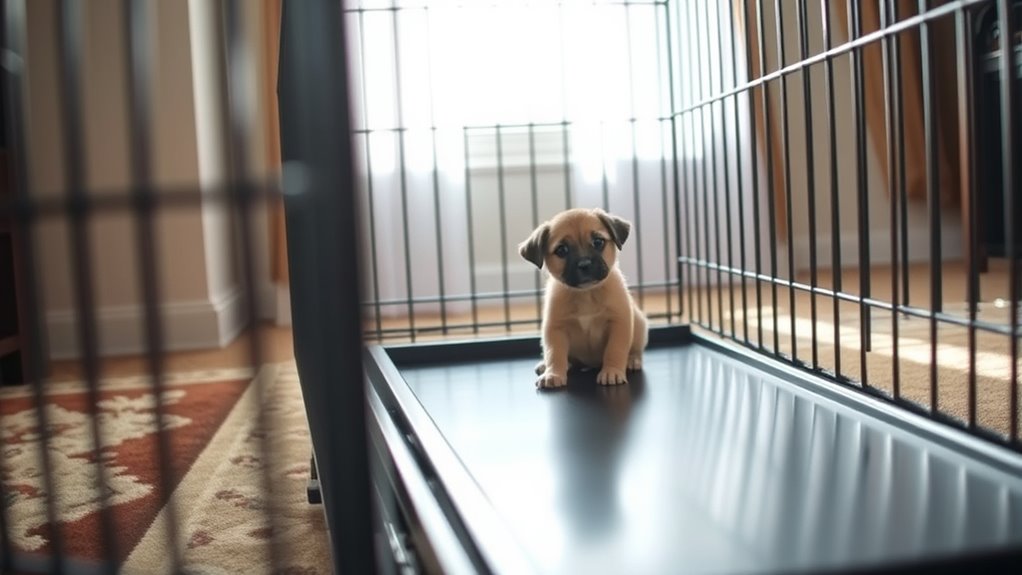

To make crate training easy, avoid common mistakes like choosing a crate that’s too big, which can cause housebreaking issues, or using it as punishment. Instead, select a crate just large enough for your dog to stand and turn around, and create a positive environment with cozy bedding and toys. Establish a consistent routine and gradually increase crate time with rewards. Stay mindful of these tips, and you’ll find success in your training journey.

Get pet supplies delivered free — and shop member deals
- Fast, free delivery on millions of items
- Access to Prime Big Deal Days deals on October 6–7
- Prime Video, Amazon Music and more included
Key Takeaways
- Use a crate that’s just large enough for your dog to stand, turn around, and lie down comfortably to prevent housebreaking issues.
- Avoid assuming a bigger crate is better; always measure your dog and use dividers to adjust the size as they grow.
- Create a positive environment with soft bedding, treats, and toys, and never punish or force your dog into the crate.
- Establish a consistent routine for feeding, potty breaks, and crate time to reduce anxiety and promote successful training.
- Gradually increase crate time with calm reinforcement, and never leave your dog in the crate for extended periods during the day.

Crate training can seem intimidating at first, but with the right approach, it becomes a straightforward process that benefits both you and your dog. Many new pet owners encounter common challenges, especially housebreaking issues, which can make the training process frustrating. One of the most frequent mistakes is choosing a crate that’s too large. When the crate is oversized, your dog might use one corner as a bathroom and sleep in another, defeating the purpose of housebreaking. Instead, opt for a crate that’s just big enough for your dog to stand, turn around, and lie down comfortably. This encourages your dog to hold their bladder and bowels until they’re taken outside, reinforcing good habits.
Another mistake related to crate size is assuming bigger is better. It’s tempting to buy a large crate, thinking your puppy will grow into it, but this often backfires. A crate that’s too spacious can lead to housebreaking issues because your dog may feel comfortable enough to eliminate inside without guilt. Measure your dog’s size and buy a crate that fits those dimensions, then use dividers to adjust the space as your dog grows. This way, you keep the crate a cozy den-like space, which is essential for successful crate training.
It’s also common to rush the process or use the crate as a form of punishment. Neither approach works well. Your goal is to create a positive association with the crate, so start by making it inviting. Place soft bedding inside, add some treats or toys, and encourage your dog to explore it voluntarily. Never force your dog into the crate or punish them for whining; instead, gradually increase the time they spend inside, rewarding calm behavior. Consistency is key here, and patience pays off in the long run.
Many owners forget to establish a routine. Your dog thrives on predictability, so set specific times for meals, potty breaks, and crate time. When your dog knows what to expect, they’re less likely to develop anxiety or resistance to the crate. Also, avoid leaving your dog in the crate for extended periods, especially during the day. Short, frequent intervals work better for housebreaking and help your dog learn that the crate is a safe space rather than a place of punishment. Additionally, understanding the importance of high-quality projectors with proper calibration can help create an environment that reduces stress and supports training success.
As an affiliate, we earn on qualifying purchases.
Frequently Asked Questions
How Long Should a Puppy Stay in the Crate Daily?
You should limit your puppy’s crate duration based on their age, typically no more than 3-4 hours during the day. Guarantee the crate size is appropriate—big enough for them to stand, turn around, and lie down comfortably. For longer periods, provide regular breaks, playtime, and bathroom opportunities. Remember, crate training isn’t about confinement but creating a safe space, so avoid keeping your puppy in the crate for extended hours.
Can Crate Training Help With Separation Anxiety?
Think of crate training as building a cozy fort your dog can retreat to. It can work wonders for separation anxiety by providing a safe space, easing fears, and creating a sense of security. The benefits of crate training include reducing stress and preventing destructive behaviors when you’re away. With patience, your pup learns to see the crate as a comforting haven, easing separation anxiety and strengthening your bond.
What Size Crate Is Appropriate for a Growing Dog?
When choosing a crate size for your growing dog, consider growth considerations to guarantee comfort and safety. You want a crate that’s large enough for your dog to stand, turn around, and lie down comfortably, but not so big that they can use one corner as a bathroom. Measure your dog now and anticipate future growth, selecting a crate that can accommodate them as they grow, making it a practical choice.
Is It Okay to Use the Crate for Punishment?
Think of the crate as your puppy’s cozy castle, not a jail cell. Using it for punishment can turn that safe space into a place of fear, stifling their developing independence. Instead, focus on crate safety and positive reinforcement to build trust. When your puppy sees the crate as a comfort zone, they’ll learn to enjoy it, fostering healthy independence without associating it with negativity.
How Do I Crate Train a Stubborn or Anxious Dog?
When crate training a stubborn or anxious dog, start with a gentle crate introduction, making it a safe space they enjoy. Use positive reinforcement, like treats and praise, to encourage them to enter voluntarily. Be patient and keep sessions short, gradually increasing time. Avoid forcing or punishing, and always associate the crate with comfort and rewards. With consistency and kindness, your dog will learn to see the crate as a positive place.
Conclusion
Remember, crate training isn’t about punishment but creating a safe space. Think of it like building a cozy nest—your dog needs comfort and trust to thrive. When you make common mistakes, it’s like trying to fit a square peg in a round hole; everything becomes harder. By avoiding these pitfalls, you’ll help your furry friend see the crate as a positive retreat, turning training into a smooth and rewarding experience for both of you.
Halloween Picks
halloween
As an affiliate, we earn on qualifying purchases.