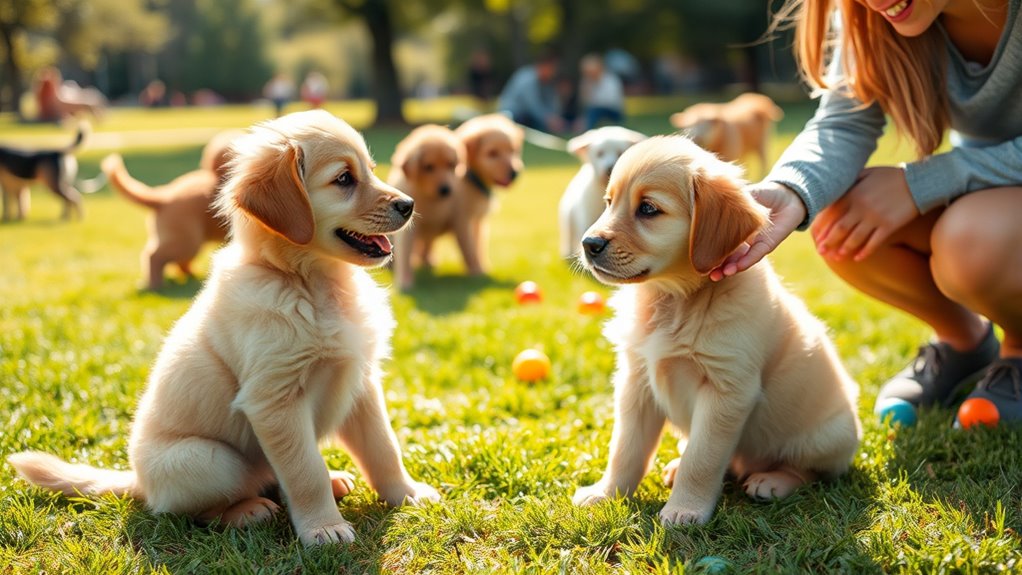

To build your puppy’s confidence with people and other dogs, start socializing early and keep experiences positive and controlled. Introduce your pup to new sights, sounds, and gentle, supervised interactions with different people and dogs. Use treats and praise to reinforce good behavior and avoid overwhelming situations. Be patient, consistent, and mindful of breed traits to tailor your approach. Keep this up, and you’ll set your puppy on the path to becoming a confident, well-adjusted companion.
Key Takeaways
- Start socializing between 3 to 14 weeks with positive, brief interactions with people and other dogs.
- Use treats and praise to reinforce calm, polite behavior during social encounters.
- Gradually increase exposure to new environments, sounds, and animals to build confidence.
- Supervise all interactions, keeping meetings short and positive to prevent overwhelm or fear.
- Tailor socialization efforts based on breed traits and individual puppy temperament for effective confidence building.
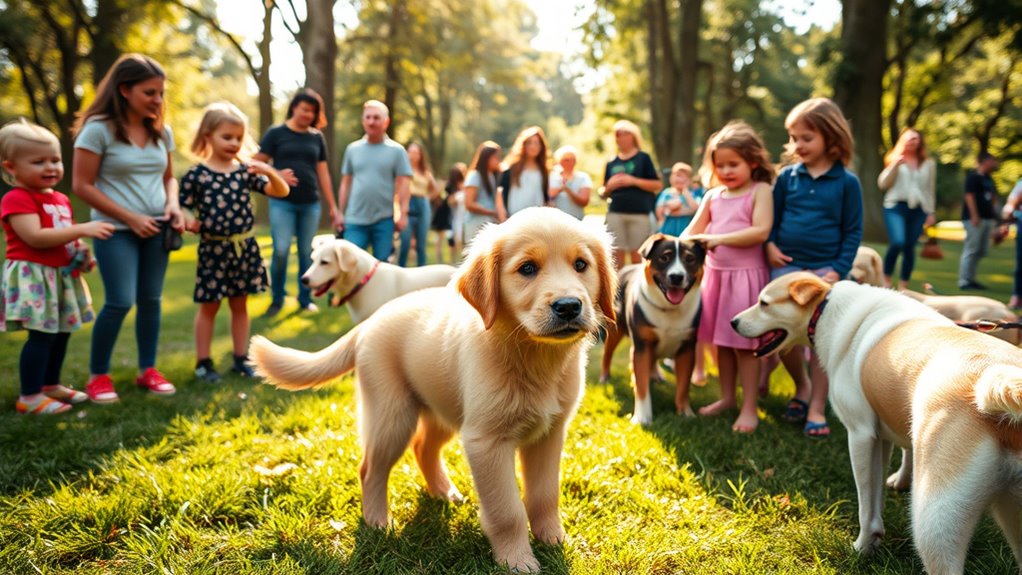
Socializing your puppy is a critical step in helping them become a well-behaved and confident adult dog. Early socialization exposes your puppy to different people, animals, sounds, and environments, which builds their confidence and reduces fear-based behaviors. It’s essential to start this process as soon as you bring your puppy home, ideally between 3 and 14 weeks of age, but never too late to begin. When socializing, keep in mind that puppy manners play an important role. Teaching your puppy basic manners, like gentle greetings and calm behavior around others, sets a positive foundation for future interactions. For example, encouraging your puppy to approach calmly and rewarding polite greetings helps prevent overexcitement or fearfulness later on. It’s equally important to think about your puppy’s breed considerations during socialization. Some breeds are naturally more reserved or cautious, while others are outgoing and eager to meet new friends. Knowing your puppy’s breed traits allows you to tailor socialization efforts appropriately. For shy or wary breeds, gradual exposure paired with positive reinforcement helps build trust and confidence. Conversely, energetic or social breeds thrive with frequent, supervised interactions that allow them to burn off excess energy and learn proper manners around people and other dogs. You should aim to provide a variety of experiences without overwhelming your puppy. Keep initial meetings short and positive, gradually increasing duration and complexity as your puppy becomes more comfortable. Always supervise interactions, especially with unfamiliar dogs or people, to guarantee they’re safe and controlled. Use treats, praise, and gentle touch to reinforce good behavior and encourage your puppy to explore new situations. Socialization isn’t just about meeting others—it also involves teaching your puppy proper puppy manners, like not jumping on guests, not biting or nipping, and respecting personal space. Consistency is key; everyone in your household should follow the same rules and reinforce positive behaviors. If your puppy shows signs of fear or anxiety, don’t push them; instead, give them space and time to recover, and try again later with a different approach. Remember, patience and positive reinforcement go hand-in-hand. By thoughtfully considering your puppy’s breed characteristics and incorporating good manners into socialization, you’re setting the stage for a well-adjusted, confident dog. This process not only helps your puppy develop appropriate social skills but also strengthens your bond, making future training and everyday interactions more enjoyable and stress-free. Recognizing the importance of Early socialization can significantly influence your puppy’s long-term confidence and behavior.

Wellness Soft Puppy Bites Dog Training Treats, Natural, Grain Free, Lamb and Salmon Recipe, 8 oz Bag
- Grain-Free Puppy Treats: Soft, bite-sized training rewards
- Supports Brain Development: Contains DHA from salmon
- Healthy Ingredients: Lamb, salmon, vitamins for puppies
As an affiliate, we earn on qualifying purchases.
As an affiliate, we earn on qualifying purchases.
Frequently Asked Questions
When Is the Best Time to Start Socializing My Puppy?
You should start socializing your puppy between 3 and 14 weeks old, during the critical socialization timeline. This period aligns with key puppy milestones, making it ideal to introduce them to new people, dogs, and environments. Early socialization helps build their confidence and reduces future fears. Keep interactions positive, gentle, and manageable, ensuring your puppy feels safe while exploring new experiences during this essential window.
How Do I Introduce My Puppy to New Environments Safely?
You should introduce your puppy to new environments gradually, starting with safe, puppy-proofed areas. Use puppy proofing tips like removing hazards and supervising closely. Keep sessions short and positive, using leash training techniques to maintain control and prevent escapes. Always reward your puppy for calm behavior, and gradually expose them to different sights and sounds. This approach guarantees safe, confident exploration while reinforcing good habits and building trust.
What Are Signs of Fear or Anxiety in a Socialized Puppy?
Remember, a frightened puppy is a silent warning sign. You’ll notice signs of fear or anxiety in your pup’s body language—such as tucked tail, flattened ears, or a lowered stance. Vocal cues like whining, whimpering, or trembling also signal distress. If you see these signs, give your puppy space and reassurance to help build their confidence. Respond calmly, avoid forcing interactions, and watch for cues to keep your puppy comfortable and safe.
How Can I Socialize an Introverted or Shy Puppy Effectively?
To socialize your shy puppy effectively, use positive reinforcement to reward calm behavior and build trust. Start with gradual exposure by introducing your puppy to new people and environments slowly, ensuring each experience is positive. Keep sessions short and relaxed, and always praise your puppy for their bravery. Consistency and patience help your puppy become more confident around others, making socialization a positive journey for both of you.
What Should I Do if My Puppy Shows Aggressive Behavior During Socialization?
If your puppy shows aggressive behavior during socialization, stay calm and avoid punishment. Use aggression management techniques like redirecting their attention with a toy or command. Practice calmness techniques such as slow, gentle movements and a soothing voice to de-escalate the situation. Gradually expose your puppy to new environments, rewarding calm behavior. Consistency and patience are key to helping your puppy overcome aggression and build confidence safely.
Conclusion
In short, steady socialization sets your pup up for a safer, happier life. By building bonds with brave bites and bold buddies, you foster fearless friendships and fun-filled futures. Keep consistent, calm, and caring, creating a confident canine capable of calmly confronting new companions and challenges. Remember, with patience and persistence, you’re paving the path for a well-rounded, wag-worthy wonder who’s welcoming to all and ready for adventures ahead.