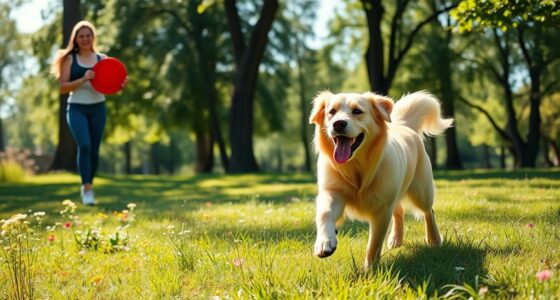
To prevent heatstroke and keep your dog cool in hot weather, always provide fresh water and guarantee they can access shade outdoors or indoors. Avoid strenuous activity during the hottest parts of the day and opt for early morning or late evening walks. Watch for signs of overheating like heavy panting or lethargy, and take immediate steps if symptoms appear. Continuing will help you learn more effective tips to protect your furry friend from heat-related dangers.

Get pet supplies delivered free — and shop member deals
- Fast, free delivery on millions of items
- Access to Prime Big Deal Days deals on October 6–7
- Prime Video, Amazon Music and more included
Key Takeaways
- Provide constant access to fresh, cool water and encourage frequent small sips to prevent dehydration.
- Limit outdoor activities during peak heat hours and seek shade during walks or playtime.
- Use portable shade structures and indoor fans or air conditioning to keep environments cool.
- Monitor for signs of overheating, such as heavy panting or lethargy, and cool your dog immediately if symptoms appear.
- Avoid leaving dogs in parked cars and be cautious with breeds susceptible to heatstroke, especially brachycephalic types.
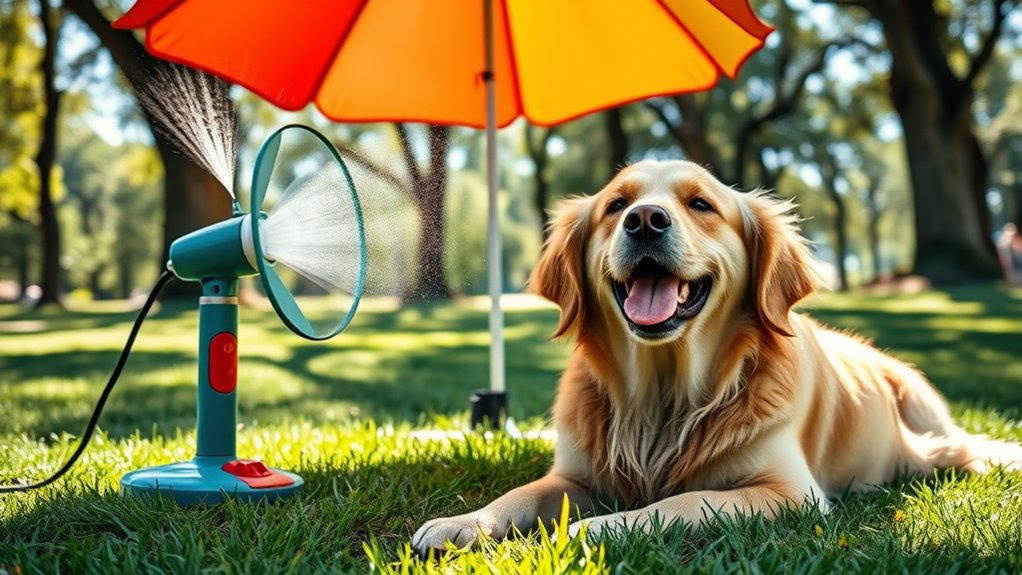
When the weather turns hot, taking steps to prevent heatstroke becomes essential to protect yourself from serious health risks. The same principle applies to your dog, who can struggle to regulate their body temperature just as easily as you do. To keep your furry friend safe, you need to focus on effective hydration tips and shade strategies. Proper hydration is key, so always ensure your dog has access to fresh, clean water. Consider carrying a portable bowl or bottle designed for pets, especially during walks or outdoor activities. Encourage frequent drinks, particularly if your dog is active or sweating through their paws. Avoid letting them drink large amounts at once; instead, offer small, regular sips to prevent stomach upset and dehydration. During the hottest parts of the day, limit outdoor activity and make sure they rest in a shaded area. Shade strategies are vital in helping your dog stay cool. If you’re outdoors, seek out natural shade under trees or provide a portable shade tent. Indoors, ensure your pet has access to a cool, well-ventilated space. You can also use fans or air conditioning to maintain a comfortable temperature. Never leave your dog in a parked car, as temperatures can quickly spike to dangerous levels, even with windows cracked. Remember, dogs don’t sweat like humans; instead, they pant to cool down, which can be insufficient in extreme heat. Overheating can happen rapidly, so watch for signs like heavy panting, drooling, lethargy, or weakness. If you notice any of these signs, move your dog to a cooler area immediately and provide water. Wetting their fur or paws with cool water can also help lower their body temperature. Be cautious about walking your dog during peak heat hours—early mornings or late evenings are safer options. Keep in mind that some breeds are more susceptible to heatstroke, especially brachycephalic dogs with flat faces, older dogs, or those with thick coats. Regularly check their temperature if you suspect overheating, and know that a rectal temperature above 103°F indicates a potential emergency. Additionally, advances in AI-powered monitoring tools can help track your dog’s health and temperature remotely, providing extra safety during hot weather. Prevention is always better than treatment, so plan ahead with hydration tips and shade strategies, and stay vigilant during hot weather. By taking these proactive steps, you can ensure your dog remains comfortable, safe, and healthy even when the temperatures soar.
As an affiliate, we earn on qualifying purchases.
Frequently Asked Questions
How Can I Tell if My Dog Is Beginning to Overheat?
You can tell if your dog is beginning to overheat by watching for signs to watch for, like excessive panting, drooling, or rapid heartbeat. Sudden behavior changes, such as weakness, disorientation, or vomiting, also indicate overheating. If you notice these signs, move your dog to a cooler area, offer water, and contact your vet immediately. Acting quickly helps prevent heatstroke and keeps your furry friend safe.
Are Certain Dog Breeds More Susceptible to Heatstroke?
Yes, some dog breeds are more susceptible to heatstroke due to breed susceptibility and coat considerations. Brachycephalic breeds like Bulldogs and Pugs, with their short noses, struggle to breathe efficiently and are prone to overheating. Breeds with thick, double coats, such as Siberian Huskies or Malamutes, also risk overheating more easily. You should monitor these breeds carefully during hot weather, providing extra shade, water, and avoiding strenuous activity.
What Are the Best Cooling Accessories for Dogs?
You should consider cooling mats and portable fans to keep your dog comfortable. Studies show that dogs can overheat quickly in high temperatures, so effective accessories make a big difference. Cooling mats provide a chill surface for your pup to relax on, while portable fans help circulate cool air, especially outdoors. Using these tools guarantees your dog stays safe and comfortable during hot days.
How Often Should I Give My Dog Water During Hot Days?
You should provide your dog with fresh water at least every 2-3 hours during hot days to maintain proper hydration. Stick to a consistent hydration schedule, ensuring water bowls are cleaned regularly to prevent bacteria buildup. Keep an eye on your dog for signs of dehydration, like excessive panting or lethargy. Regular access to clean water helps keep your dog cool, comfortable, and safe in the heat.
Can I Leave My Dog in a Parked Car Safely?
You shouldn’t leave your dog in a parked car, even for a few minutes. Inside, temperatures can rise by up to 20°F in just 10 minutes, risking heatstroke. Car safety is vital; never underestimate how quickly it becomes dangerous. If an accident happens, pet insurance can help cover costs. Always find a safe, shaded place for your dog or bring them indoors—your pet’s health depends on it.
Conclusion
To keep your dog safe, always watch for signs of heatstroke, especially during heatwaves when dogs are 2.6 times more likely to suffer from heat-related illnesses. Make certain they stay hydrated, avoid midday walks, and provide plenty of shade. Remember, your quick actions can save your furry friend’s life. By staying vigilant and proactive, you can prevent heatstroke and keep your dog cool, comfortable, and safe all summer long.
Fall Picks
fall essentials
As an affiliate, we earn on qualifying purchases.