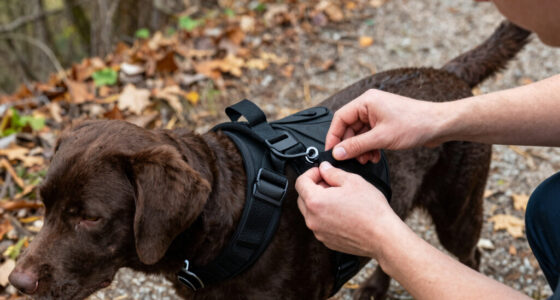

To adapt your pet’s grooming routine for summer and winter, focus on managing coat length to keep your pet comfortable. In summer, trim or thinning the coat to promote airflow and cooling, while in winter, remove loose fur and prevent matting to reduce skin irritation and trap less dirt. Use gentle grooming tools suited for each season and check skin regularly. If you keep these tips in mind, you’ll discover more ways to keep your pet healthy and happy year-round.
Key Takeaways
- Adjust grooming frequency based on season to remove excess fur and prevent matting or overheating.
- Use season-specific grooming tools, like slicker brushes for winter and de-shedding tools for summer.
- Trim coats appropriately to maintain comfort and promote airflow during hot months.
- Focus on thorough cleaning to remove seasonal allergens and reduce skin irritation.
- Regularly inspect skin and coat for signs of irritation or health issues tailored to seasonal changes.

As the seasons change, so should your grooming routine to stay fresh and comfortable year-round. During winter, your focus might be on maintaining warmth and preventing skin dryness, while summer calls for keeping your pet cool and free of matting. One vital aspect of seasonal grooming is pet allergy management. Allergens like pollen, dust, and mold tend to spike during certain times of the year, making your pet more prone to allergic reactions. Regular grooming helps remove these irritants from their coat and skin, reducing itchiness and discomfort. To effectively combat pet allergies, you must pay special attention to grooming tool selection. Choosing the right tools, such as gentle brushes and de-shedding gloves, ensures thorough cleaning without irritating sensitive skin. During winter, a slicker brush or a rubber grooming mitt can help remove loose fur and prevent matting, which traps dirt and allergens close to the skin. In summer, a wide-tooth comb or a deshedding tool can keep the coat manageable and promote airflow, helping your pet stay cooler.
Your choice of grooming tools also impacts pet allergy management. Sharp, aggressive tools might seem efficient, but they can cause micro-cuts or irritation, making allergic reactions worse. Instead, opt for tools designed for sensitive skin, and be gentle when grooming, especially around areas prone to irritation like the face, ears, and paws. Regular grooming sessions not only keep allergies in check but also give you a chance to inspect your pet for signs of skin issues or parasites that could worsen allergy symptoms. During colder months, grooming helps remove dead skin and buildup, which can trap allergens and cause discomfort. In the heat of summer, reducing excess fur with appropriate tools helps prevent overheating and minimizes the amount of allergens that cling to the coat.

Docrok Pet Grooming Combo – Blue Deshedding Brush with Metal Comb for Detangling and Dematting Long, Matted Fur on Cats and Dogs
- Effortless Dematting and Shedding: Reduces shedding and detangles easily
- Safe, Gentle Design: Soft edges prevent hurting pets
- 2-in-1 Rake for Double Coats: Wide side for dematting, dense side for deshedding
As an affiliate, we earn on qualifying purchases.
As an affiliate, we earn on qualifying purchases.
Frequently Asked Questions
How Often Should I Change My Pet’s Grooming Products Seasonally?
You should change your pet’s grooming products seasonally to guarantee ideal grooming and comfort. As grooming product longevity varies, switching to summer-scented shampoos in warmer months helps with seasonal scent changes, keeping your pet fresh and clean. In winter, opt for moisturizing formulas to prevent dryness. Regularly updating products ensures your pet’s skin stays healthy and responds well to climate shifts, making grooming more effective and enjoyable year-round.
Are There Any Specific Grooming Tools Recommended for Extreme Weather Conditions?
For extreme weather, use weather-resistant brushes to handle wet or muddy conditions, preventing rust and damage. Insulated grooming gear keeps you comfortable during cold winter grooming sessions. These tools are essential because they withstand harsh elements and keep your pet comfortable. By choosing the right equipment, you guarantee effective grooming regardless of weather, making the process smoother for both you and your furry friend.
How Can I Prevent Skin Issues Caused by Seasonal Grooming Changes?
To prevent skin issues caused by seasonal grooming changes, focus on allergy prevention and proper coat maintenance. You should regularly bathe your pet with gentle, hypoallergenic shampoos to reduce allergens and keep the coat clean. Additionally, brush frequently to remove loose fur and debris, preventing matting and irritation. Adjust grooming routines according to weather, and watch for signs of irritation or dryness, consulting your vet if needed.
What Are Signs My Pet Is Uncomfortable With Seasonal Grooming Adjustments?
If your pet exhibits signs of grooming discomfort, such as excessive scratching, biting at their coat, or hiding, they might be uncomfortable with the new grooming routine. Watch for changes in pet behavior like agitation, reluctance to be handled, or withdrawal. These signs indicate your pet is feeling uneasy, so it’s important to adjust grooming methods, use gentle techniques, and consult your vet if discomfort persists.
Should I Adjust My Pet’s Bathing Frequency During Different Seasons?
Yes, you should adjust your pet’s bathing frequency based on the season. In summer, bathe your pet more often to keep them cool and comfortable, but make sure you dry them thoroughly to prevent skin issues. In winter, reduce baths to avoid drying out their skin. Always prioritize pet hydration and consider outdoor grooming conditions—avoid bathing when it’s too cold outside to prevent discomfort.
Conclusion
So, by switching up your grooming routine for summer and winter, you’re basically transforming into a superhero with unstoppable confidence! Whether you’re battling scorching heat or freezing cold, your skin and hair will thank you with superhero-like resilience. Forget mere survival—you’re thriving, dazzling, and conquering every season like a grooming legend. Embrace these routines, and watch your confidence skyrocket to legendary heights. Summer or winter, you’re unstoppable—because great grooming makes you feel invincible!