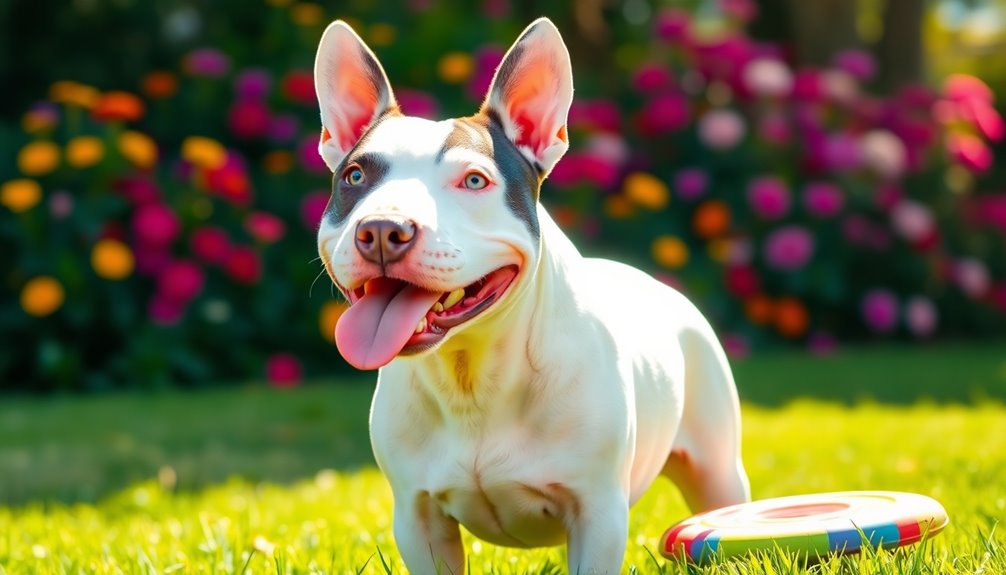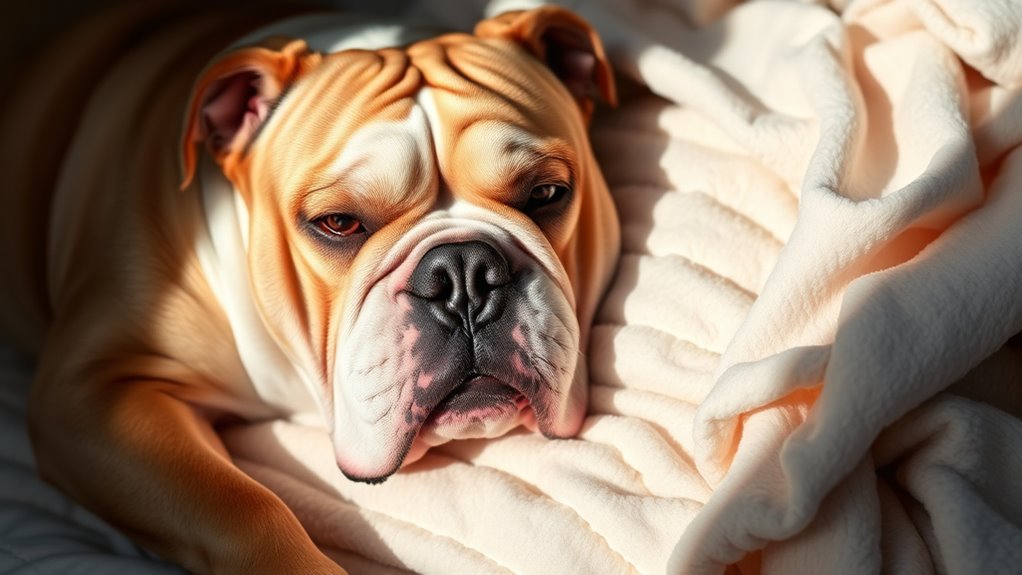

To keep your bulldog comfortable, focus on managing their breathing and skin care. Avoid heat and humidity, and keep walks gentle and in cool environments to prevent respiratory issues like tracheal collapse. Regularly clean and thoroughly dry their skin folds to prevent dermatitis, using vet-approved products. Maintaining a healthy weight and visiting the vet regularly can help catch problems early. Keep these tips in mind—there’s more you can do to guarantee your bulldog’s health and happiness.
Key Takeaways
- Regular vet check-ups help detect and manage breathing problems like tracheal collapse early.
- Keep your bulldog in a cool, calm environment, avoiding heat and humidity to ease breathing difficulties.
- Maintain a healthy weight to reduce pressure on airways and minimize skin fold dermatitis risk.
- Clean wrinkles daily with veterinarian-approved wipes, then dry thoroughly to prevent bacterial and fungal infections.
- Limit vigorous exercise and monitor activity levels to prevent overexertion and respiratory stress.

Bulldog Health
Have you ever wondered what it takes to keep your bulldog healthy? These adorable dogs come with unique needs, especially when it comes to breathing and skin care. Understanding common health issues like tracheal collapse and skin fold dermatitis can help you prevent discomfort and guarantee your bulldog lives a happy, active life.
Tracheal collapse is a condition that affects many bulldogs because of their brachycephalic (short-nosed) anatomy. You might notice your dog wheezing, coughing, or making a honking sound, especially during exercise or excitement. It occurs when the trachea, or windpipe, weakens and begins to collapse, obstructing airflow. To keep this condition in check, you should avoid exposing your bulldog to excessive heat, humidity, or strenuous activity that can strain their respiratory system. Regular vet check-ups are essential, and your veterinarian might suggest weight management, since excess weight puts additional pressure on the airway. Keeping your bulldog in a cool, calm environment can make breathing easier and reduce the risk of episodes. Also, be cautious with exercise routines, opting for gentle walks instead of vigorous play, especially in hot weather. If your veterinarian recommends medication or other treatments, follow their advice diligently to manage the condition properly. Additionally, being aware of symptoms of breathing issues such as wheezing or coughing can help prompt timely intervention.
Skin care is equally important, especially because bulldogs are prone to skin fold dermatitis. Their characteristic wrinkles and folds trap moisture, dirt, and bacteria, creating an ideal environment for infections. You should check their skin daily, paying close attention to the folds around their face, neck, and body. Regularly cleaning these areas with a gentle, veterinarian-approved wipe or damp cloth can prevent buildup of debris and reduce irritation. It’s essential to dry the folds thoroughly afterward, as moisture promotes bacterial and fungal growth. Additionally, maintaining a healthy weight helps reduce the skin folds’ stress and minimizes the risk of dermatitis. If you notice redness, foul odor, or hair loss in the folds, it’s a sign you need to see your vet promptly. They might prescribe medicated wipes, topical creams, or antibiotics if an infection develops. Proper grooming, including trimming excess hair around the folds if necessary, can also improve airflow and keep the skin healthier.
Caring for your bulldog’s breathing and skin might seem overwhelming at first, but with consistent attention and preventive measures, you can reduce discomfort and health risks. Regular veterinary visits, proactive cleaning, and monitoring your dog’s activity level are key to maintaining their well-being. Remember, your vigilant care makes all the difference in helping your bulldog enjoy a comfortable, joyful life.
Top picks for "bulldog health address"
Open Amazon search results for this keyword.
As an affiliate, we earn on qualifying purchases.
Frequently Asked Questions
How Often Should I Clean My Bulldog’s Skin Folds?
You should clean your bulldog’s skin folds at least once a week as part of your grooming routine. Regular skin fold cleaning helps prevent moisture buildup, which can lead to infections and irritation. Use a gentle, damp cloth or a specialized pet wipe to remove dirt and debris. Be thorough but gentle, ensuring you dry the folds completely afterward to keep your bulldog comfortable and healthy.
Are There Specific Exercises to Improve Breathing?
Think of your bulldog’s breathing like a muscle that can be strengthened. You can help improve it through gentle breathing exercises and respiratory training. Simple activities like encouraging slow, deep breaths or guiding your dog through controlled inhaling and exhaling can make a difference. Consistent, gentle practice can help open up their airways, making breathing easier and more comfortable. Always consult a vet before starting any new exercises.
What Signs Indicate a Skin Infection in Bulldogs?
If your bulldog shows signs of a skin infection, look for allergy symptoms like excessive scratching, redness, swelling, or skin irritation. You might notice hair loss, foul odor, or pustules on their skin. Keep an eye out for persistent itching or hot spots, as these indicate infection. Early detection helps prevent worsening issues, so consult your vet promptly if these signs appear to guarantee proper treatment.
Can Diet Affect My Bulldog’s Respiratory Health?
Yes, your bulldog’s diet can impact its respiratory health. Even if you think diet doesn’t matter, allergies caused by certain foods can worsen breathing issues. By avoiding common allergens and incorporating respiratory supplements, you can reduce inflammation and improve airflow. Proper nutrition supports overall health, making your bulldog less prone to breathing problems. So, paying attention to diet isn’t just about skin — it’s essential for better respiratory health too.
When Should I Consider Surgery for Breathing Issues?
You should consider surgery for your bulldog’s breathing issues if conservative treatments don’t help or if they experience severe symptoms. Surgical options like a breathing surgery, such as a stenotic nares correction or a palate amputation, can markedly improve airflow. Consult your veterinarian promptly if your bulldog shows persistent difficulty breathing, noisy respiration, or fatigue, so they can evaluate whether surgical intervention is necessary to ensure your dog’s health and comfort.
Conclusion
By now, you understand the importance of attentive care for your bulldog’s breathing and skin. Regular check-ups, proper hygiene, and vigilance will keep your furry friend happy and healthy. Remember, even in this modern age, the wise old adage “an ounce of prevention is worth a pound of cure” still holds true. With patience and dedication, you’ll guarantee your bulldog enjoys a comfortable, vibrant life—truly a confirmation of your devoted guardianship.