
To live well with a German Shepherd, focus on consistent training using positive reinforcement, and teach commands like sit, stay, and come early. Socialize your dog with new people, environments, and other animals gradually and positively. Keep their mind engaged with mental activities like puzzle toys and obedience exercises. Establish clear routines and boundaries to build trust and confidence. Stay patient and committed—if you want to explore more about raising a versatile working dog, there’s plenty more to discover.
Key Takeaways
- Consistent, positive reinforcement training from an early age fosters obedience and trust in German Shepherds.
- Socialize gradually with diverse people, animals, and environments to prevent fearfulness or aggression.
- Provide mental stimulation through puzzle toys, scent games, and obedience exercises to match their high intelligence.
- Maintain structured routines and clear boundaries to promote discipline and a harmonious living environment.
- Ongoing training and socialization support versatility, whether for service, protection, or family companionship.

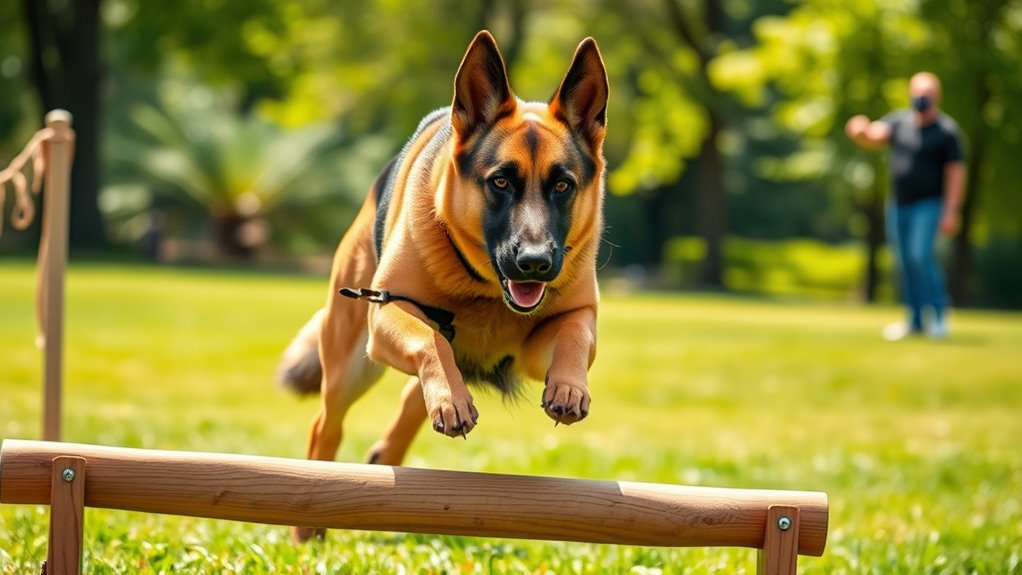
German Shepherds are renowned for their intelligence, agility, and versatility, making them ideal working dogs and loyal companions. When you bring one into your home, it’s essential to start with a solid foundation in obedience training. This breed responds well to consistent, positive reinforcement techniques that encourage good behavior. You want your dog to understand commands like sit, stay, come, and heel early on, as these are *crucial* for safety and effective communication. Regular training sessions should be short, engaging, and rewarding to keep your German Shepherd motivated and *eager* to learn. Remember, patience is key; these dogs thrive on clear boundaries and structured routines.
In addition to obedience training, socialization strategies play a *vital* role in shaping a well-behaved, confident dog. From a young age, expose your German Shepherd to a variety of people, environments, and other animals. This helps prevent issues like fearfulness or aggression later in life. Take your dog to different parks, introduce them to friendly neighbors, and arrange playdates with other well-behaved dogs. Consistent socialization helps your German Shepherd develop good manners, reduces anxiety, and fosters a balanced temperament. It’s important to do this gradually, ensuring each new experience is positive and not overwhelming. Use praise and treats to reinforce calm and friendly behavior during these encounters. Additionally, understanding the benefits of curiosity can motivate you to explore new training techniques and keep your dog mentally stimulated.
Training your German Shepherd isn’t just about commands; it’s also about establishing a bond built on trust and respect. Be firm but gentle, consistently applying the same rules and expectations. This breed is highly intelligent, so they quickly pick up on patterns and routines. That intelligence means they require mental stimulation as part of their training. Incorporate puzzle toys, scent games, and obedience exercises to keep their mind engaged. When your dog understands what’s expected and feels confident through proper socialization, they become a reliable and well-adjusted companion.
Building trust through consistent, gentle training and mental stimulation fosters a confident, well-adjusted German Shepherd.
Living with a German Shepherd means committing to ongoing training and socialization. These dogs excel in various roles, from service work to protection, but they need structure to thrive in a home environment. By focusing on obedience training and socialization strategies, you set the stage for a harmonious relationship. Your effort will pay off in a loyal, obedient, and confident dog who is happy to be part of your life. Remember, the key to success lies in consistency, patience, and positive reinforcement, ensuring your German Shepherd reaches his full potential.

Educator Dog Training Finger Clicker – Audible Positive Reinforcement Trainer with Adjustable Sound & Velcro Finger Strap – Portable Pet Obedience Training Tool, Red
POSITIVE REINFORCEMENT TRAINING – Educator premium audible finger clicker is a precise training tool that helps dogs learn…
As an affiliate, we earn on qualifying purchases.
As an affiliate, we earn on qualifying purchases.
Frequently Asked Questions
What Is the Average Lifespan of a German Shepherd?
The average lifespan of a German Shepherd is around 9 to 13 years. Your dog’s lifespan factors include genetics, diet, exercise, and regular veterinary care. To help your German Shepherd live a longer, healthier life, guarantee you provide a balanced diet, consistent exercise, and routine checkups. Proper training and socialization also contribute to their well-being, so stay attentive to their needs to maximize their lifespan and quality of life.
How Much Exercise Does a German Shepherd Need Daily?
You should provide your German Shepherd with about 1 to 2 hours of exercise daily. Their exercise needs are high, so include activities like walks, playtime, and mental stimulation to keep them happy and healthy. Incorporate these into your daily routine to prevent boredom and destructive behaviors. Remember, a well-exercised German Shepherd is more balanced, obedient, and content, making them a great companion and working partner.
Are German Shepherds Good With Children and Other Pets?
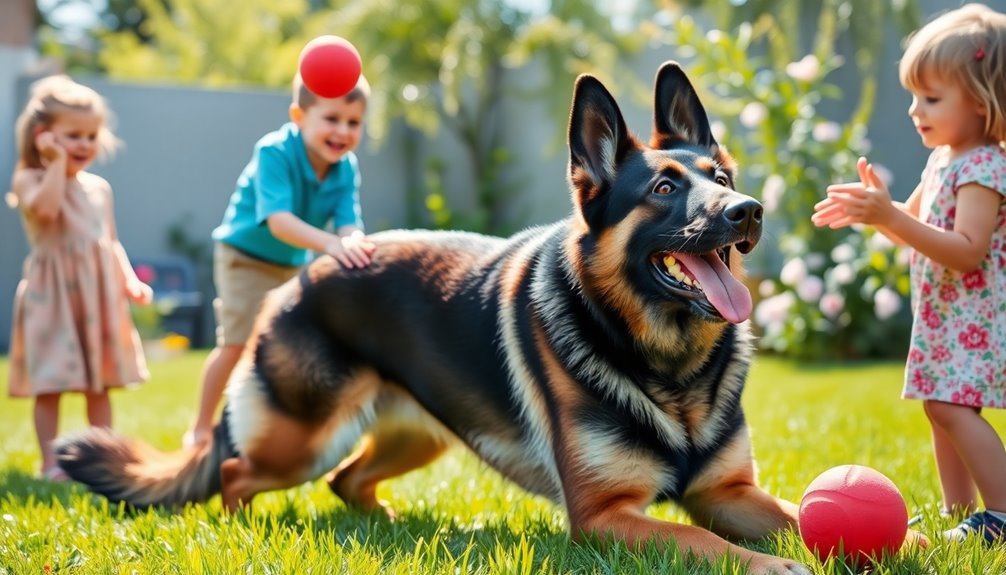
German Shepherds are like protective guardians, making them great with children and other pets if properly socialized. You should prioritize child safety and pet compatibility through consistent training and positive reinforcement. When introduced gently, they often bond well and become loyal friends. Keep an eye on interactions, especially with smaller pets, to make certain everyone stays safe and happy. With patience, your German Shepherd can become a loving, well-behaved family member.
What Are Common Health Issues in German Shepherds?
German Shepherds are prone to health issues like genetic disorders, such as hip and elbow dysplasia, and degenerative myelopathy. They can also suffer from nutritional deficiencies if not properly fed. You should schedule regular vet checkups, maintain a balanced diet, and keep an eye out for signs of joint pain or mobility problems. Proper care helps catch issues early and keeps your dog healthy and happy for years to come.
How Can I Tell if My German Shepherd Is Stressed or Anxious?
Think of your German Shepherd like a book with hidden chapters; their body language reveals their true feelings. If they pace, lip lick, or tuck their tail, they’re signaling stress or anxiety. Watch for behavioral cues like excessive barking, yawning, or avoiding eye contact. Recognizing these signs early helps you address their needs, making your dog feel safe and secure. Stay attentive, and you’ll deepen your bond and improve their well-being.

DR CATCH Dog Puzzle,Dogs Food Toys for IQ Training & Mental Enrichment,Dog Treat Puzzle(Blue)
【Size】: L9.44" * W9.44"* H1.14" suitable for cats, puppies and small dogs.
As an affiliate, we earn on qualifying purchases.
As an affiliate, we earn on qualifying purchases.
Conclusion
Living with a German Shepherd is like guiding a loyal guardian through life’s journey. They symbolize strength, intelligence, and unwavering devotion. By training and caring for them, you nurture a bond that’s as steady as a steadfast watchtower, always ready to protect and serve. Embrace this partnership, and you’ll find your life enriched by a faithful companion who truly embodies versatility and love. Together, you create a bond that’s as enduring as a mountain’s peak.

Jugbow Dog Shock Collar – 4500FT Dog Training Collar with Remote, IPX8 Waterproof Electric Dog Collar with 4 Training Modes, Security Lock, Rechargeable eCollar for 10-120lbs Small Medium Large Dogs
[4 Effective Training Mode – Recall & Correct Unwanted Dog Behavior] Featuring advanced Safe-Tech with 4 modes: Beep(1-8),…
As an affiliate, we earn on qualifying purchases.
As an affiliate, we earn on qualifying purchases.

Healthy Breeds German Shepherd Jerky Bites Beef Recipe Dog Treats 5 oz
USDA Certified Organic, Non-GMO Verified.
As an affiliate, we earn on qualifying purchases.
As an affiliate, we earn on qualifying purchases.