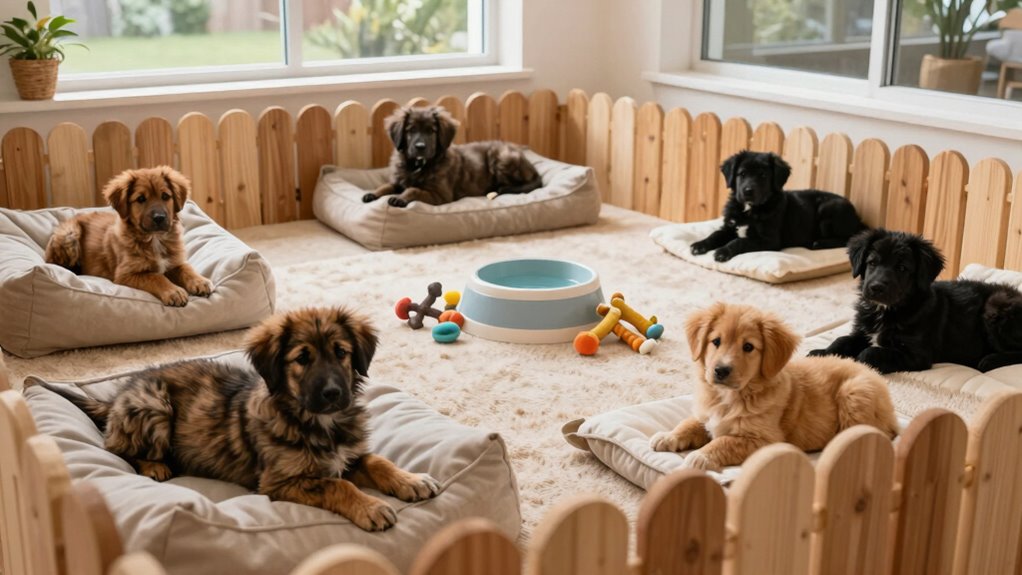

To set up your large-breed puppy’s home, choose a sturdy bed to support their growing joints and keep the space free from hazards like electrical cords and small objects. Establish a secure, designated area for resting and stick to consistent routines for feeding and socialization. Use barriers to limit access to stairs and dangerous areas, and supervise playtime closely. Take these steps now, and you’ll discover more ways to create a safe, comfortable environment for your puppy’s healthy growth.

Get pet supplies delivered free with Prime
- Fast, free delivery on millions of items
- Prime Video, Amazon Music and more included
- Member-only deals all year
Key Takeaways
- Provide a larger, supportive bed to accommodate growing joints and ensure comfort.
- Use sturdy barriers to prevent access to stairs and unsafe areas from day one.
- Ensure a spacious, obstacle-free environment to prevent injuries during rapid growth.
- Establish a consistent feeding schedule with high-quality, portioned meals to manage weight gain.
- Introduce early socialization and basic training to build confidence and promote good behavior.

When bringing a large-breed puppy home, it’s essential to set up their environment differently from the start to support healthy growth and prevent future issues. Large breeds are more prone to joint problems and developmental concerns, so establishing a proper setup early on is vital. One of the first steps is to create a designated, comfortable space where your puppy can rest and feel secure. Use a sturdy bed that supports their growing joints, and keep the area free from obstacles or hazards that could cause injury. Since large puppies tend to be curious and energetic, securing electrical cords and small objects is crucial to prevent choking or accidents.
A consistent feeding schedule is key to managing their growth and preventing obesity, which can strain their developing joints. Feed your puppy high-quality, appropriately portioned meals at regular intervals—usually three to four times a day during their first few months. Avoid free-feeding or inconsistent routines, as these can lead to overfeeding or irregular digestion. Consult your veterinarian for specific portion sizes and dietary recommendations, especially since large breeds have unique nutritional needs. Proper feeding schedules also help set expectations and reduce behavioral issues related to hunger or boredom.
Socialization is another critical aspect of setting up a large-breed puppy’s environment. Early socialization tips should include exposing your puppy to different people, animals, and environments in a controlled, positive manner. Introduce them gradually to new sights, sounds, and experiences to build confidence and reduce fearfulness later in life. Enroll in puppy classes or arrange playdates with vaccinated dogs to promote healthy social interactions. Remember, socialization isn’t just about meeting other dogs; it also involves training your puppy to walk calmly on a leash, accept grooming routines, and respond to basic commands. These skills will help manage their size and strength as they grow.
Creating a safe, structured environment from day one also involves setting boundaries. Use baby gates or barriers to limit access to stairs or certain rooms until your puppy is fully vaccinated and ready to explore. Consistency in routines, including feeding and socialization, helps your puppy understand what to expect, reducing anxiety and promoting good behavior. Additionally, understanding their growth patterns and developmental needs can help you tailor their environment and care effectively. Familiarity with puppy development stages can guide you in providing appropriate activities and training at each phase. Recognizing the importance of proper supervision during playtime further ensures their safety and helps prevent undesirable behaviors from developing. By establishing these foundational elements early—proper feeding schedules, safe spaces, and positive socialization—you set your large-breed puppy up for a healthy, happy life. Their growth can then be guided smoothly, preventing many common issues associated with large breeds and fostering a strong, trusting bond between you.
large breed puppy supportive bed
As an affiliate, we earn on qualifying purchases.
As an affiliate, we earn on qualifying purchases.
Frequently Asked Questions
How Often Should Large-Breed Puppies Be Fed Initially?
You should feed your large-breed puppy three to four times a day initially. Follow a consistent feeding schedule, which helps with digestion and growth. Refer to the nutritional guidelines on the puppy food packaging and consult your vet for personalized advice. As they grow, you can gradually reduce feedings to twice daily. Proper feeding schedules support healthy development and prevent overfeeding or nutritional deficiencies.
What Type of Bedding Is Best for Large Puppies?
Think of your puppy’s bedding as a cozy nest that supports their growth. Opt for thick, supportive materials like orthopedic foam or memory foam bedding to cushion their joints. Remember to puppy-proof this space with tips like removing hazards and keeping it clean. As they grow, consider nutritional supplements to support joint health. Your goal is a safe haven that nurtures your puppy’s comfort and development from the very first day.
When Should Crate Training Begin for Large Breeds?
You should start crate training your large breed puppy as early as 8 weeks old. Crate training benefits include providing a safe space and aiding housebreaking, while also supporting puppy socialization by gradually introducing them to new environments. Consistent, positive reinforcement helps your puppy feel comfortable in the crate, making it a natural part of their routine. Early training sets the foundation for well-behaved, confident adult dogs.
How Do I Prevent Joint Issues in Large Puppies?
A stitch in time saves nine, so to prevent joint issues in your large puppy, you should manage their exercise and diet carefully. Make sure they get appropriate exercise restrictions and avoid high-impact activities during growth spurts. Incorporate dietary supplements recommended by your vet to support joint health. Regular vet check-ups and a balanced diet help strengthen joints early, setting a solid foundation for your puppy’s future mobility.
What Are the Signs of Growth Plate Problems?
Growth plate injuries often show signs of lameness, which you might notice as limping or reluctance to move. Other signs include swelling near the joints, pain when touched, or difficulty bearing weight. If you observe these symptoms, it’s vital to consult your vet promptly. Early detection of growth plate problems can prevent long-term issues and guarantee your puppy grows healthily and comfortably.
Conclusion
From the moment you bring your puppy home, every detail shapes their future. Imagine a cozy corner just for them, where their tiny paws can rest after a day of discovery. As you set up their space, you realize that every cushion, gate, and toy fits perfectly—like pieces of a puzzle coming together. It’s no coincidence; your thoughtful setup builds a safe haven, guiding your large-breed puppy into a confident, happy life from day one.
Fall Picks
fall essentials
As an affiliate, we earn on qualifying purchases.