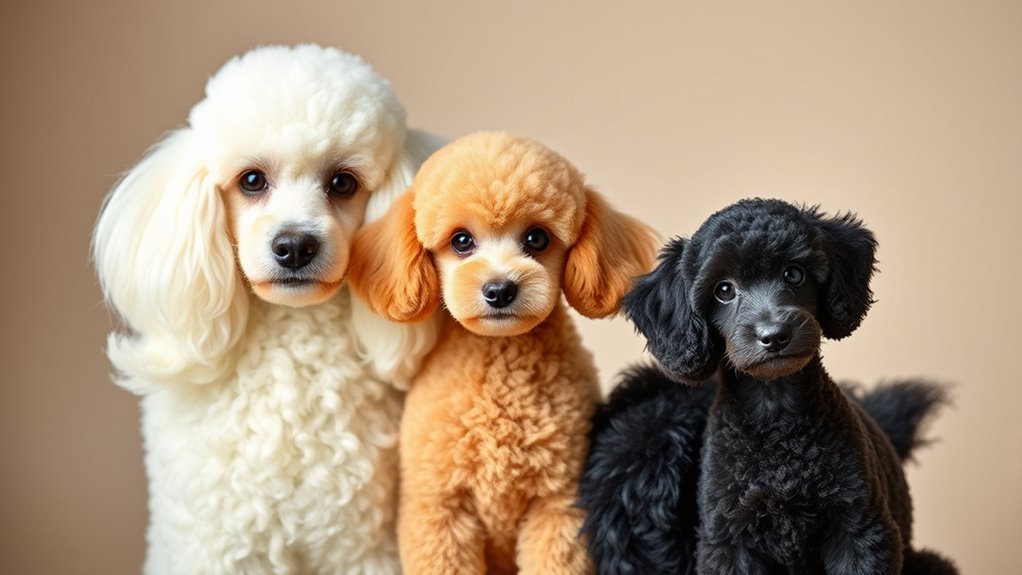

Poodles come in three sizes: Standard, Miniature, and Toy, each with unique origins and roles. Standard Poodles are the largest, originally bred for waterfowl hunting and known for their intelligence and agility. Miniatures, smaller yet versatile, were made for companionship and dog sports. Toy Poodles are the tiniest, bred as lap dogs for royalty, focusing on affection and obedience. These differences shape their looks and personalities, and if you keep exploring, you’ll discover even more about each variety’s special traits.
Key Takeaways
- Standard Poodles are over 15 inches tall, larger, and historically bred for waterfowl hunting and versatility.
- Miniature Poodles measure between 11 to 15 inches, originally bred as aristocratic companions and family pets.
- Toy Poodles are under 10 inches tall, developed as lap dogs for royalty, emphasizing companionship and agility.
- All varieties share traits like high intelligence, trainability, and adaptability, but differ mainly in size and historical roles.
- Size distinctions influence their suitability for different lifestyles, from active work and sports to indoor companionship.

Have you ever wondered about the different types of poodles? Understanding the distinctions between the standard, miniature, and toy varieties can help you decide which is the best fit for your lifestyle. To truly appreciate these differences, it’s helpful to look into their training history and breed history, which reveal how each variety has been shaped over time. Poodles originated in Germany and France, initially bred as water retrievers, valued for their intelligence and agility. Their training history is rich, as they’ve long been used in various roles—from hunting and retrieving to performing in circuses. This breed history highlights their adaptability and keen learning ability, traits that are consistent across all poodle sizes but expressed differently depending on the variety.
The standard poodle is the largest of the bunch, often standing over 15 inches at the shoulder. It’s believed to have been developed primarily for waterfowl hunting, where their exceptional swimming skills and trainability made them ideal partners for hunters. Their training history reflects this, as they excel in obedience and advanced tricks, thanks to their high intelligence. You’ll find that the standard poodle’s breed history is marked by versatility—able to switch from working dog to cherished family pet with ease. They’re often used in competitive obedience and agility events, showcasing their ability to learn complex commands quickly. This variety’s size and strength come from generations of selective breeding aimed at enhancing their working capabilities, yet they also make loyal, affectionate companions. Additionally, their training adaptability has contributed significantly to their success in various roles, from working dogs to family pets.
Miniature poodles, smaller than the standards, typically stand between 11 and 15 inches. Their breed history is rooted in the desire for a more manageable size while retaining the intelligence and agility of the larger poodle. These dogs were originally bred as companion animals for European aristocrats, and their training history includes being taught everything from basic obedience to performing in shows. Because of their smaller stature, miniature poodles are easier to manage and transport, making them popular among city dwellers. Their training history shows that they respond quickly to commands, which is why they’re often seen in dog sports and as therapy dogs. Despite their size, their breed history emphasizes their adaptability, intelligence, and friendly nature, making them perfect for various households.
Toy poodles are the smallest, usually under 10 inches tall, and were primarily bred as lap dogs for royalty and aristocrats. Their breed history is closely tied to their role as companions rather than working dogs, though their training history proves they’re just as intelligent as their larger cousins. Toy poodles excel in obedience training and are known for their sharp minds and quick learning. Their small size doesn’t diminish their agility or intelligence; instead, it makes them ideal for indoor living and participating in dog shows. Because they’ve been selectively bred for companionship, they tend to be especially affectionate and eager to please, which makes training a rewarding experience. Overall, each poodle variety carries a unique breed history, shaping their size, temperament, and suitability for different lifestyles, all rooted in their remarkable training history and versatile origins.

Professional 4 in 1 Dog & Cat Grooming Scissors Kit with Safety Round Tips,Sharp & Durable,Dog Shears for Grooming – Includes Straight, Curved, Thinning Scissors and Comb – Premium Pet Supplies
【Professional Dog Grooming Scissors】This dog grooming kit includes 1* thinning shear, 1*curved scissor, 1* straight scissor and 1*…
As an affiliate, we earn on qualifying purchases.
As an affiliate, we earn on qualifying purchases.
Frequently Asked Questions
Are All Poodle Varieties Hypoallergenic?
Yes, all poodle varieties are hypoallergenic because of their allergenic coats. They shed very little, which reduces the amount of dander in your home. This makes them a great choice if you’re sensitive to pet allergies. Remember, individual reactions vary, but generally, poodles’ minimal shedding levels help keep allergy symptoms at bay. You can enjoy the companionship of a poodle without worrying as much about allergy flare-ups.
How Do Grooming Needs Differ Among Poodle Types?
Think of grooming your poodle like caring for a delicate sculpture. The coats and trimming needs vary by size, so you’ll use different grooming tools and techniques. Standard poodles require more frequent and thorough grooming, while Miniatures and Toys need gentler, more precise trims. Regular brushing helps prevent matting, and professional grooming keeps their coats looking pristine. Adjust your routine to match each poodle’s size, ensuring they stay comfortable and stylish.
Which Poodle Variety Is Best for Families?
You should choose a Standard Poodle for your family if you want a highly trainable, intelligent dog that thrives on poodle training and enjoys plenty of poodle exercise needs. They’re protective, friendly, and great with kids. Miniature and Toy Poodles are also good options but may require less exercise. Consider your space and activity level to find the best fit, ensuring your family and new pup stay happy and active together.
Do Poodle Sizes Affect Lifespan or Health?
You might think smaller sizes mean longer lives, but surprisingly, size can influence longevity and health concerns. Larger poodles often face joint issues and heart problems, while smaller ones may encounter dental or patellar concerns. Ironically, your tiny toy might outlive your hefty standard, but every size has its quirks. So, when choosing, consider how size impacts health and lifespan, not just appearance.
Are Poodle Varieties Suitable for Apartment Living?
Yes, poodle varieties are suitable for apartment living. They adapt well because of their size and moderate exercise needs. You should manage apartment noise, especially during play or barking, and guarantee they have enough space to move comfortably. Standard poodles might need more room and mental stimulation, while Miniatures and Toys thrive in smaller spaces. Regular walks and playtime keep them happy and healthy in apartment settings.

Tiniest Dog Shock Collar, Lightest Dog Training Collar with Remote for Small Dogs 5-15lbs & Medium Large Dogs/Puppies, Waterproof, Rechargeable, 1300ft Range (Orange&Ultra Tiny)
🌟【Compact & Lightweight Design】: Boasting the smallest and lightest electric dog collar on the market – dimensions at…
As an affiliate, we earn on qualifying purchases.
As an affiliate, we earn on qualifying purchases.
Conclusion
Now that you know the differences among standard, miniature, and toy poodles, you’re better equipped to choose the perfect furry companion. Each variety offers unique qualities, so think about your lifestyle and space — whether you’re living in a castle or a cottage. Remember, a poodle’s charm isn’t just a modern trend; it’s a timeless classic, like a well-worn leather-bound book. Whatever you pick, your new poodle will surely be a loyal, lovable sidekick for years to come.

JOLLYVOGUE Dog & Cat Bed, Calming Anti-Anxiety Pet Bed for Small Dogs, Fluffy Donut Cushion for Small and Medium Pets (20")
SIZE CHOICE: Calming donut fluffy plush faux fur dog beds are a must have for every pet owner…
As an affiliate, we earn on qualifying purchases.
As an affiliate, we earn on qualifying purchases.
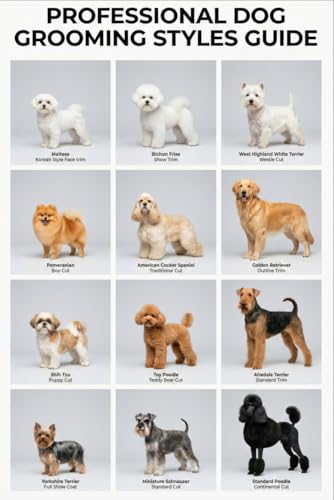
VMXWLL Professional Dog Grooming Styles Guide Canvas Wall Art – Poodle, Yorkie & Schnauzer Trim Chart – Pet Salon & Vet Clinic Decor (Includes Teddy Bear & Puppy Cut) – 12×18 Inch Unframed
THE ESSENTIAL GROOMER'S COMPANION: Eliminate miscommunication with pet owners instantly. This classic chart visualizes the 12 most requested…
As an affiliate, we earn on qualifying purchases.
As an affiliate, we earn on qualifying purchases.