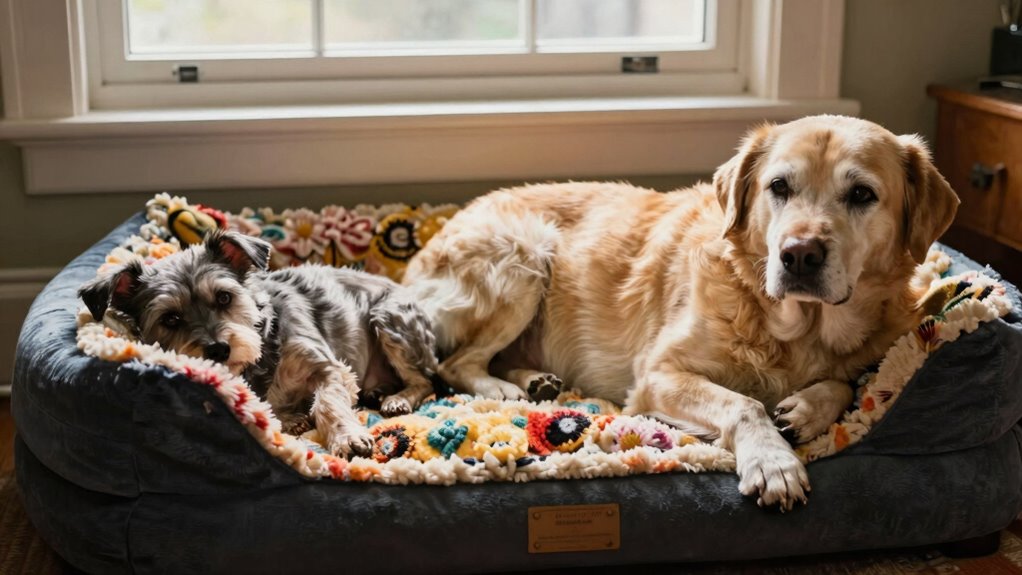

As a pet owner, you should prioritize creating a comfortable home environment tailored to your dog’s size and health needs. For senior small dogs, focus on maintaining excellent air quality, providing soft bedding, and ensuring easy mobility to prevent joint issues. Large seniors benefit from supportive bedding, low-impact exercises, and weight management strategies. Recognizing these differences helps you meet their unique comfort needs. Keep exploring to discover tips that make their retirement enjoyable and safe.

Get pet supplies delivered free — and shop member deals
- Fast, free delivery on millions of items
- Access to Prime Big Deal Days deals on October 6–7
- Prime Video, Amazon Music and more included
Key Takeaways
- Small seniors need softer bedding and easier access to avoid joint strain, while large seniors benefit from supportive, low-impact surfaces.
- Indoor air quality is crucial for small dogs with respiratory sensitivities, whereas large dogs require spacious, comfortable areas for movement.
- Mobility aids like ramps or stairs should be tailored to size, with small dogs needing less height assistance than larger breeds.
- Temperature regulation is vital; small dogs often need cozy, warm environments, while large dogs may prefer cooler, ventilated spaces.
- Safety features, such as non-slip flooring and hazard-proofed areas, should be customized to accommodate each size’s mobility and risk factors.
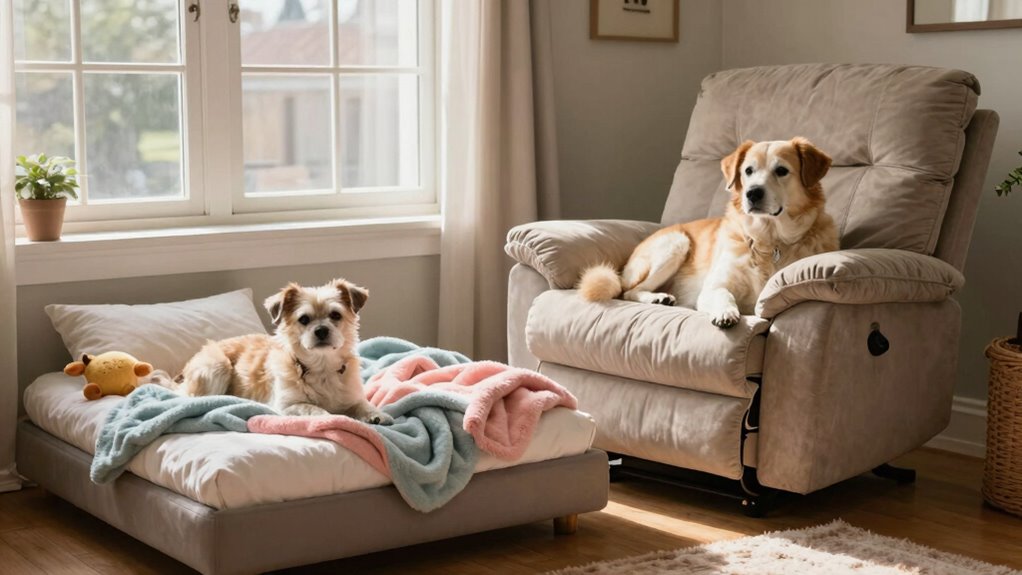
As dogs age, their size considerably influences their health, needs, and overall care, making it essential to understand the differences between senior small dogs and senior large dogs. You’ll find that their exercise routines and dietary needs diverge markedly, shaping how you create a comfortable home environment for each. Small dogs tend to be more energetic despite their age, so their exercise routines should include short, frequent walks and gentle play sessions that keep them active without overexerting them. Large dogs, on the other hand, often benefit from more moderate, low-impact activities that protect their joints and reduce fatigue. Regular movement is crucial for both sizes, but the intensity and duration need adjusting based on their size and health status.
Dietary needs also vary considerably. Senior small dogs typically require diets that are calorie-dense but easy to digest, as their metabolic rates stay relatively high even in old age. You’ll want to focus on maintaining their weight to prevent health issues like obesity, which can strain their joints and organs. Small dog foods formulated for seniors often contain extra antioxidants and joint-supporting supplements like glucosamine. For large dogs, the emphasis shifts to joint health and weight management, since they’re prone to conditions like arthritis and hip dysplasia. Their diets should be lower in calories but rich in nutrients that promote joint lubrication and bone strength. You might find that large breed senior dog foods include added omega-3 fatty acids and glucosamine to support mobility. Additionally, understanding the importance of size-related health considerations can help tailor their care for optimal comfort and longevity. Recognizing age-specific veterinary care is also crucial in detecting and managing age-related issues early, ensuring both sizes remain comfortable and healthy. Proper indoor air quality can also play a vital role in maintaining their respiratory health, especially for smaller breeds that may be more sensitive to airborne irritants. Regular checkups and tailored health plans are essential for addressing these size and age-specific needs effectively.
As an affiliate, we earn on qualifying purchases.
Frequently Asked Questions
How Do Exercise Needs Differ Between Senior Small and Large Dogs?
You’ll find that senior small dogs need shorter, more frequent exercise sessions, like gentle walks or play, fitting into their leisure activities and resting routines. Large seniors require longer, more moderate exercise to maintain joint health and muscle tone, but you should always monitor their comfort. Balancing activity with ample rest helps prevent fatigue, ensuring each dog stays happy and healthy without overexertion.
What Are Common Health Issues for Senior Small Versus Large Dogs?
Imagine your senior dog, their tiny paws or large limbs, both vulnerable to health issues. Small dogs often face dental health problems, with gums receding like fading sunsets, while large dogs might struggle with mobility aids due to joint issues. Both need regular vet checks, but your focus on dental care for small breeds and mobility support for large breeds helps keep them comfortable and happy in their golden years.
How Should Home Environments Be Adapted for Aging Small and Large Dogs?
You should adapt your home for aging dogs by prioritizing indoor safety and comfort enhancements. For small dogs, provide cozy, easily accessible beds and avoid high furniture that could cause falls. For large dogs, add ramps or stairs to help them access furniture or beds and guarantee non-slip flooring. Regularly check for hazards, secure cords, and create a quiet, comfortable space where your senior dog can rest peacefully.
Are Dietary Requirements Different for Senior Small and Large Dog Breeds?
Did you know large breeds often have shorter lifespans, averaging 8-12 years, compared to small breeds that live around 12-16 years? Yes, dietary requirements differ for senior small and large dogs. You should adjust their feeding schedules and calorie intake because large seniors need fewer calories to prevent obesity, while small seniors benefit from nutrient-dense diets. Always tailor their diets to support their unique health and energy needs.
How Do Socialization Needs Change for Senior Small Versus Large Dogs?
You’ll find that senior small dogs often need gentle socialization to prevent anxiety, while large seniors benefit from controlled, low-impact activities to maintain confidence. Grooming routines may become more frequent for small breeds, especially around sensitive areas, whereas large dogs might require extra attention during travel considerations. Tailoring socialization and grooming efforts guarantees both types stay comfortable, happy, and well-adjusted in their routines and environments.
Conclusion
Whether your senior dog is small or large, understanding their unique comfort needs keeps them happy and healthy. Think of their needs as two different but equally beautiful melodies—each deserving its own special tune. By tailoring their environment and care, you guarantee they feel loved and secure in the symphony of life. After all, a comfortable dog is a happy dog, and a happy dog is a reflection of a truly loving home.
Fall Picks
fall essentials
As an affiliate, we earn on qualifying purchases.