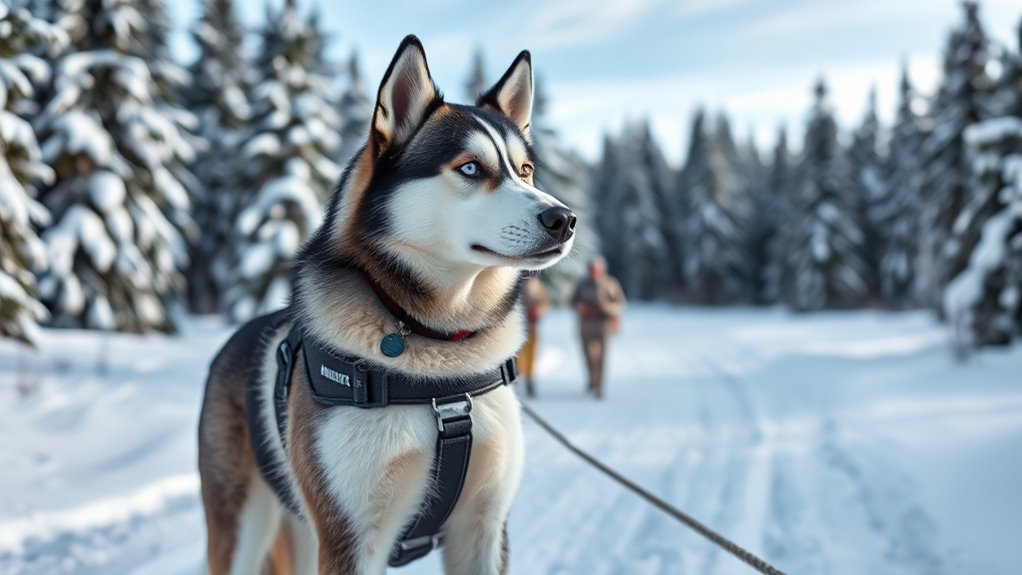
To care for a Siberian Husky, focus on consistent training with positive reinforcement, setting clear boundaries to manage their stubbornness. Make sure they get plenty of physical exercise and mental stimulation daily through activities like long walks, pulling, and agility. Regular grooming helps manage shedding, especially during heavy seasonal losses. Since Huskies are active and intelligent, providing outdoor adventures and socialization prevents boredom and behavioral issues. For more tips on keeping your Husky happy and healthy, keep exploring these insights.
Key Takeaways
- Use patience, consistency, and positive reinforcement to address Huskies’ stubborn and vocal behaviors during training.
- Provide daily physical exercise and mental stimulation through activities like running, pulling, or agility to prevent boredom.
- Socialize your Husky early with diverse people, animals, and environments to promote good behavior and prevent behavioral issues.
- Secure a strong, fenced outdoor space and ensure regular grooming to manage shedding and keep them comfortable and healthy.
- Choose active owners who enjoy outdoor activities, as Huskies thrive with ample exercise and engaging, natural instinct-driven outlets.

If you’re considering bringing a Siberian Husky into your home, understanding their unique training needs and lifestyle requirements is essential. These dogs are naturally bred as sled dogs, which means they have high energy levels, a strong work ethic, and an independent streak. Training a Husky requires patience and consistency because they tend to be stubborn and can be quite vocal. You’ll want to establish clear boundaries early on and use positive reinforcement techniques to encourage good behavior. Socialization is also key; exposing your Husky to different people, animals, and environments helps prevent behavioral issues down the line. Given their history, Huskies thrive on mental and physical stimulation, so daily exercise—like long walks, runs, or interactive play—is crucial to keep them happy and healthy. Proper exercise and mental engagement can also prevent destructive behaviors often associated with boredom.
When it comes to grooming, Huskies have a thick double coat that sheds heavily twice a year. Regular brushing, at least several times a week, helps manage shedding and keeps their coat healthy. During shedding season, daily brushing might be necessary to remove loose fur and prevent matting. Grooming tips for Huskies also include checking their ears regularly for dirt or infection, trimming their nails to avoid discomfort, and brushing their teeth to maintain oral health. Despite their need for frequent grooming, Huskies are relatively odorless and don’t require frequent baths, unless they get particularly dirty from outdoor adventures. Keeping their coat clean and well-maintained not only looks good but also supports their overall well-being. Understanding their shedding patterns can help you prepare for the amount of grooming needed throughout the year.
Training a Siberian Husky as a sled dog means understanding their instincts and natural abilities. Even if you don’t plan to participate in sledding, you can tap into their history by providing activities that mimic their natural drives, such as pulling a cart or participating in agility courses. These activities tire them out mentally and physically, reducing destructive behaviors caused by boredom. Remember, Huskies are notorious escape artists because they’re curious and clever; securing fences and providing enough space to roam is essential. Their independence can sometimes make training challenging, but with patience and consistency, you can develop a well-behaved companion. Keep in mind that Huskies are best suited for active owners who enjoy outdoor pursuits, and their grooming needs shouldn’t be neglected, as a healthy coat is essential for their comfort and health.
Frequently Asked Questions
How Long Does It Take to Fully Train a Siberian Husky?
It typically takes 4 to 6 months to fully train your Siberian Husky, but the housebreaking timeline can be around 4 weeks if you’re consistent. During the socialization process, expose your pup to different people and environments early on, helping them become well-behaved and confident. Remember, patience and positive reinforcement are key. Training varies based on the dog’s temperament and your consistency, so stay committed for the best results.
Are Huskies Suitable for Apartment Living?
Huskies can adapt to apartment living, but you should consider the pros and cons. Their energetic nature means you’ll need to provide plenty of daily exercise and mental stimulation. Urban challenges like noise and limited space can be tough, but with consistent training and outdoor activities, your husky can thrive. Make sure your apartment has enough room and nearby parks for playtime, so your pup stays healthy and happy.
What Health Issues Are Common in Siberian Huskies?
Think of your husky’s health like a delicate garden that needs care. You should watch out for common issues like genetic disorders, which can affect their hips or eyes, and dental problems that can lead to infections. Regular vet check-ups, a balanced diet, and good dental hygiene keep your husky thriving. Staying proactive guarantees your energetic companion stays happy and healthy for years to come.
How Much Exercise Does a Husky Need Daily?
You should provide your husky with at least 1 to 2 hours of exercise daily. Their exercise requirements include brisk walks, playtime, and mental stimulation to keep them happy and healthy. Incorporate activities like running, agility training, or pulling sleds if possible. Regular daily activity helps prevent behavioral issues and keeps your husky physically and mentally fit. Remember, a tired husky is a well-behaved and content companion.
Can Siberian Huskies Get Along With Other Pets?
While Siberian Huskies often thrive with other pets, their natural pack mentality and social nature mean you should prioritize pet socialization early on. With patience and proper introductions, your Husky can coexist happily with cats, small dogs, or even other animals. Keep a watchful eye, reinforce positive behavior, and create a calm environment. Over time, your Husky’s friendly temperament can blossom into harmonious companionship with your other pets.
Conclusion
So, now you’re all set to tame your wild Siberian Husky—just remember, patience and consistency are your best friends. Sure, they’ll test your limits with those puppy eyes and boundless energy, but hey, isn’t that part of the charm? Embrace the chaos, enjoy the laughs, and maybe keep a spare pair of shoes handy. After all, a well-trained Husky is just a few misadventures away—who knew that fluffy ball of mischief could be so demanding?