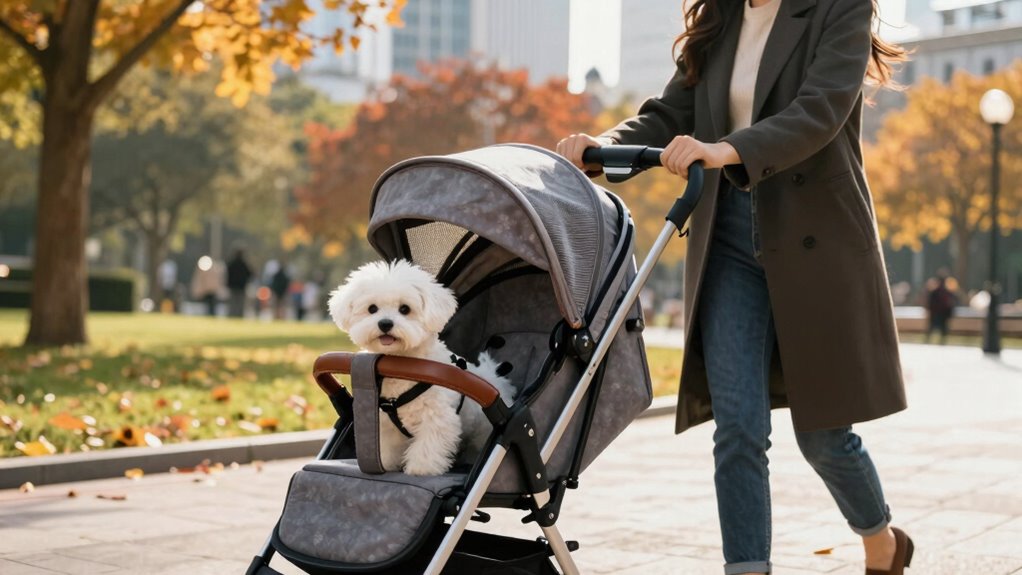

Using a stroller for toy breeds can be a convenient way to protect your small dog during outings, especially if you have mobility issues or need a break from walking. However, it can become a shortcut that hampers proper training and socialization, which are essential for your pet’s well-being. If you want to make sure your dog is happy, confident, and well-adjusted, there are important factors to take into account—topics you’ll discover as you explore further.

Get pet supplies delivered free with Prime
- Fast, free delivery on millions of items
- Prime Video, Amazon Music and more included
- Member-only deals all year
Key Takeaways
- Strollers offer safety and convenience but should complement, not replace, essential training and socialization for toy breeds.
- Proper handling and health monitoring are crucial due to toy breeds’ fragility and health vulnerabilities.
- Using strollers can enhance outings but may lead to dependency if overused, potentially limiting exercise and social skills.
- Consistent training ensures toy breeds are well-behaved and adaptable, regardless of stroller use.
- Integrating care, training, and safety measures creates a balanced lifestyle for toy breed owners.
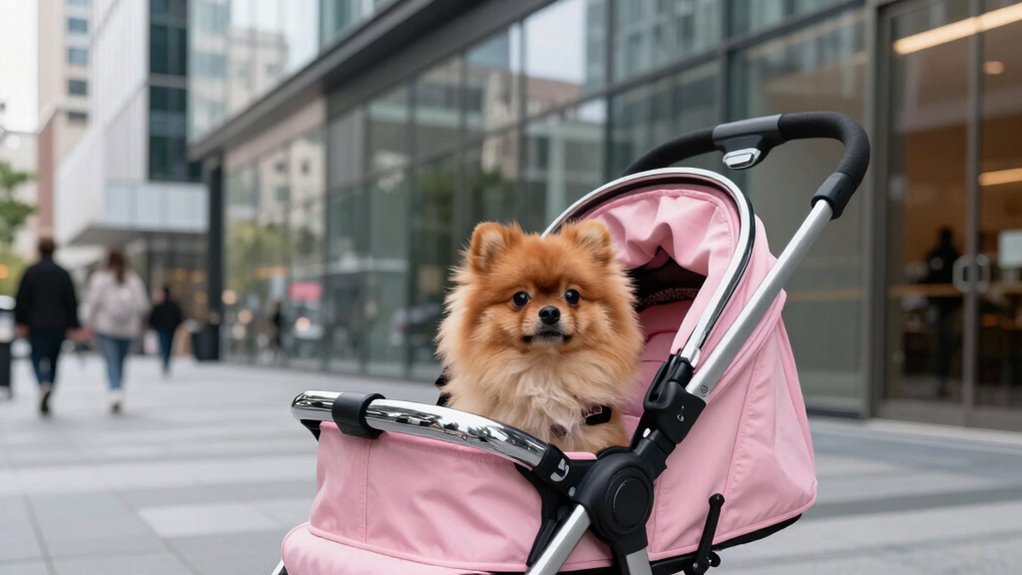
Toy breeds have become popular choices for city dwellers and those seeking a portable, affectionate companion. Their small size makes them ideal for apartment living and busy lifestyles, but owning one also comes with responsibilities. When it comes to dog training, you’ll need to be consistent and patient, especially because toy breeds can have delicate temperaments or tendencies toward stubbornness. Proper training helps ensure your dog is well-behaved in public and comfortable around other animals and people. It’s essential to start socialization early and use positive reinforcement techniques to build a strong bond. You’ll find that investing time in dog training pays off by creating a well-adjusted pet that fits seamlessly into your daily routine.
Breed health is another crucial consideration when choosing a toy breed. Many of these dogs are prone to specific health issues, such as dental problems, hypoglycemia, or respiratory difficulties due to their small size. Regular veterinary checkups, a balanced diet, and attentive care can help prevent or manage these concerns. You also need to be aware of their fragility—rough handling or falls can lead to injury. This means being cautious when lifting or carrying them, especially when using a stroller. While a stroller offers convenience for trips to the park or vet visits, it shouldn’t replace the need for active engagement or proper health monitoring. Knowing the breed’s health risks enables you to provide the best possible care, ensuring your furry companion stays happy and healthy for years to come.
Using a stroller can be a practical solution for owners who want to take their small dogs on longer outings or those with mobility issues. It’s a useful convenience that allows you to easily transport your pet without tiring them out or risking injury. However, some people view it as a lifestyle shortcut, preferring to rely on the stroller rather than engaging in walk routines or training exercises. While it’s true that strollers can help manage your dog’s comfort and safety, they shouldn’t replace the essential elements of dog training and socialization. A well-trained toy breed will be more confident and adaptable in different environments, regardless of whether they’re in a stroller or on a walk. Developing proper socialization skills is vital for your dog’s confidence and safety in public settings. Additionally, understanding breed health considerations can help prevent common issues and promote a longer, healthier life for your pet. Properly assessing your dog’s needs and limitations also involves being aware of their fragility, which emphasizes the importance of gentle handling and appropriate safety measures. Regularly consulting with a veterinarian about health concerns can further help you tailor your care routine to your dog’s specific needs. Being knowledgeable about breed-specific issues can also guide preventive measures and early intervention strategies. Ultimately, using a stroller should complement your dog’s training and health regimen, not substitute for it.
In the end, toy breeds and strollers can work together to create a convenient, enjoyable experience for both you and your pet. When approached responsibly—with attention to dog training and breed health—they enhance your lifestyle without shortcuts. Proper care and training ensure your small dog remains healthy, happy, and well-behaved, making every outing enjoyable. Whether you’re navigating city streets or relaxing at home, understanding your toy breed’s needs helps you make the most of your time together. A stroller is just one tool in your kit—use it wisely, and it can be a valuable aid rather than a lifestyle crutch.
As an affiliate, we earn on qualifying purchases.
Frequently Asked Questions
Are Toy Breeds More Prone to Health Issues Than Larger Dogs?
Yes, toy breeds are more prone to health issues than larger dogs. You should be aware of their genetic predispositions and breed-specific illnesses, which can include dental problems, hypoglycemia, and fragile bones. Regular veterinary checkups and preventive care are essential to guarantee your tiny companion healthy. While their small size offers convenience, understanding their unique health risks helps ensure they live long, happy lives with you.
How Do I Choose the Right Stroller for My Toy Breed?
Choosing the right stroller for your toy breed is like picking the perfect suit—comfort and style matter. Look for a stroller with good carrying comfort, making sure your pup stays cozy and secure. Consider style options that match your personality and lifestyle, from sleek and modern to cute and colorful. Confirm it’s lightweight for easy maneuvering, durable for safety, and provides ample ventilation. This way, your tiny companion rides in comfort and style wherever you go.
Are There Age Restrictions for Using Strollers With Small Dogs?
Yes, there are age-specific restrictions for using strollers with small dogs. For very young puppies, it’s best to avoid strollers until they’re fully vaccinated and stronger, typically around 12 weeks. You should also follow dog stroller etiquette, ensuring your dog is comfortable and secure. Always check with your vet if you’re unsure about age restrictions, and never force a dog into a stroller if it shows signs of distress.
What Safety Features Should I Look for in a Pet Stroller?
You should look for a pet stroller with excellent air ventilation to keep your dog comfortable and prevent overheating. Make sure it has secure harnesses inside to keep your small dog safely restrained during rides. Additionally, check for sturdy zippers and a locking mechanism to prevent accidental openings. These safety features help protect your pet while providing peace of mind, making outings enjoyable for both of you.
Do Toy Breeds Benefit Socially From Stroller Use?
Using a stroller for your toy breed can be a double-edged sword. It may help with social bonding, as it keeps your pup close and comfortable, encouraging interactions with other dogs and people. However, some might view it as a lifestyle shortcut, affecting public perception. While your pup may enjoy social benefits, be mindful of how others see it, and guarantee your pet still gets plenty of outdoor interaction beyond the stroller.
Conclusion
So, next time you’re tempted to roll your tiny pup in a stroller, remember: what’s more convenient—carrying your dog or just embracing the walk? You might think you’re saving time, but perhaps you’re just sidestepping the real challenge. After all, isn’t the true purpose of having a pet to share those little adventures, not to shortcut them? Sometimes, the easiest way isn’t always the most meaningful—unless your tiny dog prefers the ride.
Fall Picks
fall essentials
As an affiliate, we earn on qualifying purchases.