
When bringing home a second dog, you should reevaluate your space for comfort and safety, securing hazards and creating separate zones with gates or barriers. Establish clear boundaries, designate areas for each dog’s belongings, and supervise their interactions until they’re comfortable. Manage resources to prevent guarding and maintain routines that include training and exercise. Using technology and consistent rules helps both dogs settle in. Keep exploring for tips to create a harmonious environment and guarantee a smooth shift.

Get pet supplies delivered free — and shop member deals
- Fast, free delivery on millions of items
- Access to Prime Big Deal Days deals on October 6–7
- Prime Video, Amazon Music and more included
Key Takeaways
- Secure and designate separate areas for each dog’s belongings to prevent resource guarding and promote comfort.
- Install barriers or gates to create safe, individual zones within the home.
- Ensure outdoor spaces are secure, escape-proof, and free of toxic plants or substances.
- Establish clear house rules and routines for both dogs to promote consistency and reduce conflicts.
- Use positive reinforcement and monitor interactions to help dogs adjust and build a harmonious relationship.
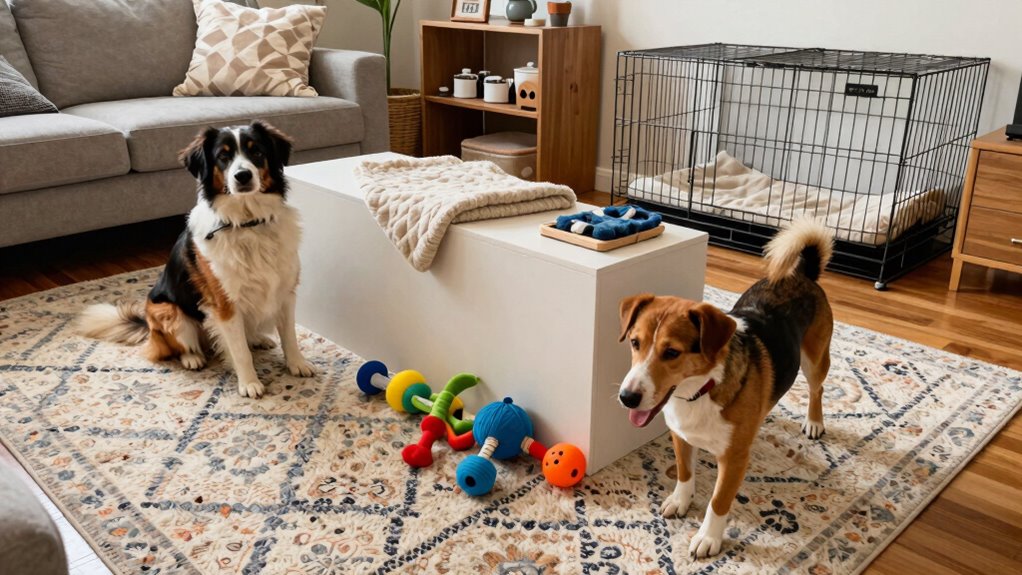
Adding a second dog to your family can be a rewarding experience, but it also requires careful planning and preparation. One of the most important steps is setting up your home to support both dogs comfortably and safely. This means reevaluating your space to guarantee it’s conducive to good dog behavior and safety. When it comes to house safety, you’ll want to secure any areas that could pose hazards, like electrical cords, trash cans, or small objects that could be swallowed. Installing baby gates or barriers can help create separate zones where each dog can retreat or calm down, reducing stress and potential conflicts. Additionally, make sure to train your dogs to respect boundaries within the house, which is a key part of effective dog training and maintaining peace.
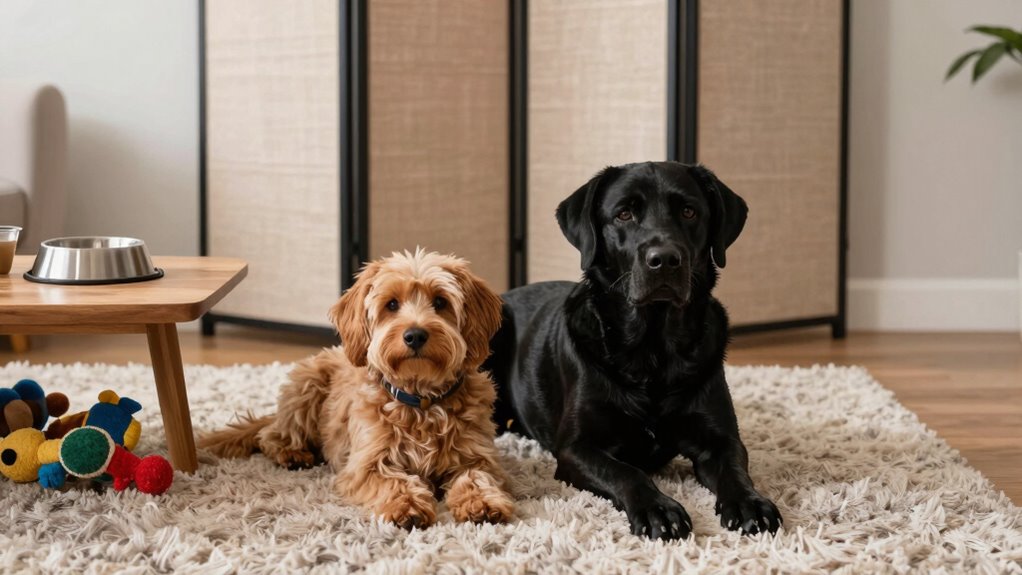
As you introduce your second dog, keep in mind that establishing clear rules early on will help both dogs understand what’s expected. Consistent training is crucial, especially in the beginning, to prevent territorial disputes or jealousy. Use positive reinforcement to encourage good behavior, and be patient as your dogs learn to coexist. When it comes to house safety, supervise their interactions until you’re confident they’re comfortable around each other. Avoid leaving food or toys in places where a dog might guard them aggressively. Create designated areas for each dog’s belongings, which helps reduce resource guarding and promotes healthy dog training habits. Understanding dog body language can also help you interpret their interactions and prevent conflicts before they escalate. Incorporating positive reinforcement techniques will further support harmonious relationships between your dogs.
It’s also important to weigh how you’ll manage your shared space. If you have a yard, make sure fences are secure and escape-proof. Check that gates are latched properly, and remove any plants or substances that could be toxic to dogs. Inside, you might want to set up separate resting spots so each dog has its own territory, helping prevent conflicts. Regular exercise and mental stimulation are crucial for both dogs and can go a long way toward reducing behavioral issues. Incorporating smart home technology to monitor their activity or manage their routines can also be beneficial for busy pet owners. It’s wise to consider the benefits of professional training, especially if resource guarding or behavioral challenges arise. Include playtime and training sessions into your routine to foster a sense of safety and stability.
Finally, remember that patience and consistency are key. Both dogs need time to adjust to each other and the new environment. Keep reinforcing good behavior, maintain house safety precautions, and continue with dog training. Over time, you’ll find that your home becomes a harmonious space where both dogs feel secure, loved, and well-adjusted. With thoughtful setup changes, you’re setting the stage for a happy, balanced life with your new furry family members.
As an affiliate, we earn on qualifying purchases.
Frequently Asked Questions
How Long Should I Quarantine the New Dog?
You should quarantine the new dog for at least 10 to 14 days to monitor health and prevent disease spread. During this time, focus on basic dog training and socialization strategies, gradually introducing the dogs under controlled conditions. Keep them separated, observe for health issues, and guarantee the new dog adapts well. This period helps both dogs adjust comfortably and safely, setting a positive foundation for their relationship.
What Are Signs of Dog Jealousy or Stress?
You might worry about your dogs getting along, but recognizing jealousy signs and stress indicators helps. Watch for behaviors like growling, avoiding eye contact, or excessive barking—they’re signs of jealousy or stress. If your dog snuggles less or shows signs of irritability near the new pet, it’s a red flag. Address these issues early by giving each dog individual attention and creating positive associations with the other.
How Do I Introduce the Dogs Safely?
To introduce your dogs safely, start with a dog scent exchange by swapping their bedding or toys, helping them become familiar with each other’s smell. Keep initial meetings short and positive, using introducing new toys to create a relaxed environment. Always supervise their interactions closely, gradually increasing time together as they show comfort. Stay calm and patient, allowing them to build trust at their own pace.
Should I Change My Existing Dog’s Routine?
Did you know 60% of dogs benefit from routine adjustments? You should modify your existing dog’s routine slightly to guarantee they feel secure and confident with the new addition. Incorporate more positive reinforcement during dog training sessions, especially around meal times and play. Consistent routines help both dogs adjust smoothly and reduce jealousy or stress. Keep the new schedule predictable, and give your first dog plenty of attention to maintain harmony.
How Can I Prevent Resource Guarding Between Dogs?
To prevent resource guarding, focus on effective resource management and dog socialization. Make certain each dog has their own food bowls, toys, and resting spots to reduce competition. During interactions, supervise closely and reward calm behavior to promote positive socialization. Gradually introduce shared resources and teach your dogs that sharing leads to rewards, which helps them feel secure. Consistent boundaries and patience will foster a peaceful environment for both dogs.
Conclusion
As you prepare for your new furry family member, remember that the adjustments you make now can set the stage for a harmonious relationship. Will your home be ready to handle the unexpected challenges, or will you find yourself caught off guard? The key lies in your preparation and patience. Stay attentive, and keep an open mind. The real journey begins once they meet—are you ready to discover what surprises this new chapter will bring?
Halloween Picks
halloween
As an affiliate, we earn on qualifying purchases.