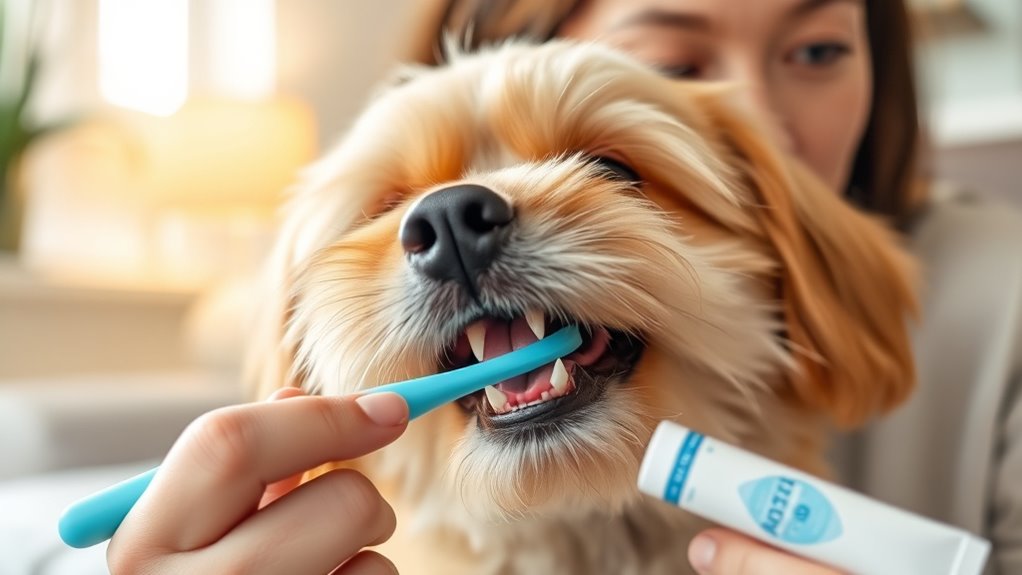

To brush your dog’s teeth effectively, use a soft-bristled toothbrush designed for dogs and pet-safe toothpaste with flavors like chicken or beef to encourage cooperation. Gently lift their lips and use circular motions on outer teeth and along the gum line, starting with short sessions and gradually increasing duration. Be consistent and use positive reinforcement like praise or treats. Keep tools familiar and pleasant—if you stay gentle and patient, you’ll soon develop a positive routine for your dog’s dental health.
Key Takeaways
- Use a soft-bristled toothbrush and pet-safe toothpaste with appealing flavors like chicken or beef.
- Gently lift your dog’s lips and use circular motions to brush outer teeth and along the gum line.
- Start with short sessions, gradually increasing duration, and reward your dog with treats or praise.
- Aim to brush several times weekly, ideally daily, to maintain optimal dental health and prevent plaque buildup.
- Introduce tools gradually, keep sessions positive, and reinforce good habits with consistent routines and gentle techniques.
Have you ever wondered why brushing your dog’s teeth is just as important as caring for your own? Maintaining good pet oral hygiene is vital for your dog’s overall health and happiness. Poor dental care can lead to painful infections, bad breath, and even more serious health issues like heart disease. That’s why establishing a regular brushing routine is essential for supporting your dog’s dental health. When you prioritize their oral hygiene, you help prevent plaque buildup, tartar formation, and gum disease, all of which can cause discomfort and affect their quality of life.
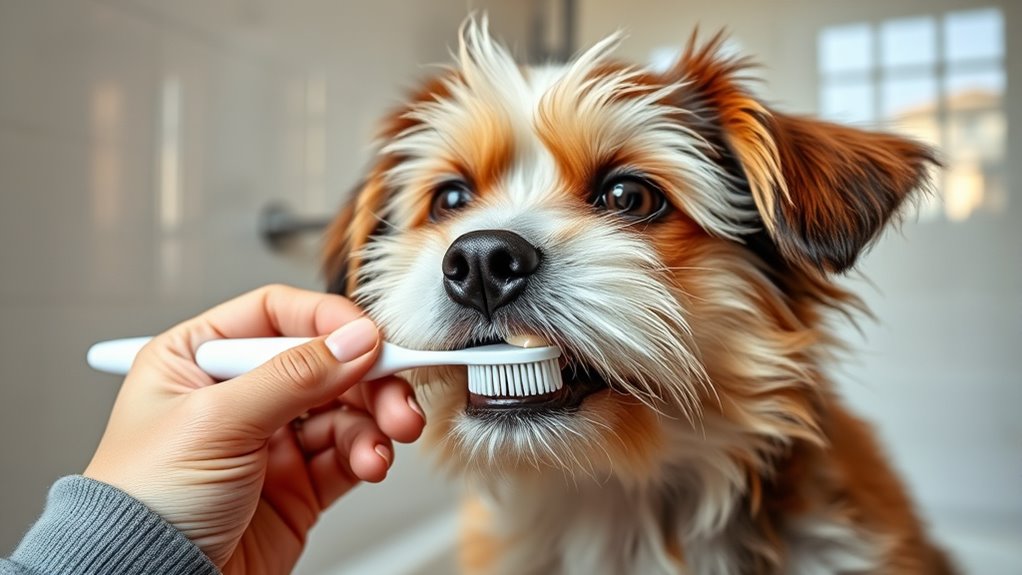
Getting started with brushing your dog’s teeth might seem intimidating at first, but it’s all about patience and consistency. Begin by choosing the right tools—soft-bristled toothbrushes designed specifically for dogs and pet-safe toothpaste. Never use human toothpaste, as it contains ingredients that can be toxic to dogs if swallowed. Pet-specific toothpaste comes in flavors your dog might find appealing, like chicken or beef, making the process more enjoyable for them. Before you start brushing, let your dog get comfortable with the tools by allowing them to sniff and lick the toothbrush. Gradually introduce the toothpaste, letting them taste a small amount to build positive associations.
When it’s time to brush, lift your dog’s lips gently and focus on their outer surfaces of the teeth and along the gum line. Use gentle, circular motions and keep the sessions short at first—just a few seconds—and gradually increase the duration as your dog becomes more accustomed to the routine. Consistency is key; aim to brush your dog’s teeth at least a few times a week, ideally daily, to keep their teeth and gums healthy. Be patient if your dog resists initially; positive reinforcement, like praise or treats, can help make brushing a positive experience.

MoonyMars Dog Toothbrush Kit 4 Pack, Ultra Soft Dog Tooth Brush for Medium to Large Dogs & Cats, Pet Tooth Brushing Kit for Easy Dental Cleaning, Soft Bristles, 2 Green Wave Head & 2 White Flat Head
What You Get – This dog & cat toothbrush kit includes 4 pack toothbrushes of extra soft bristles.
As an affiliate, we earn on qualifying purchases.
As an affiliate, we earn on qualifying purchases.
Frequently Asked Questions
How Often Should I Brush My Dog’s Teeth?
You should brush your dog’s teeth daily to maintain ideal dog dental health. Regular brushing helps prevent plaque buildup, tartar, and potential infections. If daily brushing isn’t possible, aim for at least three times a week. Consistent brushing reinforces good oral hygiene habits and keeps your dog’s mouth healthy. Remember, the more consistent your brushing frequency, the better you’ll support your dog’s overall dental health and prevent future dental issues.
Can I Use Human Toothpaste on My Dog?
You shouldn’t use human toothpaste on your dog because their dental anatomy differs, and human toothpaste contains ingredients like fluoride and foaming agents that can upset their stomach or be toxic. Instead, choose a dog-specific toothpaste to help combat canine mouth bacteria effectively. Regular brushing with the right toothpaste can maintain oral health, prevent plaque buildup, and keep your dog’s teeth and gums healthy.
What Are Signs of Dental Problems in Dogs?
If your dog’s breath smells foul or sour, it’s a sign of dental problems. Watch for excessive plaque buildup on their teeth, redness or swelling around the gums, and difficulty eating or chewing. You might also notice bleeding gums or loose teeth. These signs indicate issues that need prompt veterinary attention to prevent further dental disease and guarantee your dog stays healthy and comfortable.
How Do I Introduce My Dog to Toothbrushing?
Think of introducing your dog to toothbrushing as planting a seed of trust. Start slowly, using gentle strokes and praising your pup, making it a positive experience. Many dog dental myths suggest it’s tough, but with patience, even puppies can learn puppy dental care routines. Keep sessions short, use dog-friendly toothpaste, and reward your dog afterward. With time, brushing becomes a bonding ritual, not a battle.
Are Dental Treats Effective Compared to Brushing?
Dental treats can help improve your dog’s dental health, but they aren’t as effective as brushing. Many dental health myths suggest treats alone keep teeth clean, but chewing toys and brushing remove plaque better. Regular brushing is essential for preventing tartar buildup, while treats and toys support oral hygiene. Use a combination of these tools for ideal dental health, but don’t rely solely on treats to replace brushing.

Virbac C.E.T.® Enzymatic Toothpaste| Tartar & Plaque Control for Fresh Breath | Pet Dental Care Toothpaste | Poultry Flavor, 2.5 oz
FOR DOGS AND CATS: Enzymatic toothpaste specifically formulated using an enzyme system for dogs and cats to reduce…
As an affiliate, we earn on qualifying purchases.
As an affiliate, we earn on qualifying purchases.
Conclusion
Brushing your dog’s teeth isn’t just a routine—it’s the secret to ensuring they live a longer, healthier life, surpassing even the most resilient of all creatures. With patience and the right techniques, you can turn this everyday task into a bonding experience that keeps their smile shining brighter than a diamond. Remember, your dedication can transform their dental health from a mere chore into a powerful act of love. Keep at it, and watch your furry friend thrive!

Arm & Hammer for Pets Tartar Control Dog Dental Kit, Enzymatic Toothpaste with Toothbrush and Fingerbrush, Baking Soda Formula Reduces Plaque and Tartar, Safe for Puppies, Beef Flavor, 3-Piece
PLAQUE AND TARTAR CONTROL: Designed to help reduce plaque and tartar buildup with regular brushing, supporting cleaner teeth…
As an affiliate, we earn on qualifying purchases.
As an affiliate, we earn on qualifying purchases.

PARYUNGR Dental Tools Pet Dog Teeth Cleaner Tool Kit, Stainless Steel Plaque Remover Dental Picks Tooth Tartar Scraper, Pets Oral Care Hygiene Set for Cats and Dogs Use with Case
🐶PROFESSIONAL PET TOOTH TOOL – 4 styles of dental cleaning care tools include dental probe, tartar scraper, sickle…
As an affiliate, we earn on qualifying purchases.
As an affiliate, we earn on qualifying purchases.