To choose the right collar and harness, guarantee they fit comfortably and securely without causing chafing or slipping. Look for high-quality, durable materials like nylon or leather that can withstand your pet’s active lifestyle and weather conditions. Adjustability is key—use sliders or buckles to get a snug, safe fit. Proper measurement techniques help prevent discomfort and escape risks. Keep safety and comfort in mind, and you’ll find perfect gear to protect your pet during daily adventures. More tips can help you make the best choice.
Key Takeaways
- Measure your pet accurately around the widest part of the neck for collars and behind the front legs for harnesses, using proper sizing charts.
- Ensure the collar or harness fits snugly without causing discomfort or chafing, allowing for easy adjustments as your pet grows.
- Choose durable, high-quality materials like nylon, leather, or reinforced fabrics for longevity and weather resistance.
- Select adjustable features such as sliders or buckles to customize fit, preventing slipping and ensuring safety during active use.
- Prioritize safety and comfort to protect your pet during walks and activities, reducing the risk of escape and enhancing well-being.
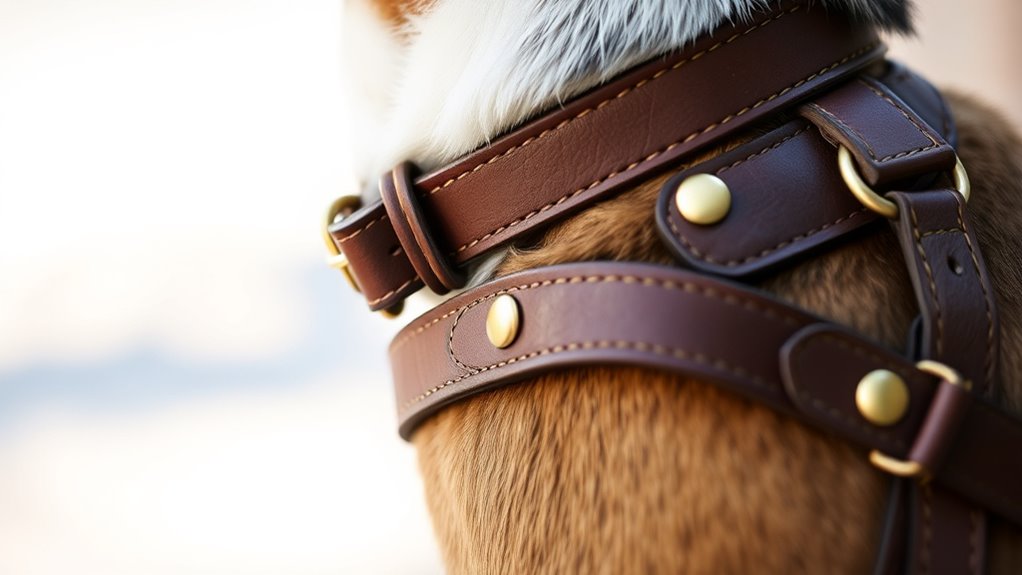
Selecting the right collar or harness is essential for your pet’s comfort and safety. When choosing, you want to ensure it’s made from material that can withstand daily wear and tear, so durability is key. Look for options crafted from strong, high-quality materials like nylon, leather, or reinforced fabrics. These materials resist fraying, tearing, and weather damage, making them reliable for active pets or those who spend a lot of time outdoors. Investing in a durable collar or harness means you won’t have to replace it frequently, saving you money and avoiding unnecessary stress for your pet.
Equally important is adjustable sizing. Pets grow quickly, and their comfort depends on a proper fit. A collar or harness with adjustable features allows you to customize the fit as your pet grows or as they gain or lose weight. Soft, flexible straps with adjustable sliders or buckles make it easy to tighten or loosen the fit, ensuring it’s snug but not restrictive. A well-fitting collar or harness shouldn’t pinch or chafe, and it should sit comfortably against your pet’s body without slipping or causing discomfort. Proper adjustment also helps prevent your pet from slipping out, especially if they’re particularly active or curious.
When selecting a collar, measure your pet’s neck carefully to find the right size. Most collars come with sizing charts, but it’s best to measure directly around the widest part of the neck for accuracy. For harnesses, measure around the chest behind the front legs, as this is where most harnesses are secured. Adjustable harnesses typically have multiple points of adjustment, allowing you to fine-tune the fit. This flexibility is especially useful for pets that are still growing or for breeds with unique body shapes.
Durability combined with adjustable sizing ensures your pet’s collar or harness remains functional, safe, and comfortable over time. It’s worth investing a little extra in quality gear that can adapt to your pet’s changing needs, rather than opting for cheaper, less adjustable options that may cause discomfort or fail prematurely. Remember, a collar or harness that fits well and is made from durable material isn’t just about convenience; it’s about safeguarding your pet’s well-being during every walk, adventure, or day at home. Using the best materials can significantly impact the longevity and safety of your pet’s gear. When you prioritize these features, you’re giving your furry friend the comfort, safety, and lasting quality they deserve.
Frequently Asked Questions
How Often Should I Replace My Dog’s Collar or Harness?
You should replace your dog’s collar or harness every 6 to 12 months to guarantee collar longevity and safety. Regularly check for signs of wear, fraying, or damage, and replace your harness if it no longer fits properly or shows signs of weakness. A good harness replacement schedule keeps your dog comfortable and secure, preventing accidents during walks. Prioritize safety by inspecting and updating your gear as needed.
Can a Collar or Harness Cause Long-Term Neck or Back Issues?
Yes, a poorly fitted collar or harness can cause long-term neck strain or back pain. If it’s too tight, it can put unnecessary pressure on your dog’s neck and spine, leading to discomfort or injury over time. Always make certain the collar or harness fits properly, distributes pressure evenly, and is suited to your dog’s size and activity level to prevent these issues. Regular checks help keep your dog safe and comfortable.
Are There Specific Materials Best for Sensitive Skin?
For sensitive skin, opt for collars and harnesses made of soft, hypoallergenic fabrics like organic cotton or silk, which minimize fabric sensitivity. Look for materials that offer good durability without sacrificing comfort, such as nylon with a smooth finish. Avoid rough or synthetic fabrics that could cause irritation. Choosing the right material guarantees your pet stays comfortable and safe, reducing the risk of skin issues over time.
How Do I Train My Dog to Accept a New Collar or Harness?
Imagine you’re a Jedi trainer—training your dog to accept a new collar or harness takes patience and a positive attitude. Use positive reinforcement and a gradual introduction, rewarding your pup with treats and praise as they get used to the new accessory. Start by letting them sniff and wear it loosely, then slowly increase the time. Consistency and gentle encouragement will make the process smooth and stress-free.
What’s the Best Way to Clean and Maintain Collars and Harnesses?
To clean your dog’s collar or harness, start with gentle cleaning techniques suited to the material durability. For fabric, hand wash with mild soap and warm water, then air dry. Leather options should be wiped with a damp cloth and conditioned regularly. Avoid harsh chemicals that can damage the material. Regular cleaning keeps your dog comfortable and prolongs the lifespan of the collar or harness, ensuring safety and durability.
Conclusion
Ultimately, selecting the perfect collar or harness depends on your dog’s comfort, confidence, and care. By considering fit, function, and safety, you create a connection that’s both secure and supportive. Remember to regularly review and adjust as your pup grows or changes. With thoughtful choices and attentive awareness, you’ll foster a fearless, fuss-free friendship—making every walk wonderful, worry-free, and wonderfully rewarding.