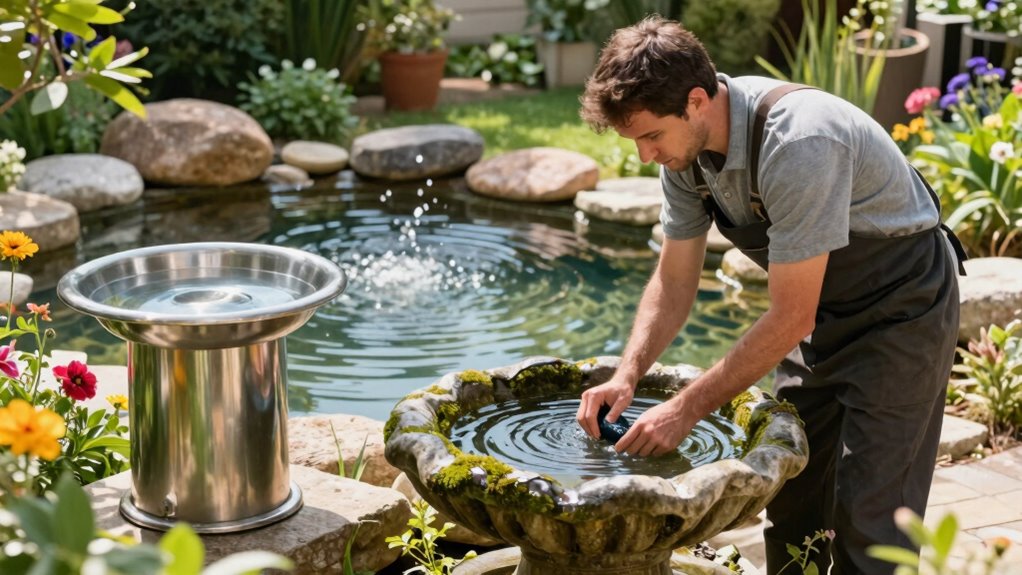

To clean your pet’s bowls, fountains, and feeding stations properly, wash them daily with warm water and a pet-safe detergent, then rinse thoroughly to remove soap residue. Disinfect periodically with diluted vinegar or a pet-safe disinfectant, ensuring all traces are rinsed away. Keep containers out of direct sunlight and change water frequently to prevent algae and bacteria buildup. Keep this routine consistent to maintain a healthy environment — there’s more to discover for ideal pet care.

Get pet supplies delivered free — and shop member deals
- Fast, free delivery on millions of items
- Access to Prime Big Deal Days deals on October 6–7
- Prime Video, Amazon Music and more included
Key Takeaways
- Wash containers daily with warm water and pet-safe detergent, then rinse thoroughly to remove residues.
- Disinfect periodically using diluted vinegar or pet-safe disinfectants, ensuring complete rinsing afterward.
- Change water frequently and clean containers to prevent algae growth and contamination.
- Keep water and feeding stations out of direct sunlight to reduce algae and microbial growth.
- Regularly inspect and promptly address foul smells or slimy buildup for optimal pet health.
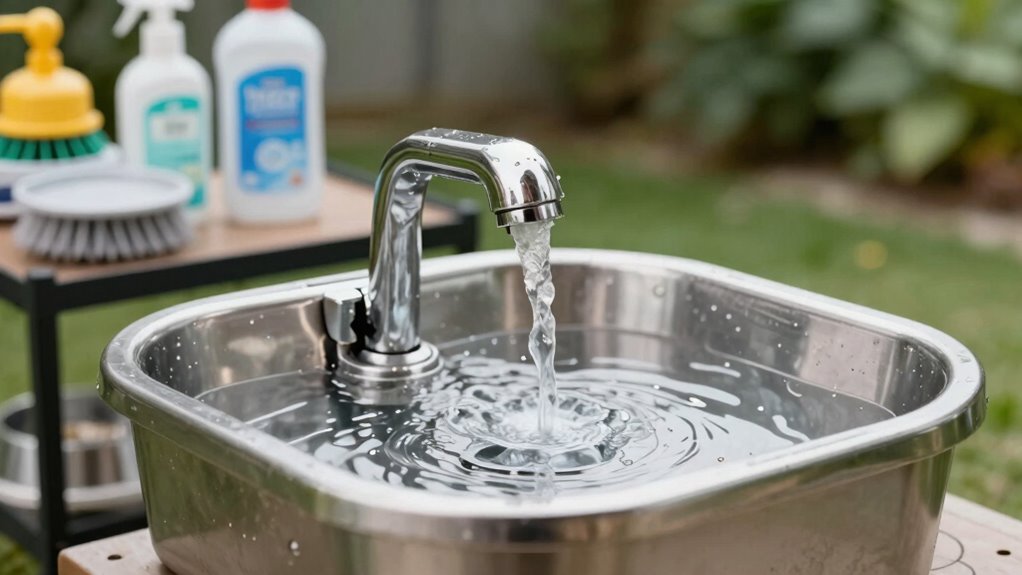
Have you ever wondered why your pet’s bowls, fountains, and feeding stations need regular cleaning? It’s not just about keeping things tidy; it’s about maintaining their health and happiness. Dirty bowls and stagnant water can harbor bacteria, mold, and algae, which can seriously impact your pet’s well-being. For birds, in particular, water quality is essential. Birds are highly sensitive to changes in their environment, and contaminated water can lead to infections, illnesses, or even more severe health issues. Regular cleaning ensures that the water they drink remains fresh, safe, and free from harmful microorganisms.
Regular cleaning keeps your pet’s water and food safe, healthy, and free from harmful bacteria and mold.
When you clean your pet’s bowls and fountains, you’re directly supporting their overall health. Bacteria and mold can grow quickly, especially in warm, damp environments. If neglected, these contaminants may cause gastrointestinal problems or infections. For birds, contaminated water can cause respiratory issues or weaken their immune systems. That’s why it’s necessary to wash all water containers and feeding stations thoroughly, preferably daily. Using warm water and a gentle, pet-safe detergent helps remove residues and biofilms that can develop over time. Rinse everything well to make sure no soap traces remain, as leftover soap can also harm your pet.
In addition to regular washing, it’s important to disinfect the bowls and fountains periodically. Disinfection kills any lingering bacteria or mold spores that cleaning alone may miss. You can use a diluted vinegar solution or a pet-safe disinfectant, ensuring you rinse everything thoroughly afterward. This extra step is especially important if you notice any slimy buildup or foul smell, which indicates bacterial growth. Always verify that the cleaning products you choose are safe for pets, as ingestion of harsh chemicals can cause health complications. Regularly monitor water quality to catch any early signs of contamination and address them promptly. Proper cleaning routines also help prevent the buildup of algae, which can quickly compromise water quality.
Another key aspect is preventing the buildup of algae, which thrives in standing water exposed to sunlight. Changing water frequently and cleaning the containers prevents algae from forming and keeps water quality high. For birds, clean water is essential because they tend to drink frequently and may even bathe in their water sources. If you neglect regular cleaning, you risk compromising their hydration and exposing them to potential health risks. Additionally, keep the feeding stations clean to prevent the spread of diseases or parasites that can be transmitted via contaminated surfaces. Regularly inspecting and maintaining the cleanliness of these items also helps identify early signs of contamination, ensuring prompt action can be taken.
Ultimately, maintaining clean bowls, fountains, and feeding stations isn’t just about aesthetics. It’s about actively protecting your pet’s health, ensuring they stay happy, active, and healthy. Regular cleaning routines preserve water quality and promote bird health, giving you peace of mind that you’re doing everything possible to care for your feathered friends.
pet water fountain cleaning brush
As an affiliate, we earn on qualifying purchases.
As an affiliate, we earn on qualifying purchases.
Frequently Asked Questions
How Often Should I Replace the Water in Outdoor Birdbaths?
You should replace the water in your outdoor birdbath at least every two days to guarantee proper birdbath maintenance. Fresh water prevents algae buildup and discourages bacteria growth, keeping your feathered visitors healthy. During hot weather or if you notice debris, increase the water replacement frequency. Regularly changing the water helps maintain a clean, inviting environment for birds and supports their overall health.
What Are the Safest Cleaning Agents for Pet Water Bowls?
Did you know that bacteria can multiply rapidly in pet water bowls, increasing health risks? To keep your pet safe, use pet-safe disinfectants or non-toxic cleaning solutions. Look for products specifically labeled for pet use, avoiding harsh chemicals like bleach or ammonia. Regular cleaning with these gentle agents not only prevents bacterial growth but also guarantees your pet drinks clean, safe water, promoting their health and well-being.
Can I Use Vinegar to Clean Animal Feeding Stations?
Yes, you can use vinegar to clean animal feeding stations, but it’s important to take into account vinegar safety. Dilute vinegar with water to ensure it’s not too strong, which helps prevent any residue that could harm your pet. Proper cleaning techniques involve scrubbing thoroughly, rinsing well afterward, and drying completely. Vinegar is effective for removing odors and bacteria when used correctly, making it a safe and natural cleaning option for feeding stations.
How Do I Prevent Algae Buildup in Fountains?
To prevent algae buildup in fountains, focus on consistent cleaning and proper fountain maintenance. Regularly remove debris and scrub surfaces to stop algae from settling. Use algae prevention techniques like adding beneficial enzymes or UV sterilizers to inhibit growth. Keep water moving with pumps to discourage stagnation. By maintaining a routine of diligent cleaning and proactive measures, you guarantee a clean, clear fountain that stays algae-free longer, promoting healthier water for your animals.
Are There Eco-Friendly Cleaning Options for Bird Feeders?
Yes, you can use eco-friendly disinfectants to clean bird feeders, which help prevent bird seed contamination while protecting the environment. Look for natural options like vinegar or baking soda, and always rinse thoroughly. Regular cleaning with these eco-friendly solutions keeps your feeders safe for birds, reduces harmful buildup, and supports eco-conscious gardening. This way, you guarantee healthy feeding stations without harming the environment or your feathered visitors.
Conclusion
So, next time you think cleaning your pet’s bowls and fountains is just a chore, remember it’s actually a tiny act of love—though it might seem trivial, neglecting it could turn their favorite spot into a bacteria playground. Irony? The cleaner you keep their bowls, the happier and healthier they’ll be, proving that sometimes, the simplest routines are the most essential. After all, a spotless station isn’t just tidy—it’s a gift you’re giving your furry friend.
Halloween Picks
halloween
As an affiliate, we earn on qualifying purchases.