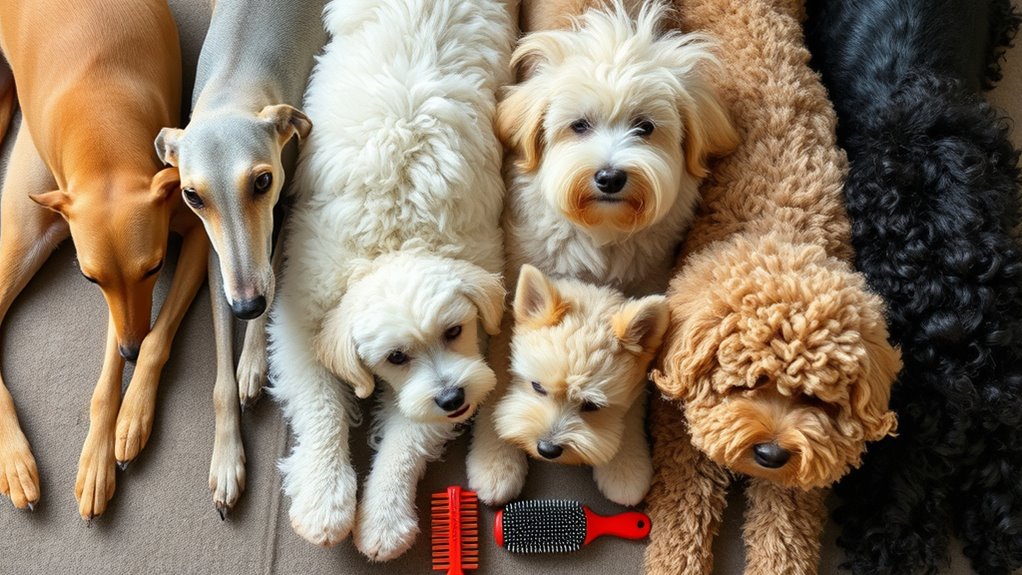

Knowing your dog’s coat type helps you choose the right grooming routine to keep them healthy and comfortable. Double coats shed seasonally and need regular de-shedding tools, while breeds with continuous-growing hair require frequent trimming and minimal shedding. Curly or wiry coats need regular grooming and conditioning, and smooth coats need less maintenance but still benefit from routine brushing. Understanding these differences guarantees your dog’s coat stays clean, healthy, and mess-free—details that can make a big difference once you learn more.
Key Takeaways
- Recognize whether a breed has a double coat, continuous growth, or short hair to determine grooming frequency and tools needed.
- Double-coated breeds shed seasonally and require regular de-shedding routines to manage loose hair effectively.
- Breeds with continuous-growing hair, like Poodles, need regular trimming and minimal shedding for coat maintenance.
- Curly or wiry coats demand routine trimming and conditioning to prevent mats and promote healthy texture.
- Grooming routines should be tailored to coat type to ensure comfort, reduce health issues, and maintain a clean environment.
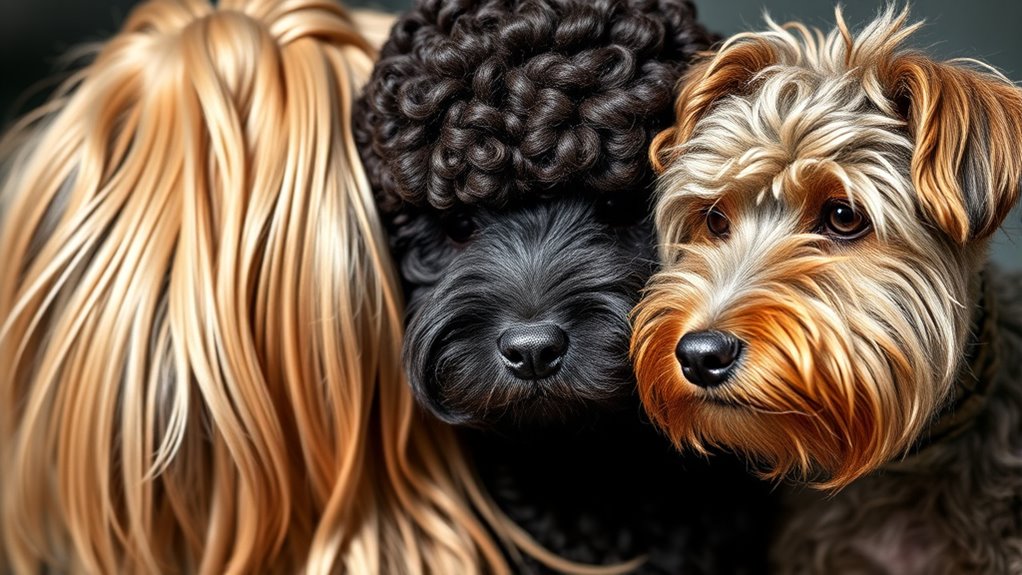
Have you ever wondered what makes each dog’s coat unique? It all boils down to their coat type, which influences everything from shedding patterns to grooming routines. Understanding these differences helps you care for your dog properly and maintain their health and comfort. Some breeds have coats that shed heavily, while others shed minimally or not at all. Recognizing these shedding patterns allows you to choose the right grooming tools and develop a routine that keeps your dog clean and comfortable. For example, breeds with double coats, like Siberian Huskies or Golden Retrievers, tend to shed seasonally, often heavily in spring and fall. During these times, you’ll want to use a de-shedding tool or undercoat rake to manage loose hair effectively. Conversely, breeds with hair that grows continuously, such as Poodles or Yorkshire Terriers, shed very little but require regular trimming to prevent matting. Knowing your dog’s shedding pattern helps you select the appropriate grooming tools—slicker brushes, pin brushes, or combs—to keep their coat healthy without causing discomfort. It’s crucial to stay consistent with grooming, especially for breeds prone to heavy shedding or matting. Regular brushing not only reduces loose hair but also distributes natural oils, promoting a shiny, healthy coat. For breeds with more delicate or fine hair, gentle brushes are better suited, while sturdier tools work well for thicker, denser coats. If you ignore your dog’s shedding patterns and grooming needs, you risk developing mats, skin infections, or excessive hair around your home. Proper grooming tools tailored to your dog’s coat type make the process easier and more effective, ensuring you can remove loose hair before it causes problems. Additionally, understanding the specific grooming needs of your dog’s coat type helps you prevent common issues like dryness or irritation. For example, dogs with curly or wiry coats may need regular trimming and conditioning to avoid tangles and maintain their coat’s texture. Meanwhile, dogs with smooth coats require less frequent grooming but still benefit from routine brushing to keep loose hair under control. By paying attention to your dog’s shedding patterns and using the right grooming tools, you create a grooming routine that’s efficient and suited to their needs. This not only keeps your home cleaner but also enhances your pet’s comfort and overall health. Remember, each breed has its own unique coat characteristics, so investing time in understanding these details makes caring for your dog easier and more effective. Proper grooming isn’t just about appearance; it’s about ensuring your dog’s skin stays healthy, their coat remains manageable, and they feel comfortable every day.
Frequently Asked Questions
How Often Should I Schedule Professional Grooming Sessions?
You should schedule professional grooming sessions every 4 to 8 weeks, depending on your dog’s breed-specific grooming needs and coat type. Seasonal grooming routines are essential for managing shedding and keeping your dog comfortable. Short-haired breeds may need less frequent grooming, while long-haired or curly-coated breeds require more regular visits. Regular grooming helps maintain coat health, prevents matting, and guarantees your pet stays comfortable year-round.
What Tools Are Best for Grooming Different Coat Types?
You should select tools based on your dog’s coat type. For short coats, a rubber curry brush works well, while long or thick coats benefit from slicker brushes or undercoat rakes. For trimming, use scissors or clippers suited to the coat’s texture. Always choose appropriate brush selection and trimming techniques to prevent damage and ensure a comfortable grooming experience, keeping your dog neat and healthy.
Can Coat Types Indicate a Dog’s Health Issues?
Like a detective in a noir film, you can often spot health issues through a dog’s coat texture and shedding patterns. Changes in these areas might signal underlying problems, such as allergies, parasites, or nutritional deficiencies. If your pup’s coat becomes dull, patchy, or shedding wildly, it’s time to consult your vet. Monitoring these signs helps keep your dog healthy and happy, like a true sleuth on the case.
How Do I Prevent Matting in Long-Haired Breeds?
To prevent matting in long-haired breeds, you should brush regularly using gentle, proper techniques. Focus on detangling knots before they tighten, and use a slicker brush or comb suited for their coat. Incorporate coat conditioning products to keep hair soft and manageable. Consistent grooming not only prevents mats but also promotes healthy skin and coat, making grooming sessions easier and keeping your dog comfortable and happy.
Are Certain Coat Types More Prone to Skin Infections?
Think of your dog’s coat as a delicate garden; some plants are more prone to pests. Certain coat types, like those with dense or oily fur, are more prone to skin infections because they trap moisture and dirt. Breed-specific infections can thrive when coat sensitivity isn’t addressed. Regular grooming, thorough drying, and attention to any redness or irritation help keep your dog’s skin healthy and free from troublesome infections.
Conclusion
Now that you understand different coat types, you can better care for your dog’s grooming needs. Whether you’re brushing, trimming, or bathing, recognize the specific requirements of each coat. Keep your dog’s coat healthy, shiny, and comfortable. Embrace the routine, enjoy the bonding, and stay attentive to changes. With knowledge and care, you’ll keep your furry friend looking great, feeling happy, and living comfortably—because a well-groomed coat means a happy, healthy dog.