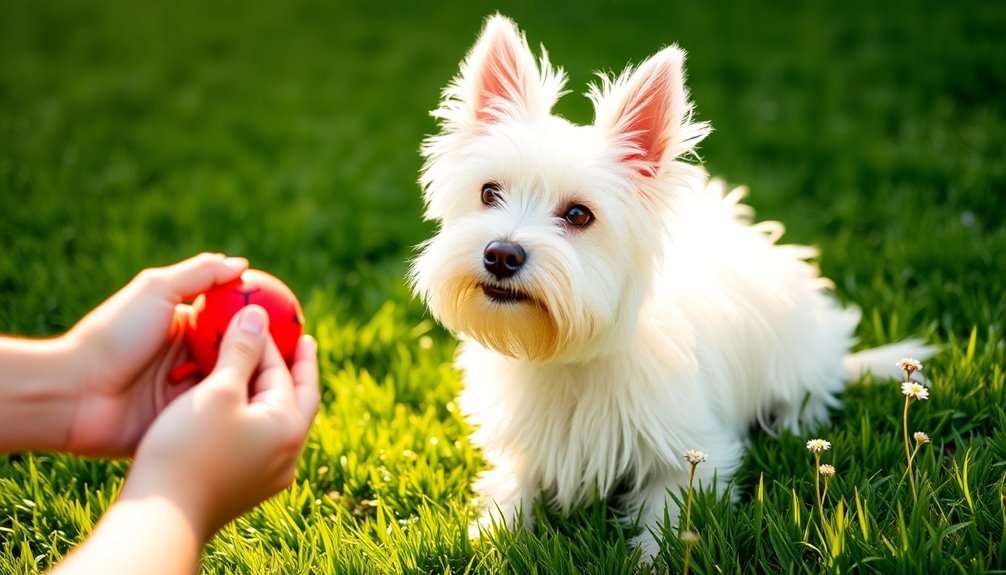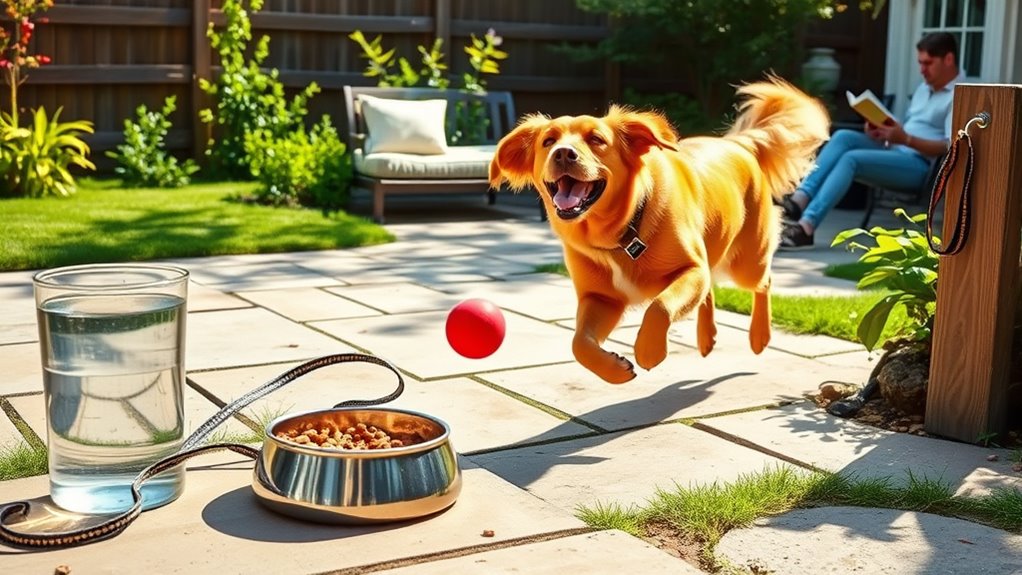

To structure a balanced day for your dog, establish a consistent routine that includes regular walks, playtime, training sessions, grooming, and plenty of rest. Use positive reinforcement and keep activities short and engaging to reinforce good behaviors. Incorporate calming elements and maintain predictability to help your dog feel secure and happy. A well-planned schedule boosts their health and behavior—continue exploring ways to create the perfect daily plan for your furry friend.
Key Takeaways
- Establish consistent times for feeding, walks, training, grooming, and rest to create predictability.
- Incorporate short, positive training sessions to reinforce commands and strengthen your bond.
- Balance physical activity with rest periods in a designated, comfortable space for optimal health.
- Regularly groom and check ears, teeth, and paws to promote good health and prevent issues.
- Use calming elements and a structured routine to foster security, reduce stress, and encourage well-behaved habits.
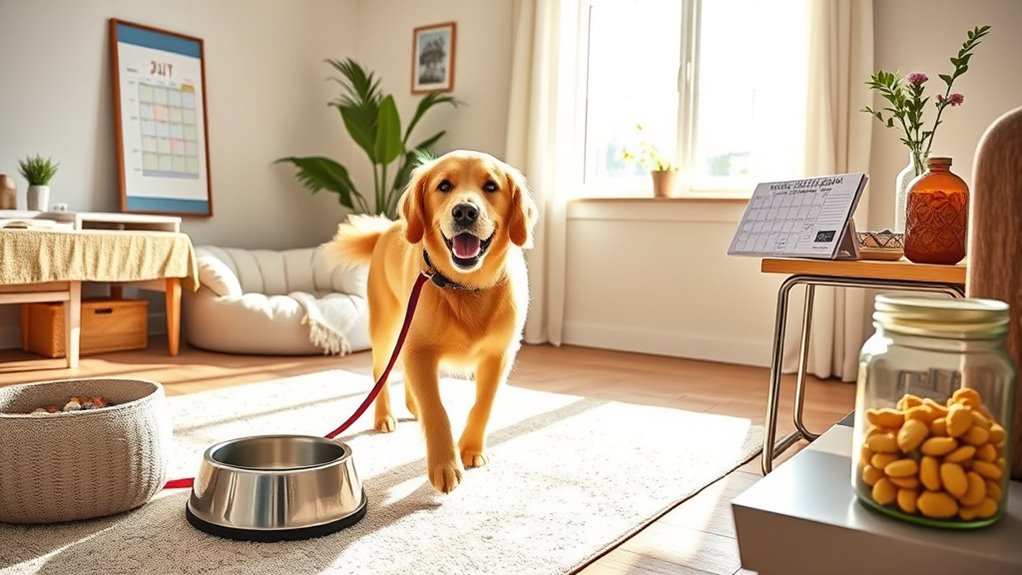
Establishing a consistent daily routine is essential for keeping your dog happy, healthy, and well-behaved. When you structure your dog’s day with regular activities, it helps them feel secure and understand what to expect. A predictable schedule also makes training easier, as your dog learns to anticipate certain exercises and commands, reinforcing good behavior. Incorporate training exercises into your daily routine to build your dog’s skills and strengthen your bond. Short, focused sessions—around 10 to 15 minutes—are most effective and prevent your dog from becoming overwhelmed or bored. Use positive reinforcement, like treats or praise, to motivate your dog and make training sessions enjoyable. Consistency is key; practicing commands like sit, stay, or come at set times helps your dog learn faster and retain commands longer. Introducing self-watering plant pots into your home can help maintain healthy plants with minimal effort, providing a calming environment for both you and your dog. Grooming tips are equally important to include in your daily routine. Regular grooming not only keeps your dog looking good but also promotes good health by checking for any signs of skin issues, parasites, or abnormalities. Start with simple grooming tasks such as brushing their coat to remove loose hair and prevent matting. Depending on your dog’s breed, you might need to groom more or less frequently, but daily brushing can be beneficial for many short and long-haired breeds. Make grooming a positive experience by offering treats and gentle handling, which helps your dog associate grooming with comfort and rewards. Additionally, incorporate routine checks of the ears, teeth, and paws into your daily grooming tips to catch potential problems early. Regularly cleaning their ears and brushing their teeth will contribute to overall health and reduce the risk of infections. Balancing playtime, rest, and mental stimulation is also crucial in your dog’s daily routine. After training exercises and grooming, set aside time for physical activity, whether that’s a walk around the neighborhood, play fetch, or some agility exercises. This not only keeps your dog physically fit but also helps burn off excess energy, which can lead to better behavior indoors. Remember, dogs also need plenty of rest, so create a cozy, designated space for naps. By establishing a structured day that combines these elements—training, grooming, exercise, and rest—you create a stable environment that nurtures your dog’s well-being and reinforces good habits. A well-planned routine makes your life easier and ensures your furry friend remains content and well-adjusted.

3PCS Self Cleaning Slicker Brush & Pet Grooming Rake & Flea Comb for Dogs, Cats and Horses | Double-Sided Dematting Comb & Skin Friendly Deshedding Grooming Tool | Premium Pet Supplies (Blue)
【Professional Pet Grooming Kit 】3 Pet grooming tools selected by pet lovers, which can meet daily all the…
As an affiliate, we earn on qualifying purchases.
As an affiliate, we earn on qualifying purchases.
Frequently Asked Questions
How Can I Adjust Routines for a Senior Dog?
To adjust routines for your senior dog, prioritize their health by incorporating gentle, low-impact activities and more frequent rest periods. Modify feeding schedules to smaller, more manageable meals, and provide cozy, accessible resting spots. Pay close attention to signs of senior health issues, and adapt walks and playtime accordingly. By adjusting schedules thoughtfully, you help your senior dog stay comfortable, happy, and healthy in their golden years.
What Are Signs My Dog Is Stressed During the Day?
If your dog shows signs like panting, pacing, whining, or avoiding eye contact, they may be experiencing dog anxiety. Keep an eye out for stress signals like trembling, yawning, or excessive licking. When you notice these signs, it’s important to calmly soothe your dog and reduce their triggers. Recognizing stress signals early helps you manage their anxiety, ensuring they feel safe and secure throughout the day.
How Do Routines Differ for Active Versus Sedentary Breeds?
You might think all dogs need the same routine, but active breeds thrive on more breed-specific exercise and mental stimulation, while sedentary breeds benefit from shorter, calmer activities. For active breeds, incorporate vigorous walks, play, and training sessions. Sedentary breeds require gentle walks and mental puzzles. Adjust routines to match their energy levels, ensuring both types stay healthy and happy, preventing stress and boredom.
How Should I Handle Unexpected Changes in My Dog’s Schedule?
When unexpected changes happen, stay flexible with your scheduling to ease your dog’s stress. Adjust walk times or play sessions as needed, and keep a backup plan for emergencies. Having an emergency plan in place guarantees you can quickly accommodate sudden disruptions without overwhelming your dog. Communicate calmly and reassure your pet, helping them feel secure despite the schedule shift, and gradually re-establish normal routines afterward.
What Are Quick Activities to Keep My Dog Engaged During Short Breaks?
You can keep your dog engaged during short breaks with quick activities like interactive toys and short training sessions. Interactive toys challenge their minds and keep them busy, while brief training sessions reinforce good behavior and stimulate their brains. These activities are perfect for quick mental stimulation, helping your dog stay happy and focused even during busy or interrupted days. Plus, they strengthen your bond in just a few minutes.

Buddy Biscuits Trainers 10 Oz. Pouch of Training Bites Soft & Chewy Dog Treats Made with Bacon Flavor
Highly Palatable with natural pork liver base
As an affiliate, we earn on qualifying purchases.
As an affiliate, we earn on qualifying purchases.
Conclusion
By sticking to a consistent daily routine, you guarantee your dog feels secure and happy. Incorporate exercise, play, and rest to keep them balanced and healthy. Remember, a well-structured day is like a well-tended garden—what you put in determines what you get out. So, stay patient and committed, and you’ll enjoy a joyful, loving companion who thrives by your side every day. After all, “A happy dog is a well-loved dog.”

Bedsure Calming Dog Bed Medium Size Dog – Donut Washable Medium Pet Bed, 30 inches Anti-Slip Round Fluffy Plush Faux Fur Cat Bed, Fits up to 45 lbs Pets, Camel
Oprah Daily Award-Winning Comfort:Recognized by Oprah Daily as the perfect donut dog bed for curl-up sleepers, this round…
As an affiliate, we earn on qualifying purchases.
As an affiliate, we earn on qualifying purchases.

FOXMM Interactive Dog Treat Puzzle Toys for IQ Training & Mental Stimulating,Fun Slow Feeder,Large Medium Small Dogs Enrichment Toys with Squeak Design
【Product Size】10 inch*10 inch*1.2 inch.
As an affiliate, we earn on qualifying purchases.
As an affiliate, we earn on qualifying purchases.