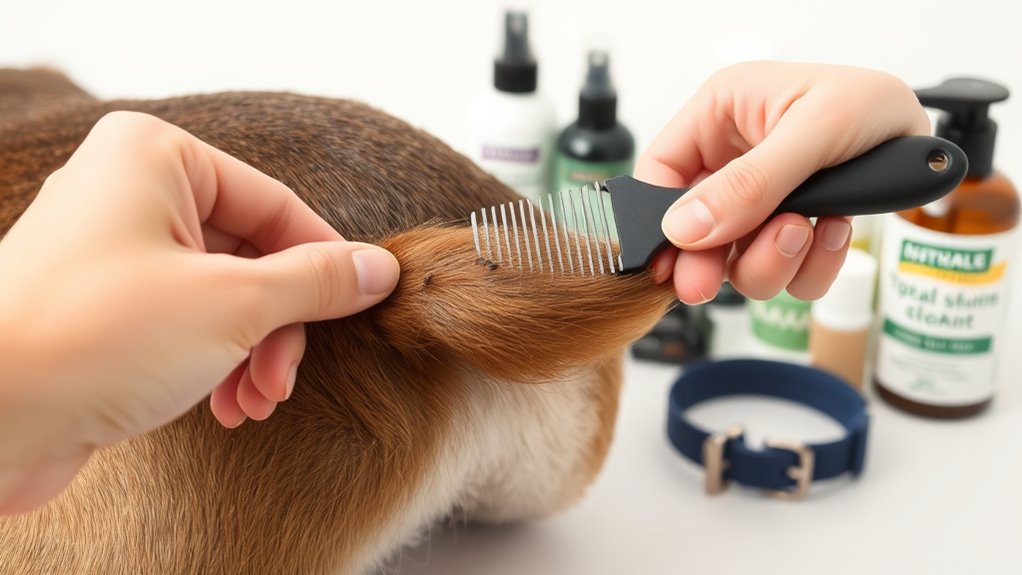

To prevent and treat fleas and ticks, you should maintain a regular grooming routine, wash bedding, and vacuum often. Use veterinarian-approved treatments like topical, oral medications, or collars for long-lasting protection. Environmental control, such as yard maintenance and outdoor pest management, also helps. Combining these approaches with natural remedies can boost effectiveness. Staying vigilant after outdoor activities is key. If you continue exploring, you’ll discover more ways to keep pests at bay effectively.
Key Takeaways
- Implement regular grooming, vacuuming, and washing pet bedding to prevent flea and tick infestations.
- Use veterinarian-approved topical, oral, or collar treatments for effective protection.
- Incorporate natural remedies like essential oils and herbal sprays as supplementary pest management strategies.
- Maintain outdoor environments through yard maintenance and outdoor pest control to reduce tick habitats.
- Monitor pets after outdoor activities and promptly remove ticks to prevent disease transmission.
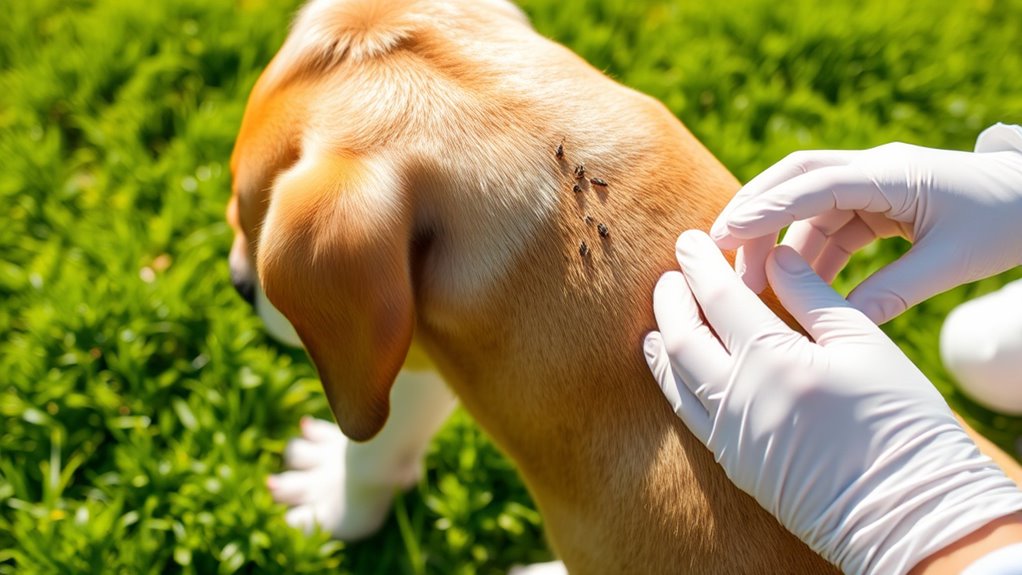
Fleas and ticks are common pests that can cause discomfort and health risks for both your pets and your family. When dealing with these pests, it’s vital to explore effective prevention and treatment options. You might be tempted to try natural remedies first, as they often appeal to pet owners seeking chemical-free solutions. These remedies, like essential oils, diatomaceous earth, or herbal sprays, can sometimes help reduce fleas and ticks, especially as a part of an integrated approach. However, natural remedies may not always be enough to completely eliminate an infestation, particularly if the problem is severe. That’s where veterinary treatments come into play. Veterinarians can prescribe potent medications that target fleas and ticks quickly and effectively, providing peace of mind that your pets are protected. These treatments include topical applications, oral medications, and collars that offer long-lasting protection. Using veterinary-approved products ensures you’re applying safe and reliable options, especially when you consider the health risks associated with these pests, such as Lyme disease, tapeworms, or allergic reactions. It’s vital to follow your vet’s advice for dosage and application to avoid any adverse effects.
Prevention is equally important to avoid the stress of dealing with infestations. Regular grooming, vacuuming your home thoroughly, and washing your pet’s bedding help remove fleas and ticks before they become a problem. Many pet owners also choose to use preventative veterinary treatments year-round, particularly in areas where these pests are prevalent. These medications not only kill existing pests but also prevent new ones from establishing. Combining these treatments with environmental control measures, like yard maintenance and outdoor pest control, creates a thorough defense against fleas and ticks. Keep an eye on your pets, especially after outdoor activities, as ticks tend to latch onto hosts in grassy or wooded areas. Prompt removal of ticks with fine-tipped tweezers and checking your pets regularly can prevent disease transmission. Additionally, passive voice detection tools can assist writers in ensuring their content is clear and engaging by identifying and reducing passive constructions.

Vet’s Best Natural Flea and Tick Drops for Dogs – Natural Topical Flea Prevention with Certified Essential Oils – Plant-Based Spot-On Treatment for Large Dogs – Pest Control – 4 Month Supply
LARGE DOG FLEA TREATMENT: Specifically designed for small dogs up to 15 pounds, our flea medicine for dogs…
As an affiliate, we earn on qualifying purchases.
As an affiliate, we earn on qualifying purchases.
Frequently Asked Questions
Can Natural Remedies Effectively Eliminate Fleas and Ticks?
Natural remedies like herbal repellents and essential oils can help deter fleas and ticks, but they may not completely eliminate an infestation. You should use them as a preventive measure or alongside other treatments. Essential oils like citronella, eucalyptus, and tea tree can be effective, but always dilute them properly and test for allergies. Remember, natural remedies work best when combined with thorough cleaning and regular vet visits.
How Often Should I Check My Pets for Fleas and Ticks?
You should check your pets for fleas and ticks at least once a month through regular grooming, paying close attention to ears, neck, and paws. During peak flea and tick seasons, perform more frequent seasonal checks, ideally every couple of weeks. Regular inspections help catch infestations early, making treatment easier and more effective. Consistent vigilance guarantees your pet stays comfortable and healthy throughout the year.
Are There Specific Signs of Flea or Tick Infestations in Pets?
You might notice your pet itching, biting, or scratching excessively, which could indicate fleas or ticks. Look for flea dirt, small brown specks, or tiny moving fleas on their skin. Ticks may be visible clinging to fur or skin. Flea allergy dermatitis causes inflammation and hair loss. Be alert for signs of tick-borne illnesses like fever or lethargy. Regular checks help catch infestations early and prevent serious health issues.
What Environmental Treatments Can Reduce Flea and Tick Populations?
You can reduce flea and tick populations through yard treatments and seasonal control. Apply appropriate insecticides to your yard, focusing on shaded, moist areas where pests thrive. Regularly mow the lawn, clear debris, and trim bushes to eliminate hiding spots. Use seasonal treatments to target peak pest activity, especially during warm months. Consistent environmental management helps keep fleas and ticks at bay, protecting both your pets and your family.
Can Fleas and Ticks Transfer Diseases to Humans?
Yes, fleas and ticks can transfer diseases to humans. Flea-borne illnesses like plague and typhus, and tick-borne diseases such as Lyme disease and Rocky Mountain spotted fever, pose serious health risks. When you’re outdoors or in infested areas, you can pick up these parasites and become infected. To protect yourself, check for ticks regularly, use repellents, and seek prompt treatment if you notice bites or symptoms.

Earth Animal Apothecary Natural Flea & Tick – Herbal Bug Spray for Dogs & People – 8 oz. Bottle
PROTECT & REPEL EFFECTIVELY AGAINST FLEAS, TICKS, & MOSQUITOES: A veterinary formulated bug spray infused with cedarwood &…
As an affiliate, we earn on qualifying purchases.
As an affiliate, we earn on qualifying purchases.
Conclusion
Taking proactive steps to prevent and treat fleas and ticks keeps your pets healthy and your home flea-free. Regular grooming, vet-recommended treatments, and thorough cleaning make a big difference. Are you ready to prioritize your pet’s well-being and avoid unnecessary discomfort? Remember, staying vigilant and consistent is key. Don’t wait until an infestation occurs—your pet’s comfort and health depend on your proactive efforts. Keep these tips in mind and enjoy worry-free, happy moments with your furry friends.

Hartz UltraGuard Flea & Tick Collar for Cats and Kittens, 7 Month Flea and Tick Protection and Prevention, White
Fresh scented
As an affiliate, we earn on qualifying purchases.
As an affiliate, we earn on qualifying purchases.

Wondercide – Ready to Use Flea, Tick, and Mosquito Yard Spray with Natural Essential Oils – Mosquito and Insect Killer, Treatment, and Repellent – Plant-Based – Safe Around Pets, Plants, Kids – 32 oz
KILL & REPEL BUGS. Plant powered pest protection that works. A flea and tick yard treatment and preventative,…
As an affiliate, we earn on qualifying purchases.
As an affiliate, we earn on qualifying purchases.