TL;DR
Choose a clean, food-safe dog food storage container with a reliable lid and enough room for the bag you use. Keep kibble in its original bag inside the container when possible, store it somewhere cool and dry, and clean and dry the bin between batches. Follow the package directions, and don’t feed food that smells rancid or shows mold, dampness, or pests.
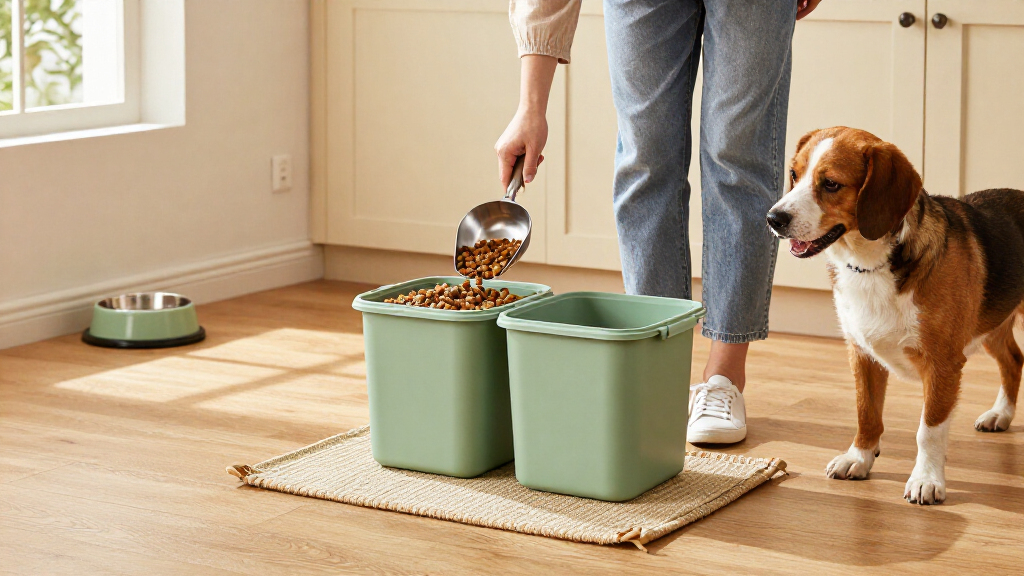
A bag of kibble can turn from crisp and savory to limp and stale when it sits open beside a warm oven. The right dog food storage container helps protect your dog’s food, but the lid is only part of the job: bag placement, cleanliness, and where you keep the container matter too. Each choice addresses a different weakness: the bag retains product information, the container limits exposure, and the storage spot affects heat and humidity.

Get pet supplies delivered free with Prime
- Fast, free delivery on millions of items
- Prime Video, Amazon Music and more included
- Member-only deals all year
This guide walks you through why storage matters, which container features are worth your money, and how to set up a routine that works in a small kitchen or a busy home. You’ll also learn why the original bag is often useful, how to size a bin to your dog’s appetite, and what signs mean the food should stay out of the bowl.
Think of the container as a pantry for kibble. A sturdy door helps, but a dry shelf and clean interior matter just as much. Follow the food’s label, and ask your veterinarian for guidance if you have questions about your dog’s diet or food safety.
Keep kibble in its original bag inside a clean, dry container when possible.
Choose a lid that closes securely and a capacity that matches your bag and your dog’s eating pace.
Store food in a cool, dry place away from sunlight, ovens, and damp areas.
Empty crumbs and clean the bin between batches when needed; let it dry completely before refilling.
Keep food with mold, moisture, pests, rancid odor, or a marked change in appearance out of your dog’s bowl.
Why the Right Container Helps Kibble Stay Fresh
A dog food storage container helps limit exposure to air, moisture, heat, light, and pests, all of which can affect food quality. A secure lid slows down staling and helps keep kibble dry, while a cool, dry storage spot avoids the heat swings that can make food deteriorate faster. The container works like a raincoat: useful protection, but it can’t fix a damp or overheated pantry. Think of these safeguards as working together: a good seal reduces what reaches the food each time you open the bin, while a suitable location reduces the stress on the food between feedings.
Imagine you leave a bag rolled loosely beside a sunny window. The top pieces may lose their crisp smell, and humid air can reach the food every time you open it. Moisture can also encourage mold, so a bin beside a dishwasher vent or a laundry room’s damp corner is a poor choice even if the lid seals well. Repeated exposure matters because opening the container is part of the routine; a seal helps limit that exchange, but it cannot undo exposure that has already occurred.
Store dry food according to the package instructions, away from direct sunlight, ovens, and other heat sources. If your kitchen is warm, a shaded cupboard may work better than a countertop. A garage can be suitable only when it stays cool and dry and pests can’t get in; many garages have hot afternoons and cold nights that make storage less predictable. A convenient spot is useful only if its conditions remain reasonably stable over the time it takes your dog to finish the bag.
A tight lid helps, but a cool, dry location and clean handling do just as much for kibble.
For opened wet food, use the label’s directions: cover it, refrigerate it promptly, and follow the manufacturer’s timeframe. Dry food usually belongs in a cool, dry place rather than the refrigerator, unless the package says otherwise. Different food types have different storage needs, so the package directions should decide where and how to keep each one.
Products Worth Considering

iRobot Roomba Plus 505X Robot Vacuum & Mop Combo with AutoWash Dock

Dyson Ball Animal 2 Upright Corded Vacuum Cleaner, Fuchsia

Shark PowerDetect Robot Vacuum and Mop Combo with 60-Day Self-Emptying Base (AV2800ZE)
As an affiliate, we earn on qualifying purchases.
Keep the Original Bag Inside the Bin
Keeping dry food in its original bag, then placing that closed bag inside a clean container, is usually the most practical storage setup. The bag keeps the product label, date, and feeding information with the food while the outer bin adds a barrier against air, humidity, and pests. That extra layer can save you a scramble if you need to check ingredients or call your veterinarian about a food your dog has eaten. It also reduces direct contact between the kibble and the bin, so the bin’s surface is less likely to retain food oils or crumbs from one batch to the next.
For example, suppose you buy two diets for different dogs. If you pour both into similar bins, a quick scoop can turn into a mix-up. Keeping each bag intact and labeling the container with the dog’s name or food type makes the difference clear, even when dinner is rushed. That separation is useful beyond convenience: it helps you identify exactly what each dog has eaten if you need to discuss a reaction or feeding change with your veterinarian.
You can pour kibble directly into a bin if it’s intended for food contact, clean, completely dry, and kept sealed. But you’ll lose the bag’s printed details unless you keep the label or write down the product information and date. If you do pour it in, empty and clean the bin before refilling; don’t keep topping up a layer of old crumbs with a new bag. Old food at the bottom may have been stored longer and can be harder to inspect, while mixing batches makes it less clear when the remaining food was opened.
Use the package’s best-by date and storage directions as your guide. Marking the purchase or opening date on a label can help when you have several bags in rotation. Follow the feeding plan set for your dog, and check with your veterinarian before changing diets, especially if your dog has a health condition.
A bag tucked into a bin may look less tidy than loose kibble, but it keeps the useful information close at hand. That small tradeoff is often worth it. If your container is too small for the whole bag to sit comfortably, choose a better-fitting bin or use another safe storage arrangement that still keeps the bag details available.
Choose Features That Fit Your Kitchen and Routine
The best container is the one that fits your food supply, closes reliably, and is easy for you to clean and use. Look for a tight-fitting lid, food-safe materials, smooth surfaces, and a practical opening. A rolling bin or built-in scoop can make feeding easier, but only if the lid still seals well and the container fits where you plan to store it. The key tradeoff is between convenience during daily feeding and the effort required to keep the food protected: a wide opening may make scooping simple, but it still needs a lid you can close fully each time.
Plastic, metal, and glass containers can all work when they are suitable for food contact and you follow the maker’s cleaning instructions. Material alone doesn’t guarantee freshness. A scratched, crumb-filled bin with a loose lid is a worse choice than a simple container that is clean and closes properly. A smooth interior matters because residue is easier to see and remove; a hard-to-clean shape can leave crumbs behind even when the container looks empty.
Think through your daily routine before buying. If you lift a large bag every morning, wheels and a wide opening might help. If your dog nudges anything left on the floor, choose a stable shape and a lid that resists curious paws. A heavy container may stay put but feel awkward to move; a lightweight one is easy to carry but may tip more readily. Choosing around the actual storage spot also avoids a common frustration: a bin that fits the bag but cannot be opened fully under a shelf or beside an appliance.
| Feature | Why it helps | What to check |
|---|---|---|
| Tight lid | Limits air, moisture, and pest access | It closes fully every time |
| Food-safe material | Fits the job of holding pet food | The product is intended for food contact |
| Smooth interior | Makes crumbs and residue easier to remove | There are few hard-to-reach corners |
| Wheels or handles | Makes a large bin easier to move | Convenience doesn’t interfere with the seal |
| Clear label | Helps distinguish foods and dates | Food type or dog’s name stays readable |
Fancy features such as odor control, app connections, or measuring compartments may suit your habits, but they don’t replace a clean interior and a dependable lid. If you feed one small dog, a compact bin may suit you better than a rolling container designed for a large bag. Paying for extra capacity or mechanisms only helps if they make your routine easier without making cleaning or closing the container less reliable.
Match the Container Size to How Fast Your Dog Eats
Choose a container that holds the amount of food you buy without leaving kibble stored for an unnecessarily long time. Capacity labels can be misleading because different kibble shapes and sizes take up different amounts of space. Check the product’s stated dimensions and compare them with your bag, then leave enough room for the bag to close and sit comfortably inside. A bin that is too small can force you to crush or leave the bag exposed; one that is much larger may encourage bulk buying or leave a bigger space of air above the food if you pour kibble directly in.
For instance, a small terrier who eats slowly may take weeks to finish a large bag. Buying a bin big enough for several bags can tempt you to stock up and let food sit for longer. A smaller container that fits one bag makes it easier to keep the food fresh and to notice when you’re running low. The useful size is therefore tied to turnover: how long a bag is open matters along with how much it holds.
A household with two large dogs may need a bigger bin or a second container. If the dogs eat different formulas, keep each food in its own labeled bin or bag. That simple boundary prevents a hurried scoop of the wrong kibble and makes it easier to track which bag is nearly empty. Separate storage also avoids having to empty a large mixed supply just to identify or replace one food.
Check how quickly your dog finishes a bag and use the package’s freshness guidance to plan purchases. If the food’s smell, appearance, or texture changes before you finish it, stop and ask your veterinarian or the manufacturer for advice. Don’t rely on a large airtight container to make old food fresh again. A seal can slow further exposure, but it cannot reverse changes that have already happened.
- One dog, small bag: Choose a compact bin that fits the bag without excessive spare space.
- Several dogs, same food: Consider a larger container if you can keep the bag protected and clean the bin between batches.
- Different diets: Use separate, clearly marked storage for each food.
Think of capacity as a match for your dog’s eating pace, not a reason to buy the biggest bin on the shelf. The right size keeps storage manageable and reduces the temptation to mix old and new food. It should also fit the space where you plan to keep it, since a bin that is difficult to reach or close is less likely to be used consistently.
Follow a Simple Routine Every Time You Refill
A repeatable refill routine keeps crumbs, old food, and confusion from building up in the bin. Check the package first, keep the bag closed inside the container when possible, and clean and dry the bin between batches if food touches its interior. These small steps take only a few minutes but make storage easier to manage. The order matters: using up the older food before opening the next batch prevents you from burying it, and drying the container prevents wash water from becoming a new source of moisture.
- Read the label: Check storage directions and the best-by date before opening the bag.
- Keep the bag: Fold or close it tightly and place it inside the container whenever possible.
- Empty before refilling: Use the remaining food first, then remove crumbs and residue rather than topping old food with new kibble.
- Wash when needed: Follow the container maker’s cleaning instructions, especially between batches or whenever you see residue.
- Dry it fully: Let every surface dry before adding food; even a little leftover dampness can harm kibble.
- Store and label: Put the bin in a cool, dry place and mark the food type or date if that helps your household.
Take the case of a family that buys a new bag before the old one is empty. The easiest move is to keep the new bag sealed, finish the old food, clean the container if needed, then start the next batch. Mixing the two may hide how long the older kibble has been sitting there. Keeping batches separate also makes it easier to follow the package date and to tell which food was in the bin if you notice a problem.
Keep the scoop clean and dry, too. A scoop left in a water bowl or on a damp counter can bring moisture into the food. Store it in a dry spot or attach it to the outside of the container. A dedicated scoop also makes portions more consistent than using a cup or utensil that may have residue from other foods.
Store the bin off the floor if dampness or pests are a concern. A shelf or raised platform can help, provided the container stays stable and easy to reach. If lifting it becomes awkward, choose a lower, dry location instead; a storage habit works best when it is safe and easy to repeat.
Know When Kibble Should Stay Out of the Bowl
Don’t feed kibble if you find mold, moisture, pests, an unusual rancid smell, or a marked change in its appearance. Those signs suggest the food may have been exposed to conditions that affected it. If you’re uncertain, set it aside and contact your veterinarian or the food’s manufacturer for guidance. These signs are reasons to stop and check rather than try to judge whether a small amount is safe; the package’s freshness guidance also matters because food can change without an obvious warning.
A familiar example: you open the bin and notice a sour, oily smell that wasn’t there last week. The kibble may also feel soft or look clumped. Don’t try to fix it by mixing it with fresh food or masking the odor with a new bag; keep it away from your dog and seek advice. Mixing would make it harder to identify how much of the questionable batch was eaten and could spread the problem through otherwise normal food.
Food can also become stale without obvious mold or pests, especially after repeated air exposure or poor storage. That’s one reason a lid matters, and why a bag left open on a humid floor is a poor setup. Follow the package’s freshness instructions instead of relying on smell alone to decide how long the food lasts. Sensory checks can reveal some changes, but they do not replace the manufacturer’s storage guidance.
Never feed your dog food that may be spoiled. If your dog eats questionable food and becomes unwell, contact your veterinarian promptly and share the product name, package details, and any date information you have. Keep the bag or label when possible; it gives the veterinary team useful details. If you are unsure whether the food is safe before feeding, a call to the manufacturer or veterinarian can help you decide what to do with that batch.
When food looks damp, smells rancid, or shows mold or pests, keep it out of your dog’s bowl.
Storage habits can reduce avoidable problems, but they can’t replace product directions or veterinary advice. A clean bin, a reliable seal, and a cool dry spot give you a sensible starting point.
Frequently Asked Questions
Should I keep dog food in its original bag?
Usually, yes. Close the bag tightly and place it in a clean container to add protection while keeping the label and date information with the food. Follow the package directions for storage and freshness.
Can I pour kibble directly into a plastic bin?
You can if the bin is intended for food contact, clean, completely dry, and sealed reliably. Keeping the original bag is a practical alternative because it preserves product details and limits direct contact with the bin.
How often should I clean a dog food container?
Clean it between batches, or sooner if you notice crumbs, grease, or residue. Follow the maker’s cleaning directions and let the container dry fully before adding food.
Can I store dog food in the garage?
Only if the garage stays cool and dry and pests can’t reach the food. Since garages can swing between hot, cold, and humid conditions, a pantry or cupboard may be a steadier choice.
How can I tell if dog food has gone bad?
Keep food out of the bowl if it has mold, moisture, pests, an unusual rancid odor, or a marked change in appearance. Follow the package’s freshness guidance, and contact your veterinarian or the manufacturer if you’re unsure.
Can I mix new kibble with the old food left in the bin?
It’s better to use the old batch first and clean out crumbs or residue before refilling. Mixing batches can make it harder to track freshness and can leave older food at the bottom for longer.
Conclusion
Choose a container that seals well, fits the food you actually buy, and is easy to keep clean. Keep the original bag inside when you can, store it in a cool, dry place, and give the bin time to dry before the next refill.
Good storage is quiet work: no fancy gadget required, just a clean scoop, a closed lid, and kibble that still smells like dinner when you open the pantry.