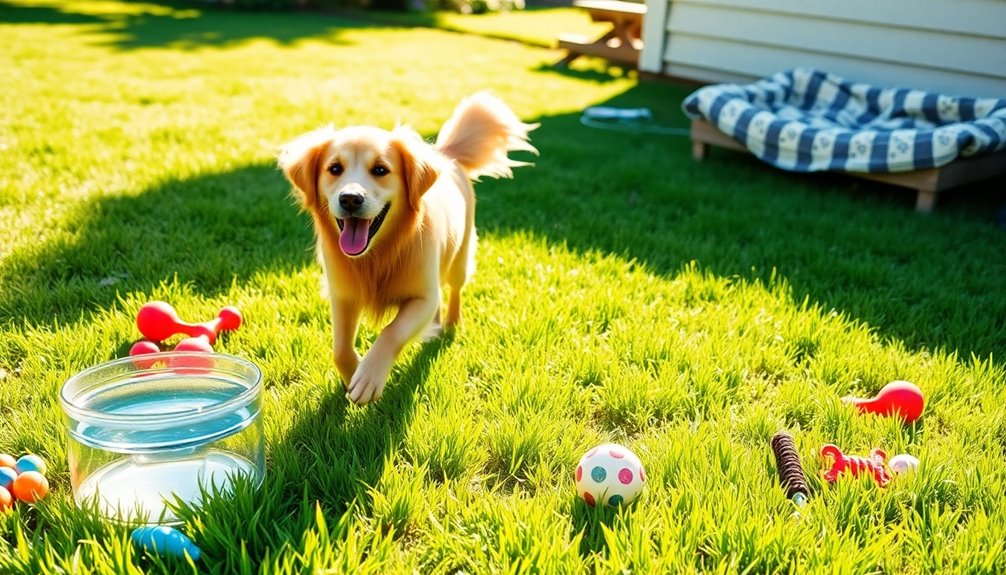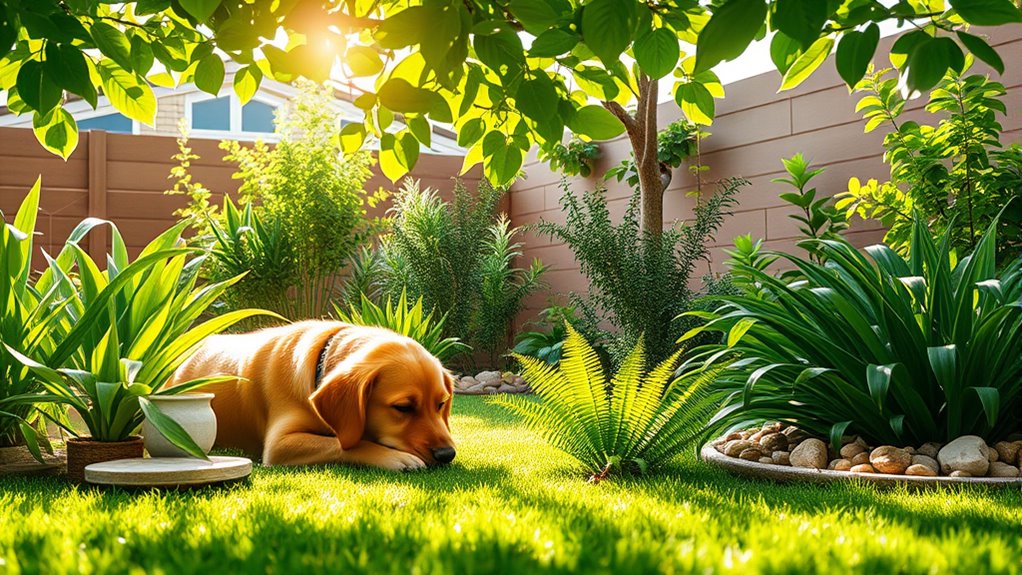
To keep your home safe for your dog, choose non-toxic houseplants like spider plants, Boston ferns, and parlor palms, which are generally safe if ingested. Supervise your dog around plants, place them where your pet can’t access easily, and provide alternative entertainment to discourage chewing. Using pest-free, pet-friendly landscaping options also helps maintain safety outdoors. Continuing will reveal more tips to create a beautiful and secure environment for both your dog and your home.
Key Takeaways
- Choose non-toxic houseplants like spider plants, Boston ferns, and parlor palms to ensure pet safety.
- Verify plant safety with reputable sources such as the ASPCA’s list before bringing new plants indoors.
- Supervise dogs around houseplants and provide alternative toys to reduce curiosity-driven chewing.
- Use barriers or place plants in inaccessible locations to prevent dogs from ingesting or damaging them.
- Incorporate pet-safe landscaping plants into outdoor areas to create a safe, attractive environment for dogs.
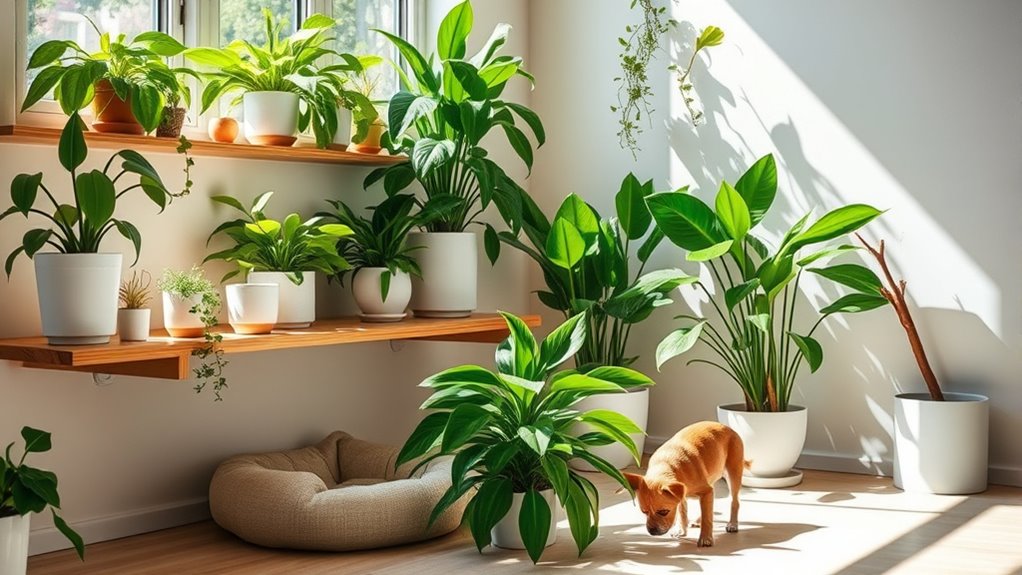
If you’re a dog owner looking to brighten up your home with plants, it’s important to choose varieties that are safe for your furry friend. Indoor pet safety should always come first when selecting houseplants, as many common plants can pose health risks if ingested. Dogs are naturally curious and may chew on leaves or stems, so understanding which plants are toxic and which are safe is essential to prevent accidents. Toxic plant prevention is a key step in creating a pet-friendly environment, ensuring your home remains both beautiful and safe.
Start by familiarizing yourself with plants that are known to be non-toxic to dogs. Many popular houseplants, like spider plants, Boston ferns, and parlor palms, are generally safe and won’t cause harm if your dog nibbles on them. Choosing these varieties reduces anxiety about accidental ingestion and allows your dog to explore your indoor garden without risk. When shopping for new plants, always verify their safety status through reputable sources, such as the ASPCA’s list of toxic and non-toxic plants. This proactive approach helps you avoid introducing harmful plants into your living space.
Familiarize yourself with non-toxic plants like spider plants and Boston ferns for a pet-safe home.
Even with safe plants, it’s wise to monitor your dog’s interactions with your greenery. Some dogs might chew out of boredom or teething, so providing plenty of toys and enrichment can reduce their interest in your plants. Placing plants in high or inaccessible spots can also serve as a visual and physical barrier, minimizing the chance of unwanted chewing. Remember, even non-toxic plants can cause mild stomach upset if ingested in large quantities, so moderation and supervision are key. Being aware of plant toxicity levels can help you better manage your pet’s safety around houseplants. If you notice your dog showing excessive interest in your plants, consider redirecting their attention to safer alternatives or consulting your veterinarian for advice.
Incorporating pet-safe plants into your home creates a healthy, inviting space for both you and your dog. It’s a simple yet effective way to enhance indoor air quality and add natural beauty without risking your pet’s health. Regularly inspect your plants for pests or damage, and keep the soil covered to prevent your dog from digging or ingesting soil particles, which may contain harmful substances. If you’re ever unsure about a specific plant, it’s better to err on the side of caution and leave it out of your home or garden.
Frequently Asked Questions
Which Non-Toxic Plants Are Best for Small Apartments?
You should choose pet-friendly plants like spider plants, Boston ferns, and areca palms for your small apartment. These indoor plants are safe for pets, promoting indoor plant safety and allowing you to enjoy pet-friendly gardening without worries. They thrive in limited space, add greenery, and improve air quality. Always double-check specific plant safety details to guarantee your furry friend stays healthy while you create a lush, pet-safe environment.
How Can I Identify Toxic Plants My Dog Has Ingested?
If you suspect your dog has ingested a toxic plant, watch for plant toxicity signs like vomiting, diarrhea, drooling, or difficulty breathing. Act quickly by removing the plant and calling your vet or emergency plant care services. Keep a photo of the plant handy to help identify it. Promptly seeking professional advice can prevent serious health issues and guarantee your dog receives the care it needs.
Are There Natural Remedies for Plant Poisoning in Dogs?
When facing plant poisoning in your dog, gentle natural remedies can help soothe their discomfort. You might try offering small amounts of honey or coconut oil to ease irritation or encourage vomiting, but always consult your vet first. Activated charcoal can also bind toxins and promote recovery. Remember, while natural remedies can support your dog’s healing, professional veterinary care is essential to guarantee safe and effective treatment.
How Often Should I Inspect My Plants for Hazards?
You should inspect your plants for hazards weekly to guarantee plant safety routines are maintained. Regular hazard inspection schedules help you catch potentially toxic plants or other dangers early. During each inspection, look for new growth or changes that could pose risks to your dog. Stay vigilant and make hazard inspections a routine part of your pet care, so you can prevent poisoning or injuries before they happen.
Can I Train My Dog to Avoid Garden Plants?
Think of training your dog to avoid garden plants as guiding a ship through treacherous waters. You can absolutely teach your dog plant avoidance with consistent dog training. Use positive reinforcement, like treats and praise, whenever they steer clear of plants. Establish boundaries and redirect their attention when they approach plants. Patience is key—over time, your dog will learn to navigate your garden safely, avoiding hazards effortlessly.
Conclusion
Just like the loyal Hachiko waited faithfully, your commitment to choosing safe plants guarantees your furry friend stays happy and healthy. By selecting non-toxic greenery, you’re creating a haven that’s as comforting as a warm hearth. Remember, in this garden of life, your mindful choices protect your best friend’s well-being—turning your home into a sanctuary where both you and your dog can thrive together, just like legends that stand the test of time.