You should know that ear cropping and tail docking are mainly done for appearance, not health, and many regard these procedures inhumane. They can cause pain, distress, and long-term discomfort for animals. Ethical veterinary practices oppose unnecessary surgeries that don’t benefit the animal, and many regions are banning or restricting them. Moving forward, understanding the ethical concerns can help you make more compassionate choices for your pets—there’s more to contemplate if you keep exploring these issues.
Key Takeaways
- Ethical concerns highlight that ear cropping and tail docking cause pain without medical benefits.
- Many regions have laws restricting or banning these procedures due to animal welfare considerations.
- Veterinarians generally oppose cosmetic surgeries unless medically necessary, emphasizing animal well-being.
- Public awareness is shifting toward respecting animals’ natural features and rejecting unnecessary modifications.
- Responsible pet care involves prioritizing health and comfort over aesthetic standards promoted by outdated practices.
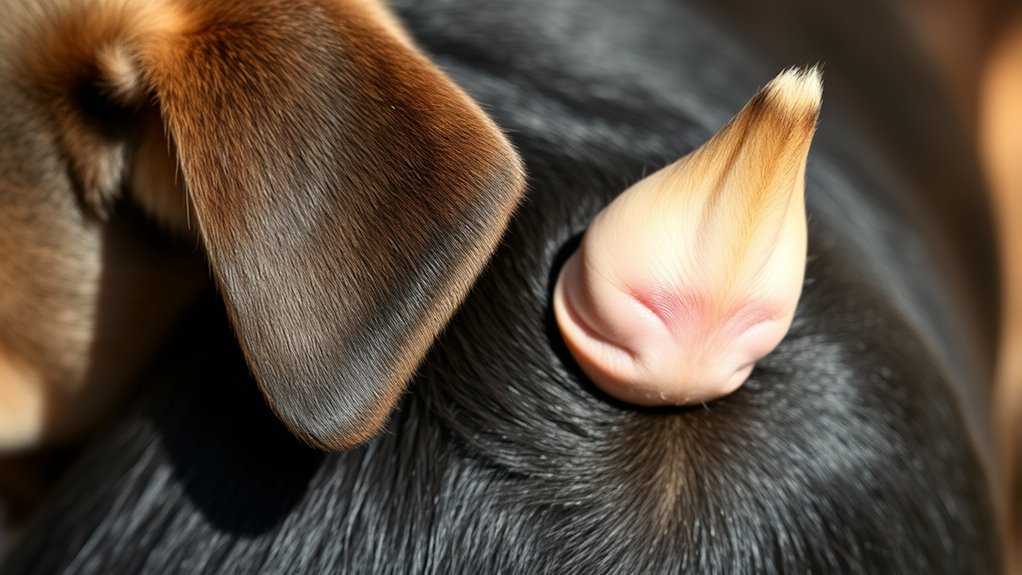
Have you ever wondered why some dogs have their ears and tails altered? Many people ask this question, especially as awareness around animal rights and veterinary ethics grows. These procedures, known as ear cropping and tail docking, have traditionally been performed to meet breed standards or for perceived practical reasons. However, from an ethical standpoint, many argue that these surgeries raise serious concerns because they are often done solely for aesthetic reasons and can cause unnecessary pain and distress to the animal. As someone interested in responsible pet ownership, understanding the ethics behind these practices is essential. The debate frequently centers on whether such modifications are justified when they serve no medical purpose. Veterinary ethics emphasize the importance of prioritizing animal welfare and minimizing suffering, which conflicts with cosmetic procedures that offer no health benefits. Legally, several countries and regions have moved toward banning or restricting these surgeries, recognizing that they often violate principles of animal rights, which advocate for respecting animals’ intrinsic value and preventing unnecessary harm. When considering whether ear cropping or tail docking is appropriate, it’s essential to reflect on whether these surgeries serve the animal’s best interests or simply conform to outdated breed stereotypes. Many veterinarians now oppose these procedures unless medically necessary, such as to address injury or health problems. They argue that performing cosmetic surgeries solely for appearance disregards the animal’s well-being, undermining veterinary ethics rooted in compassion and respect. If you’re a dog owner or prospective owner, it’s worth questioning whether these procedures are truly necessary. Advances in animal welfare standards and a growing understanding of animal sentience have shifted public opinion, leading many to view these practices as archaic and inhumane. Furthermore, some emerging trends in animal welfare emphasize natural beauty and reject unnecessary alterations, aligning with ethical veterinary practices. Instead of altering a dog’s natural features, focus on providing proper care, training, and love, which are far more beneficial for the animal’s happiness and health. Veterinary professionals increasingly advocate for leaving animals as they are, emphasizing that respecting their natural state aligns better with ethical standards and animal rights principles. Ultimately, the decision to perform or decline ear cropping and tail docking should be guided by a deep respect for animal welfare and a commitment to ethical veterinary practices. By choosing to oppose unnecessary cosmetic surgeries, you contribute to a shift toward more humane treatment and recognition of animals as sentient beings deserving of care and respect. The conversation surrounding these procedures continues to evolve, reflecting society’s growing awareness of the importance of animal rights and the ethical responsibilities of those who care for animals.

ziyue Doberman Ear Posting Kit, Dog Ear Cropping Dog Ears Stand up Care Tape Kit for Doberman Pinscher Dogs
【High Elastic Sponge】The dog ear posting kit are made of high quality elastic sponge material(manual cutting), the edge…
As an affiliate, we earn on qualifying purchases.
As an affiliate, we earn on qualifying purchases.
Frequently Asked Questions
Are There Legal Restrictions on Ear Cropping and Tail Docking Worldwide?
You should know that legal restrictions on ear cropping and tail docking vary worldwide. In many countries, these procedures are banned or heavily restricted, especially for cosmetic reasons, due to ethical concerns. Cultural differences also influence these laws; some regions permit them as traditional practices, while others prioritize animal welfare. Always check local regulations before considering these procedures, as laws can change and differ markedly across borders.
What Are the Potential Health Risks Associated With These Procedures?
You should know that about 15% of ear cropping and tail docking procedures lead to infection risks, which can cause serious complications. You might also experience pain and discomfort, sometimes lasting weeks after the procedure. These risks highlight the importance of proper veterinary care and post-operative monitoring. If you decide to proceed, guarantee the procedures are performed by experienced vets to minimize health hazards for your dog.
How Do These Procedures Impact a Dog’s Behavior and Well-Being Long-Term?
You might notice behavior changes and emotional impacts in your dog after these procedures. They can become more anxious or stressed due to pain, discomfort, or altered sensory input. Long-term, your dog may miss out on natural communication signals, affecting social interactions. These changes can influence their overall well-being, making it essential to contemplate how ear cropping or tail docking might affect their emotional health and behavior over time.
Can Alternative Methods Replace Ear Cropping and Tail Docking for Aesthetic Purposes?
You can definitely choose aesthetic alternatives that preserve your dog’s natural appearance instead of ear cropping or tail docking. These options include grooming styles, accessories, or natural postures that highlight your pet’s unique features. Many breeders and owners now prioritize natural looks, recognizing that these alternatives can enhance beauty without causing harm. Embracing the natural appearance not only respects your dog’s well-being but also promotes ethical pet care.
What Role Do Breeders and Owners Play in Advocating for Ethical Practices?
You play a vital role in advocating for ethical practices by supporting responsible breeding that prioritizes animal welfare over aesthetics. By educating others and choosing breeders committed to humane standards, you help promote ethical advocacy. Your actions can influence industry standards and encourage alternatives that avoid unnecessary procedures. Ultimately, your dedication to ethical practices helps protect animals from harmful procedures and fosters a more compassionate, responsible approach within the breeding community.
Supet Raised Inflatable Dog Cone Collar to Stop Licking, Soft Dog Cone Alternative After Surgery, Doggie Neck Donut Collar for Small Medium Large Dogs
Upgraded Dog Donut Collar – Our inflatable dog cone is the ultimate upgrade from common inflatable dog collars,…
As an affiliate, we earn on qualifying purchases.
As an affiliate, we earn on qualifying purchases.
Conclusion
In making decisions about ear cropping and tail docking, you weigh ethics against tradition, care against cruelty, choice against consequence. Recognize the importance of understanding the reasons behind these practices, the impact they have on animals, and the responsibility you hold. By questioning, by learning, by choosing compassion over convention, you can foster a future where care guides your actions and ethics shape your decisions. Ultimately, your choices define the well-being of the animals in your care.

Aglads 3PCS Cat Rabbit Bunny Dog Grooming Kit, Self-Cleaning Slicker Cat & Dog Brush for Shedding, Fine-Needle Comb, Pet Nail Clipper & File for Long/Short-Haired Pets, Easy to Remove Loose (3, blue)
Our premium cat grooming kit & rabbit grooming kit is crafted with top-tier materials: the cat brush/rabbit brush…
As an affiliate, we earn on qualifying purchases.
As an affiliate, we earn on qualifying purchases.

The Animal Book: A Visual Encyclopedia of Life on Earth (DK Our World in Pictures)
Used Book in Good Condition
As an affiliate, we earn on qualifying purchases.
As an affiliate, we earn on qualifying purchases.