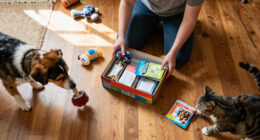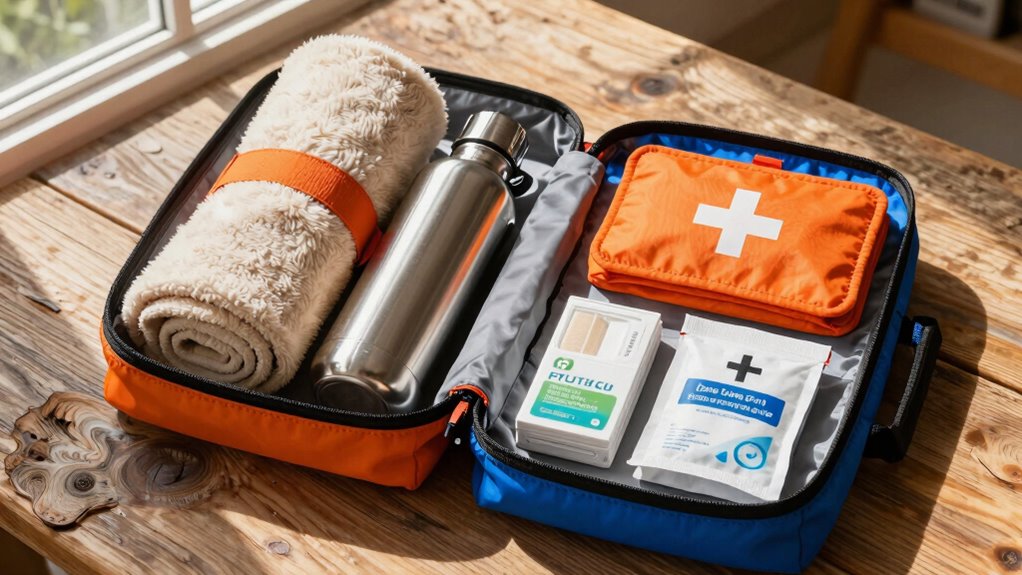

When packing an emergency go-bag for your dog, include essentials like a first aid kit, medications, and copies of health records. Add items for comfort, like a favorite toy and blanket, along with food, treats, and collapsible water bowls. Keep everything organized in a waterproof bag, and consider eco-friendly options when possible. Focus on safety, convenience, and sustainability. Want to know how to make your dog’s emergency kit the most effective? Keep going for more tips.

Get pet supplies delivered free with Prime
- Fast, free delivery on millions of items
- Prime Video, Amazon Music and more included
- Member-only deals all year
Key Takeaways
- Include veterinary supplies like first aid kits, medications, and health records for quick medical response.
- Pack travel essentials such as water, food, leash, harness, and comforting items to reduce stress.
- Ensure safety with a portable crate, photo ID, and familiar items for security and recognition.
- Organize supplies in a waterproof, accessible bag, and include flashlight and batteries for emergencies.
- Use eco-friendly products to promote sustainability and reduce environmental impact during disaster preparedness.
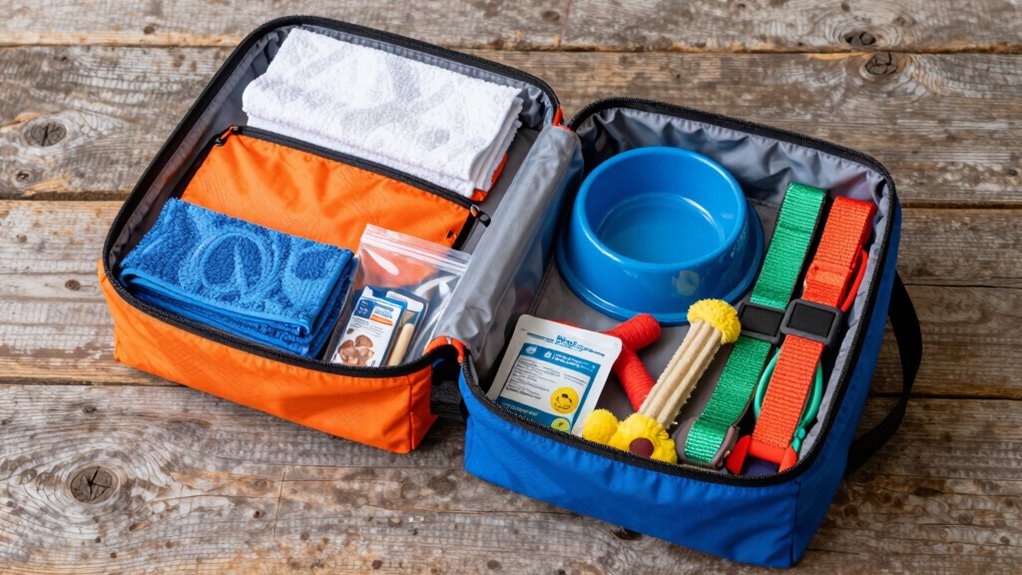
Emergency situations can strike unexpectedly, and having a well-prepared go-bag for your dog guarantees you’re ready to keep them safe and comfortable. When disaster hits, your priority is to ensure your dog’s well-being, which means packing essentials that cover their basic needs and potential medical emergencies. One of the most important aspects is including veterinary supplies. These should feature items like basic first aid kits with antiseptic wipes, bandages, and tweezers, along with any medications your dog regularly takes. If your dog has specific health issues, make sure to pack enough medication to last several days and keep copies of their health records in a waterproof container. Having these veterinary supplies on hand can make all the difference if your dog sustains an injury or shows signs of illness during an emergency.
Alongside medical items, travel accessories are equally vital. You’ll want a sturdy, collapsible water bowl and a supply of clean water to prevent dehydration. A lightweight leash and harness make it easier to control your dog in crowded or chaotic environments while maintaining their safety. Don’t forget a familiar blanket or a favorite toy; these small comforts can help reduce your dog’s anxiety amid chaos. If your dog has specific dietary needs, pack enough of their regular food in airtight containers to last several days, along with some treats for positive reinforcement or comfort. The goal is to create a sense of familiarity and security despite the upheaval.
Think about your dog’s comfort and safety when selecting travel accessories. A portable, collapsible crate or carrier can serve as a secure space for them to rest and feel protected. Make sure it’s well-ventilated and easy to carry. Also, consider including a photo of your dog, especially if they tend to wander off or get lost during emergencies. This can help others identify them if needed. Additionally, pack a flashlight and extra batteries—emergencies often happen at night or in low-light conditions. Remember to keep everything organized in a waterproof, durable bag so you can quickly grab it when time is critical. Recognizing the importance of biodiversity and environmental awareness can also inspire you to choose eco-friendly supplies and reduce waste in your preparedness efforts. Being mindful of environmental sustainability can help you make greener choices that benefit both your pet and the planet. Incorporating eco-conscious products can further enhance your disaster preparedness and promote a healthier environment for all.
Frequently Asked Questions
How Often Should I Update My Dog’s Emergency Go-Bag?
You should update your dog’s emergency go-bag at least every three to six months to guarantee pet safety and emergency preparedness. Check for expired medications, replace fresh food or water, and update any worn or out-of-date supplies. Regularly reviewing your kit helps you stay ready for unexpected situations, making sure your dog’s essentials are current and reliable. Staying proactive is key to keeping your pet safe in emergencies.
Can I Include Medications in the Emergency Kit?
Yes, you should include medications in your dog’s emergency kit. Store them in a waterproof container to prevent damage, and include clear dosage instructions. Keep medications like heartworm preventives, allergy meds, or any daily prescriptions your dog needs, and make certain to check the expiration dates regularly. Having these essentials ready guarantees you can provide your dog with necessary treatment during emergencies, even if you’re away from home.
What Size Go-Bag Is Best for Small Dogs?
For small dogs, opt for a compact, lightweight go-bag that’s easy to carry yet fits essentials. You’ll want enough space for dog hydration supplies like a collapsible bowl and emergency feeding items such as small, non-perishable treats or canned food. Make sure the bag has compartments for medications and first aid. A size around 10-15 liters usually works well, ensuring your dog’s needs are met without overloading you during emergencies.
Should I Customize the Bag for Different Seasons?
Yes, customizing your dog’s go-bag for different seasons is a smart idea. You should include season-specific supplies like extra blankets or cooling mats, considering climate considerations. In winter, pack warm clothing and paw protectors; in summer, add water bottles and cooling towels. Adjusting your bag’s contents guarantees your dog stays comfortable and safe, no matter the weather. Regularly update and review these items to respond effectively to seasonal changes.
How Do I Train My Dog to Use the Emergency Supplies?
Think of training your dog to use emergency supplies as planting seeds for future safety. Start with positive reinforcement, rewarding your dog each time they interact calmly with the supplies. Practice in a calm environment, gradually increasing distractions. Consistent dog training and emergency preparedness go hand-in-hand, building your dog’s confidence and ensuring they’re comfortable during stressful times. Patience and repetition turn unfamiliar supplies into trusted tools your dog will rely on when it matters most.
Conclusion
When disaster strikes, your dog’s emergency go-bag is your lifeline, a tiny vessel of hope amid chaos. Think of it as a magic carpet, ready to whisk your furry friend to safety and comfort. Packing the right essentials guarantees you’re prepared to face the storm together, turning fear into resilience. So, gear up, and let your preparedness be the anchor that keeps you both steady when the winds of trouble blow hardest.
Halloween Picks
halloween
As an affiliate, we earn on qualifying purchases.