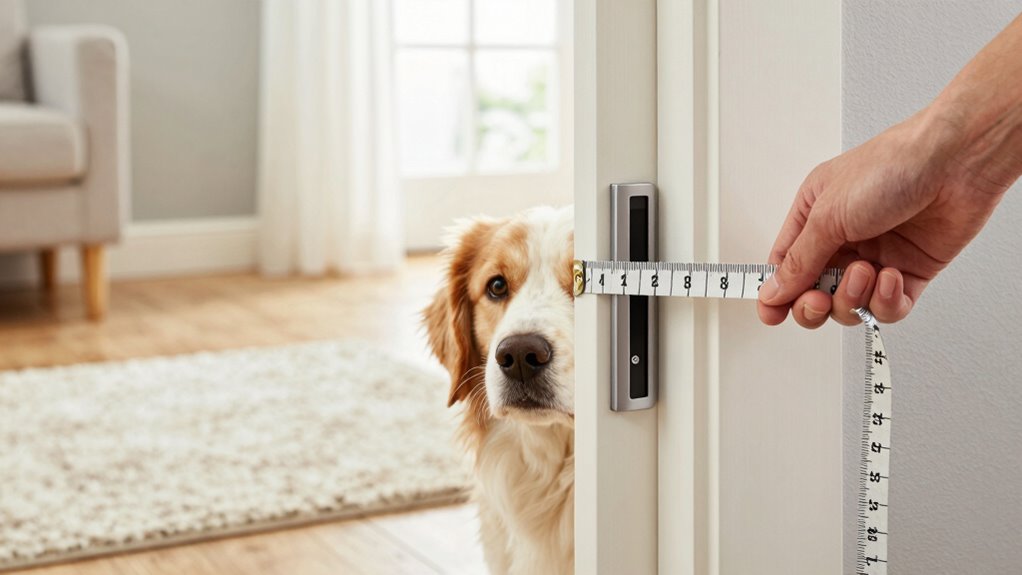
To measure your dog’s size correctly, use a flexible tape measure to find their height from shoulders to the floor and width at the widest point of their chest or shoulders. Add a couple of inches for comfortable movement and security. Double-check your measurements before choosing a door size to prevent frustrating returns. Keep your measurements accurate and tailored to your dog’s shape for a perfect fit—learn more tips to get it just right.

Get pet supplies delivered free — and shop member deals
- Fast, free delivery on millions of items
- Access to Prime Big Deal Days deals on October 6–7
- Prime Video, Amazon Music and more included
Key Takeaways
- Use a flexible tape measure to accurately determine your dog’s height from shoulders to floor, and width at the widest chest point.
- Add approximately 2 inches to the height and 1 inch to the width of your dog’s measurements for comfortable movement.
- Double-check measurements before cutting or installing to ensure a proper fit, avoiding gaps or tight spots.
- Confirm measurements align with manufacturer size guidelines to select the correct dog door opening.
- Test the door after installation to verify proper operation and safety, reducing the need for returns.
As an affiliate, we earn on qualifying purchases.
Why Measuring Your Dog’s Size Correctly Matters
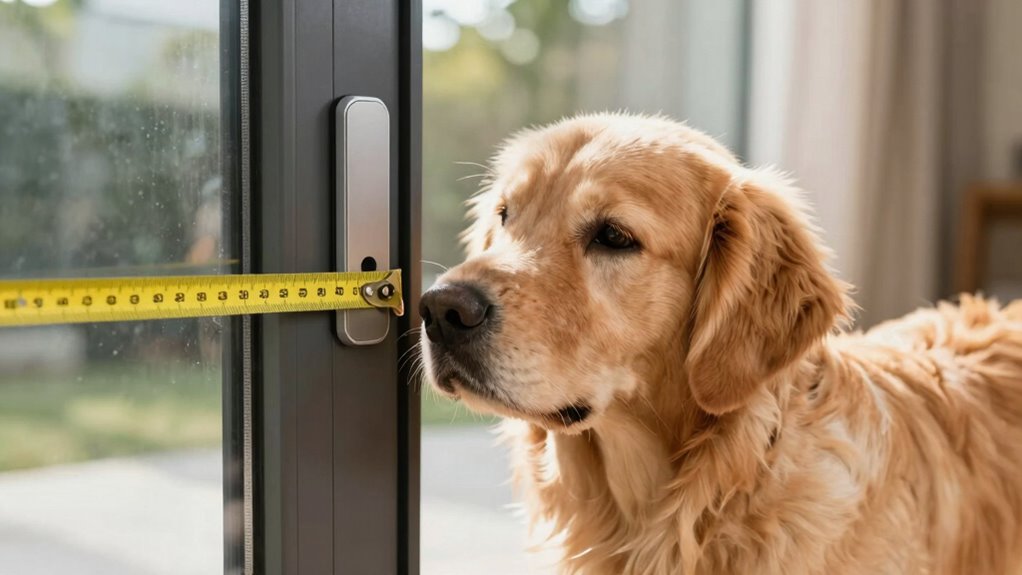
Measuring your dog’s size accurately is essential because an ill-fitting door can cause frustration for both you and your pet. When choosing a dog door, consider the materials it’s made from, as durable options like sturdy plastic or aluminum ensure longevity and safety. Proper measurement helps you select a door that fits snugly, preventing drafts and unwanted pests, which enhances pet door security. An incorrect size can make your dog struggle or get stuck, risking injury and damaging your door. Additionally, a well-measured, appropriately sized door gives your pet confidence to come and go freely. Accurate measurement is key to selecting the perfect fit for your pet’s needs. Ensuring the correct size also influences the durability and overall performance of the door, making the process even more important. Properly understanding product specifications can help you better evaluate different options and find the best fit for your furry friend. Recognizing dog breed characteristics can also assist in choosing a door that accommodates your dog’s unique size and activity level. Understanding seasonal considerations can also ensure your pet remains comfortable year-round with the right door choice.
How to Measure Your Dog’s Height and Width Accurately
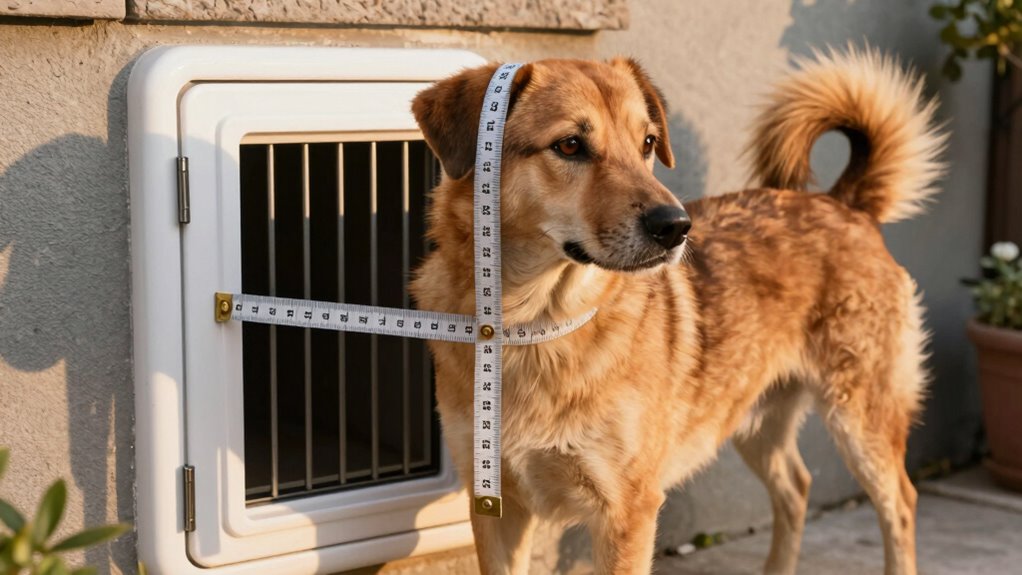
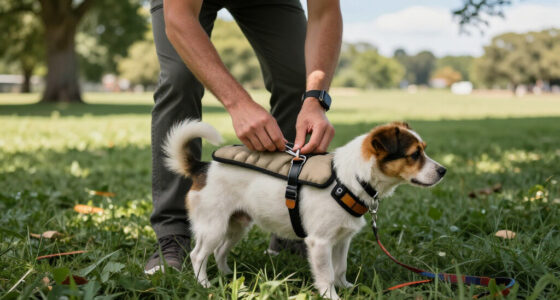
To guarantee your dog door fits perfectly, you need to measure your dog’s height and width accurately. Use straightforward measurement techniques to account for dog size variations, ensuring comfort and mobility. For height, have your dog stand straight on a level surface, then measure from the top of their shoulder blades (withers) down to the floor. For width, measure the widest part of their chest or shoulders while standing naturally. Keep the measuring tape snug but not tight. Avoid guessing or using rough estimates, as precise measurements prevent returns and mismatched sizes. Remember, dog size variations mean each measurement should be tailored to your pet’s unique shape. Proper measurement techniques are essential to selecting the ideal dog door size. Accurate measurements are the foundation for choosing a dog door that’s comfortable, functional, and correctly fitted. Additionally, understanding dog size variations can help you select the most suitable door size for your pet’s specific needs. Being aware of dog growth patterns can also assist in choosing a door that accommodates your dog as they grow. Using accurate measurements can also help you account for potential future growth and avoid the need for multiple replacements. Moreover, considering well-drained soil and full sun conditions can influence the placement and durability of your outdoor dog door, especially for larger breeds that may spend extended periods outside.
How to Choose the Right Dog Door Size Based on Your Pet’s Measurements
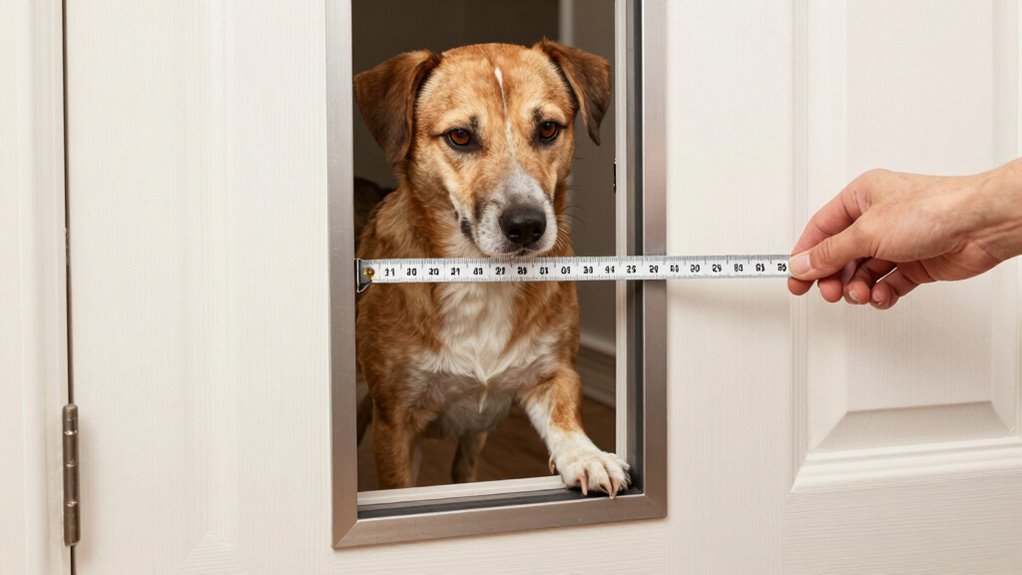
Choosing the right dog door size starts with using your pet’s measurements to find a comfortably fitting opening. Measure your dog’s height from the top of the shoulders to the ground, and width from shoulder to shoulder. Add about 2 inches to height and 1 inch to width for easy movement. When selecting a dog door, make sure the opening matches these measurements closely to facilitate smooth dog door installation. A door that’s too small can cause frustration and potential injury, while one that’s too large might compromise your home’s insulation. Remember, pet safety tips emphasize choosing a size that allows your dog to pass comfortably without forcing or squeezing. Proper sizing ensures your pet can come and go safely, making the installation process simpler and more secure. Additionally, considering proper sizing techniques can help prevent issues related to ill-fitting doors, ensuring both comfort and safety for your pet. Understanding dog door dimensions can also help you select the best fit and avoid the need for returns or adjustments later, especially since accurate measurements are crucial for a perfect fit. Taking the time to measure carefully can save you hassle and ensure your pet’s safety and comfort.
Common Mistakes to Avoid When Measuring Your Dog for a Door

One common mistake pet owners make is estimating their dog’s size without taking accurate measurements. Relying on incorrect measurements can lead to purchasing a door that’s either too small or too large, causing frustration and returns. Avoid using improper tools like uncalibrated rulers or tape measures that aren’t flexible enough. Instead, use a soft measuring tape for precision. Proper measurement techniques are essential for preventing infection and ensuring your dog’s comfort during use. Additionally, understanding the importance of accurate measurements can greatly improve the fit of your dog door. When measuring, consider herbal wellness principles to promote overall comfort and health for your pet. Using digital measurement tools can also enhance accuracy and streamline the process. Here’s a quick guide:
| Mistake to Avoid | Solution |
|---|---|
| Guessing size without measuring | Measure your dog carefully |
| Using improper tools | Use a flexible, calibrated tape |
| Relying on outdated info | Measure again for accuracy |
Accurate measurements ensure your dog door fits perfectly, avoiding the hassle of incorrect measurements and unnecessary returns. Remember, proper measurement techniques are part of the precise process for a perfect fit.
How to Double-Check Your Measurements and Install Hassle-Free
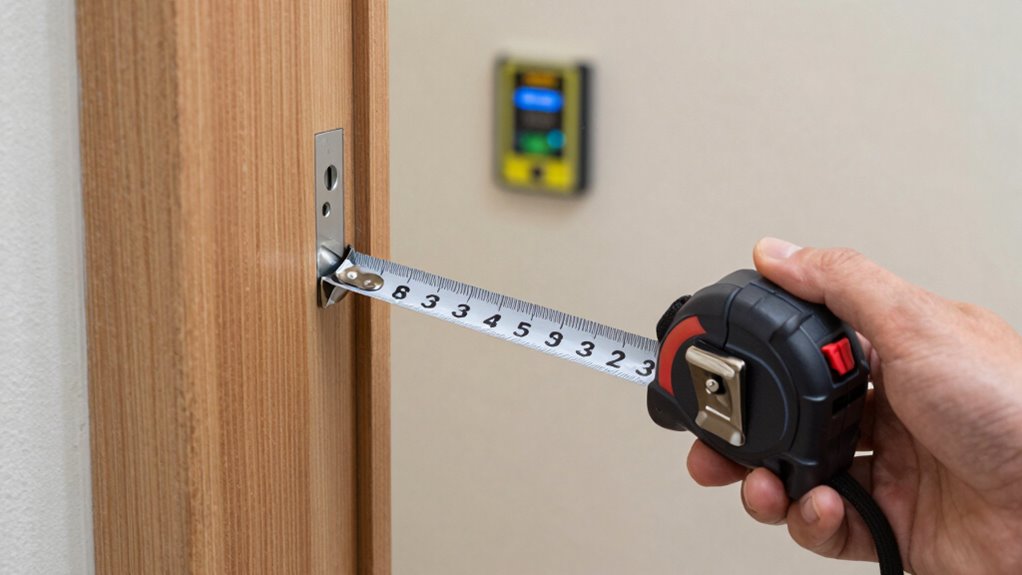
Before you install your dog door, double-check your measurements to guarantee a perfect fit. Use a tape measure to verify the width and height, ensuring they match your dog’s size and intended opening. It’s helpful to mark the measurements on the door frame with a pencil before drilling or cutting. Double-check that the measurements align with the manufacturer’s specifications to avoid gaps that could compromise door security. Proper installation is key to pet safety; a secure, well-fitted door prevents your dog from getting stuck or injured. Take your time during the process, and don’t rush. Confirm all measurements one last time before making any cuts. Measuring tools are essential for accuracy during installation. Utilizing accurate measurement techniques can help prevent costly errors and ensure your pet’s safety. Proper measurement techniques also contribute to a smoother, hassle-free installation process, saving you time and effort. Paying attention to measurement precision can further enhance the accuracy of your installation. A hassle-free install ensures your pet’s safety and maintains the integrity of your door’s security. Additionally, considering proper measurement practices can further enhance the precision of your installation.
Frequently Asked Questions
Can I Measure My Dog for a Door if They’Re Still Growing?
Yes, you can measure your growing dog for a door by estimating their future size and tracking growth regularly. Use your dog’s current height and weight to predict their final size, and add a bit extra for growth. This way, you guarantee the door will be large enough as they grow, avoiding the hassle of returns. Consistent growth tracking helps you choose the right size, so your dog stays comfortable and safe.
How Often Should I Re-Measure My Dog for Updates?
Did you know dogs grow an average of 1 inch per month during their first year? You should re-measure your dog’s growth every 2-3 months, especially during rapid growth phases. Regular measurement frequency guarantees you select a door size that fits comfortably and safely. Keep track of your dog’s growth to avoid buying a door that’s too small or too large, making sure they stay comfortable as they grow.
What Tools Are Best for Precise Measurements?
To guarantee measurement accuracy, you should use high-quality measuring tools like a metal ruler or a tape measure with clear markings. A carpenter’s square can help verify right angles for precise cuts. For small measurements, consider a digital caliper for ultimate accuracy. Always double-check your measurements and keep your tools steady to avoid errors, ensuring your dog door fits perfectly and reduces the need for returns.
How Do I Measure a Dog With Unusual Body Shapes?
Imagine your dog as a uniquely crafted sculpture, each curve and contour telling its own story. When measuring a dog with an unusual body shape, use flexible measuring tapes to follow every twist and turn. Focus on key areas like the widest part of the chest and the tallest point of the shoulders. These measurement techniques help guarantee you get an accurate size, fitting your one-of-a-kind pup perfectly through the door.
Is It Better to Choose a Slightly Larger or Smaller Door?
It’s better to choose a slightly larger dog door for better door frame compatibility and easier installation. A bigger door allows for more flexibility, especially if your dog’s size varies or they grow. Plus, it reduces the risk of fitting issues or damage during installation. Just make sure the opening isn’t too large, which could compromise security or insulation. Always measure carefully to balance comfort and practicality.
Conclusion
Getting your measurements right is like finding the perfect fit — it makes everything smoother and more comfortable for your furry friend. Take your time, double-check your numbers, and trust your careful eye. When you do, you’ll avoid unnecessary returns and ensure your dog’s new door becomes a seamless part of your home. A little extra effort now can turn into endless happy moments, making every step of the process truly worth it.
Halloween Picks
halloween
As an affiliate, we earn on qualifying purchases.