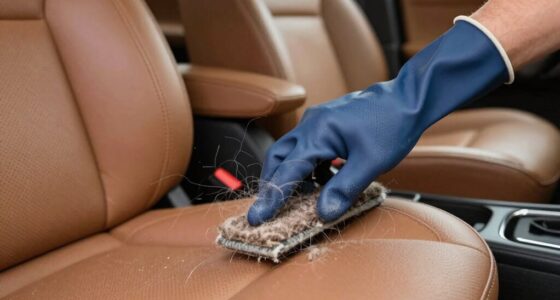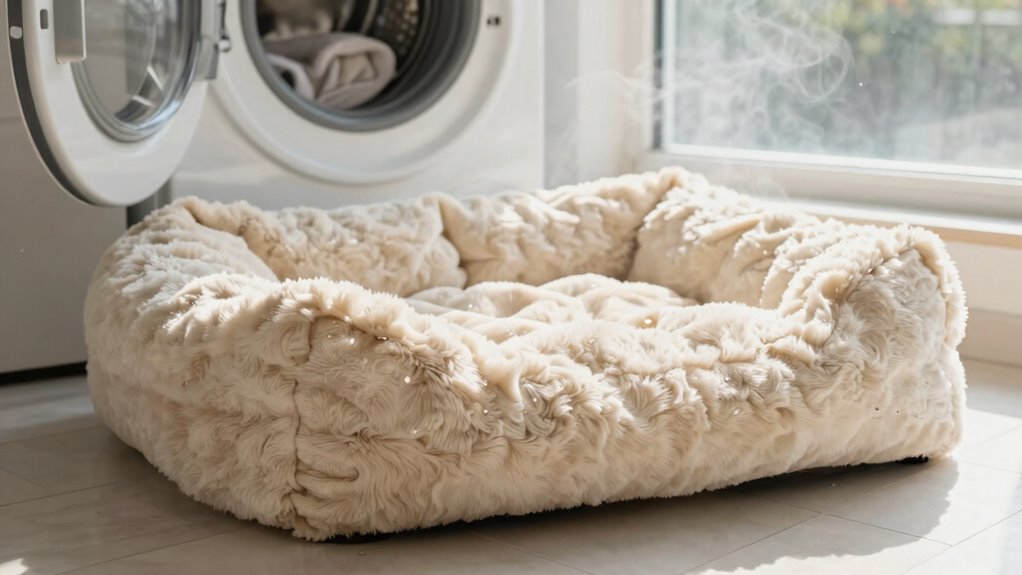

To keep your dog’s bed smelling fresh, wash it every 1-2 weeks using a gentle cycle with mild detergent, avoiding bleach and fabric softeners. Remove the cover and shake off loose hair outdoors, then wash or spot clean non-removable parts carefully. For foam, spot clean and air dry thoroughly to prevent mold. Air drying is best, but you can use a dryer on low with dryer balls to fluff. For more tips, stick around.
Key Takeaways
- Wash the bed regularly (every 1-2 weeks) using gentle, mild detergent to eliminate odors and bacteria.
- Remove and wash covers separately, and spot clean foam or non-removable parts with a damp cloth.
- Use hot water on a gentle cycle, avoiding bleach and softeners that can cause odors or fabric damage.
- Ensure thorough air drying or low-heat tumble drying with dryer balls to prevent musty smells.
- Regularly shake and vacuum the bed to remove hair, dirt, and dander that contribute to odors.
Keeping your dog’s bed clean is essential for their health and comfort, but knowing how to wash it properly can be confusing. The first step is understanding the dog bed materials, as different fabrics and fillings require specific care. Many dog beds are made from machine-washable fabrics like cotton, polyester, or microfiber, which can usually handle regular washing without issue. However, some beds have foam inserts, memory foam, or waterproof covers that need special attention. Foam, for instance, often can’t be soaked entirely or washed in a machine; instead, spot cleaning or surface washing is best. Waterproof covers can usually be removed and washed separately, which makes cleaning easier and extends the life of the bed.
When it comes to washing frequency, it’s recommended to clean your dog’s bed at least once every one to two weeks, especially if your dog sleeps there daily or has allergies. Regular washing helps remove dirt, hair, dander, and odors, preventing bacteria growth and keeping the bed smelling fresh. If your dog has been sick, gets muddy, or has a strong odor, you should wash the bed immediately. Spot cleaning in between washes also helps manage messes and keeps the bed more hygienic. Additionally, proper maintenance can prevent the buildup of pests like fleas and ticks, which can thrive in unclean bedding. Regular cleaning is also important because bacteria and mold can develop in damp or dirty beds, potentially causing health issues for your pet. Proper care and fabric types play a crucial role in maintaining the integrity of the bed over time. Using the right cleaning methods for specific materials can significantly extend the lifespan of your dog’s bed.
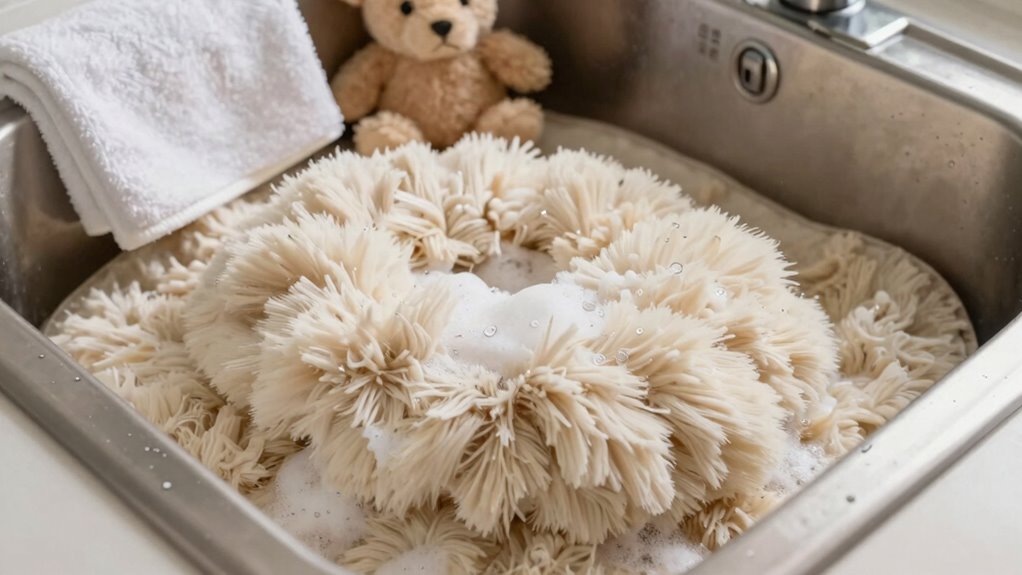
To wash the bed properly, remove any covers or removable parts and shake off loose hair and debris outside. If the bed has a removable cover, check the care label for washing instructions. Most covers can be machine washed in cold or warm water on a gentle cycle, using a mild detergent free of harsh chemicals. Avoid using bleach or fabric softeners, as these can irritate your dog’s skin or damage the fabric. For foam or non-removable parts, spot clean with a damp cloth and mild soap, then let them air dry thoroughly before reassembling. If the entire bed is machine washable, run it through a thorough rinse cycle afterward to ensure all soap residue is gone. Proper drying is just as important as washing, as it helps prevent mold and mildew from developing. Additionally, drying in a well-ventilated area can help speed up the process and prevent any lingering dampness. Choosing the right drying method is essential to maintain the bed’s shape and material quality.
Air drying is best, especially for foam-filled beds, to prevent mold or mildew. If using a dryer, select a low or no-heat setting, and add a few clean tennis balls or dryer balls to help fluff the bed and prevent clumping. Proper maintenance and regular washing not only keep the bed smelling clean but also extend its lifespan and ensure your dog stays healthy and comfortable.
As an affiliate, we earn on qualifying purchases.
Frequently Asked Questions
How Often Should I Wash My Dog’s Bed?
You should wash your dog’s bed at least once every one to two weeks to keep it fresh and odor-free. Consider the dog bed materials—machine-washable fabrics make cleaning easier, while delicate or non-removable covers may need spot cleaning. Use odor elimination techniques like baking soda or enzymatic cleaners during washes. Regular cleaning prevents buildup of dirt and bacteria, ensuring your dog’s bed stays clean, comfortable, and smelling fresh.
Can I Use Fabric Softener on Dog Beds?
You shouldn’t use fabric softener on dog beds because it can irritate your pet’s skin and isn’t safe for them. Instead, look for fabric softener alternatives like vinegar or baking soda, which are eco-friendly cleaning options. These natural solutions help keep the bed soft and smelling fresh without harmful chemicals, ensuring your dog stays comfortable and safe while maintaining a clean, pleasant-smelling bed.
Are There Specific Cleaning Products for Dog Beds?
Did you know that using the right cleaning products can extend your dog’s bed lifespan by up to 30%? Yes, there are specific cleaning products for dog beds, especially tailored to different materials like memory foam or cotton. Opt for eco-friendly cleaners to keep your pet safe and the environment healthy. Always check labels to verify compatibility with your bed’s materials, and avoid harsh chemicals that can cause irritation.
How Do I Remove Stubborn Stains From the Bed?
To remove stubborn stains from your dog’s bed, start by treating the stain with a mixture of equal parts water and white vinegar, which aids in odor elimination. Gently scrub the area with a soft brush or cloth, then let it sit for 10-15 minutes. For tough stains, apply a mild enzymatic cleaner designed for pet stains. Rinse thoroughly and wash the bed to keep it fresh and odor-free.
Can I Wash Dog Beds in a Washing Machine?
Yes, you can wash dog beds in a washing machine, but you need to take into account the dog bed materials and washing machine capacity. Check the care label first; most fabric beds are machine washable. For larger beds, make sure your washing machine has enough capacity to handle them without damage. Use gentle detergent and cold water to protect the materials, and avoid overloading the machine for thorough cleaning.
Conclusion
Now that you know the simple secrets to spotless, snuggly dog beds, you’re all set to keep your pup’s space fresh and fabulous. Regular rinsing, robust scrubbing, and thorough drying guarantee every nook and cranny stays clean and cozy. With a little effort, you’ll enjoy a happier hound and a healthier home—hassle-free and hygienic! So, stay steadfast in your cleaning routine, and your furry friend will forever favor your fresh, fabulous, and fragrance-free fostered fortress.