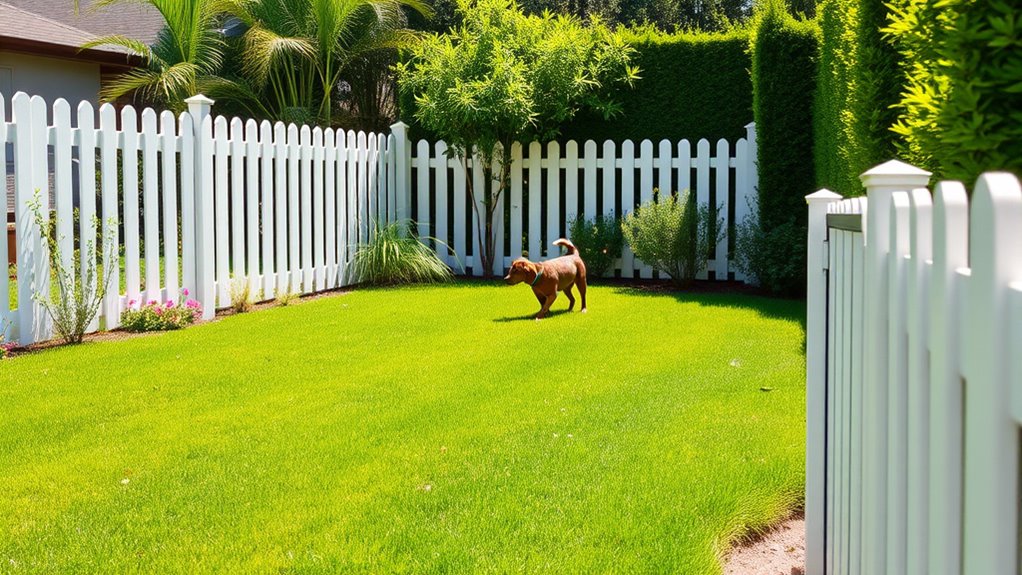

To build a safe backyard for your dog, choose durable fencing like vinyl, chain-link, or wood, making sure it’s at least 4 feet high and has no sharp or toxic materials. Regularly inspect for weak spots and add natural barriers or escape-proof gates for extra security. Plant pet-safe, non-toxic plants and create shaded, water-fed areas for comfort. Stay vigilant about potential hazards—continue on to learn more ways to keep your furry friend safe outdoors.
Key Takeaways
- Install durable, high fences (at least 4 feet) with small gaps and secure gates to prevent escapes.
- Use pet-safe plants like lavender and marigolds, avoiding toxic varieties, to create a safe, attractive environment.
- Incorporate underground barriers and dense natural hedges to block escape routes and enhance security.
- Regularly inspect fencing for damage, loose boards, or holes, and repair promptly to maintain safety.
- Provide shaded areas, fresh water, and a clutter-free space to ensure outdoor comfort and prevent injuries.
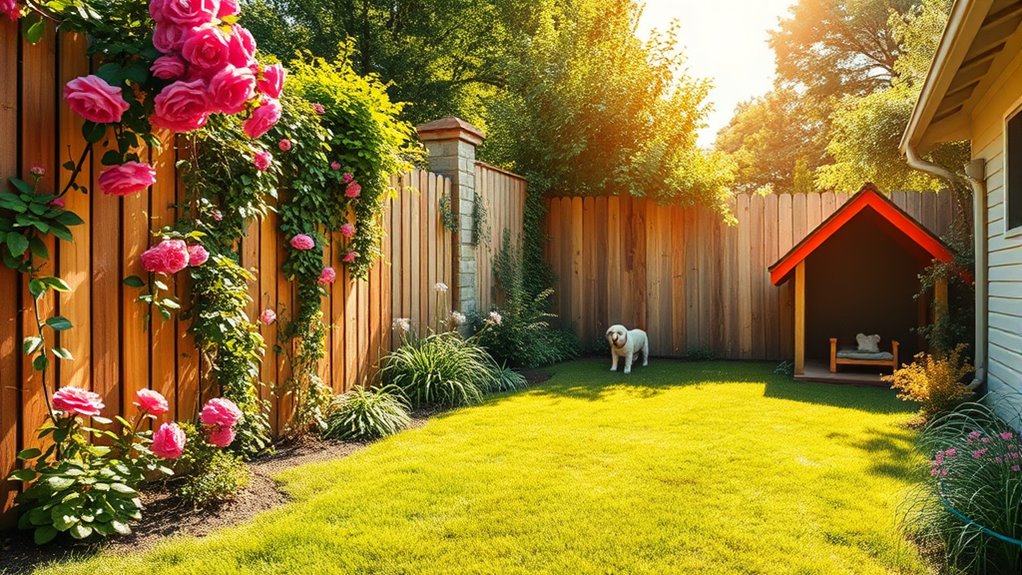
Have you ever wondered how to create a backyard that keeps your dog safe and happy? It all starts with choosing the right fencing materials and incorporating dog-friendly plants. A sturdy, reliable fence is essential to prevent your dog from wandering off or getting into trouble. When selecting fencing materials, opt for options like vinyl, chain-link, or wood that are durable and safe. Avoid sharp or toxic materials that could harm your pet if they attempt to chew or scratch. Chain-link fences are popular because they’re sturdy, but ensure the gaps are small enough to prevent escape or getting paws stuck. Vinyl fencing offers a smooth surface, reducing the risk of cuts, while wooden fences provide privacy and a natural look. Whatever material you choose, make sure it stands tall enough—at least 4 feet—to discourage jumping, and check regularly for any damage or loose boards that could create escape routes.
Once your fencing is secure, turn your attention to the plants in your yard. Dog-friendly plants are a must to keep your pup safe from toxicity or allergies. Avoid common toxic plants like azaleas, lilies, and sago palms, and instead opt for pet-safe options such as lavender, rosemary, or marigolds. These plants not only add beauty but also help create a welcoming environment for your dog. Incorporate ground covers, shrubs, and flowers that are non-toxic and resistant to being dug up or chewed. Keep in mind that some plants might be tempting for your dog to nibble on, so it’s wise to research or consult with a veterinarian about safe choices. Additionally, understanding website performance metrics can help you monitor how your yard layout encourages safe exploration and activity.
Beyond fencing and plants, think about additional features that improve safety, like underground barriers or escape-proof gates. Regularly inspect your yard for weak spots, holes, or loose fencing sections that could serve as an escape hatch. Consider planting dense bushes or installing natural barriers along the fence line to make it more difficult for your dog to find a way out. Creating shaded areas and providing plenty of water will keep your dog comfortable during outdoor playtime, especially in warmer weather. Remember, a safe backyard isn’t just about keeping your dog contained; it’s about creating an environment where they can explore, play, and relax without risk. With the right fencing materials, dog-friendly plants, and thoughtful safety measures, you’ll build a backyard that nurtures your dog’s well-being and gives you peace of mind.
Frequently Asked Questions
How Often Should I Inspect My Fence for Damage?
You should inspect your fence for damage regularly, ideally once a month, to stay on top of fence maintenance. Look for signs of damage like loose boards, rust, or holes that could compromise security. Early damage detection helps you fix issues promptly, preventing your dog from escaping or injury. Consistent inspections guarantee your fence remains sturdy and safe, giving you peace of mind and maintaining a secure environment for your pet.
Are There Dog-Safe Plants I Should Avoid?
Your concern about dog-safe plants is vital—it’s like protecting a tiny, vulnerable kingdom. You should avoid plants on the toxic plant list to prevent health hazards. Focus on dog-friendly landscaping options, such as marigolds or sunflowers, which are safe and beautiful. Always double-check before planting, because a single toxic plant can turn a happy backyard into a health crisis. Stay vigilant and prioritize your pup’s safety!
What Are Effective DIY Escape Prevention Methods?
To prevent your dog from escaping, you should focus on effective DIY methods like installing dog-proof latches on gates and doors. Adding shrub barriers along fences can also create a natural obstacle, making it harder for your dog to squeeze through or jump over. Regularly check your fencing for gaps or weaknesses. These simple steps, combined with secure latches and strategic shrub placement, help keep your dog safely contained.
Can Certain Fence Types Hurt My Dog?
Certain fence materials can hurt your dog if they’re sharp or splinter easily, so choose sturdy options like vinyl or wood with smooth surfaces. Additionally, some plants near your fence might be toxic if your dog chews on them. To keep your pup safe, avoid plants like azaleas or lilies, and regularly inspect your fencing for damage. This way, you prevent injuries and keep your dog secure in your yard.
How Can I Train My Dog to Stay Within Boundaries?
To train your dog to stay within boundaries, focus on boundary training using positive reinforcement. Start by clearly marking the area and guiding your dog with commands like “stay” or “come.” Reward them with treats and praise whenever they respect the boundaries. Consistency is key—practice regularly, and gradually increase distance. Over time, your dog will associate boundaries with positive experiences, making it easier for them to stay within safe limits.
Conclusion
Creating a safe backyard for your dog isn’t just about installing fences or choosing non-toxic plants; it’s about blending safety with freedom. Think of your yard as a playground where security and exploration coexist, much like a fortress and a wonderland rolled into one. When you balance protection with open space, you give your dog the gift of happy, worry-free adventures. In this harmony, both your peace of mind and your pup’s joy thrive.