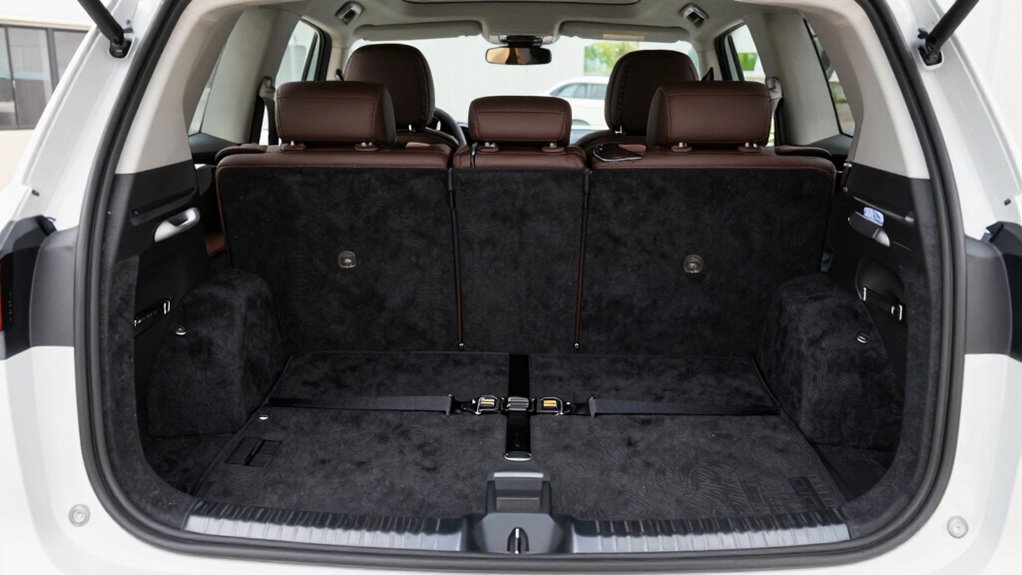
The back seat is generally safer for your dog than the cargo area because it offers better restraint options and reduces injury risks during sudden stops or collisions. The cargo area lacks proper restraints and can turn loose objects into dangerous projectiles, increasing harm to your pet. Using harnesses, barriers, or crates helps secure your dog no matter where they travel. To learn more about choosing the safest spot and securing your dog properly, keep exploring the tips below.
Key Takeaways
- The back seat often offers better visibility and easier access for supervision compared to the cargo area.
- Securing dogs with crash-tested harnesses in the back seat reduces injury risk during sudden stops or accidents.
- Cargo areas pose higher ejection and projectile hazards if items or pets are unrestrained during crashes.
- Proper barriers or crates in the cargo area can improve safety, but they require regular inspection and secure installation.
- For larger or anxious dogs, the back seat with restraints is generally safer and more manageable than the cargo area.

Kurgo Enhanced Strength Tru-Fit Dog Car Harness – Pet Travel Safety Harness – Crash Test Certified Fit – Five Point Adjustment – Secure Buckle – Padded Chest – Black – Medium
Crash-Tested Safety & Comfort: The Kurgo Enhanced Strength Tru-Fit Dog Car Harness offers a crash test-certified fit with…
As an affiliate, we earn on qualifying purchases.
As an affiliate, we earn on qualifying purchases.
Is the Cargo Area or Back Seat Safer for My Dog?

When it comes to keeping your dog safe during car rides, many pet owners wonder whether the cargo area or the back seat offers better protection. The cargo area can pose significant hazards, such as loose objects that can become projectiles or your dog being unrestrained. Without proper safety measures, your pet is vulnerable to injury in sudden stops or accidents. On the other hand, the back seat generally provides better back seat safety, especially when you use a well-fitted harness or crate. It keeps your dog more secure and minimizes the risk of injury from sudden movements or debris. Prioritizing the back seat and ensuring your dog is properly restrained can make a significant difference in keeping them safe during every trip. Additionally, understanding pet safety ratings can help you choose the best restraint system for your dog. Furthermore, selecting appropriate restraint devices that are tested and rated for safety can greatly reduce injury risks. Using safety-certified harnesses can provide an added layer of protection and peace of mind for pet owners. Being aware of vehicle safety features can also help in making informed decisions about your pet’s travel safety. Incorporating up-to-date safety standards ensures that your pet’s travel setup aligns with current best practices.

rabbitgoo Dog Car Barrier for SUVs, Adjustable Large Pet Gate, Universal-Fit Divider Cargo Net, Heavy-Duty Wire Mesh Dog Barrier SUV, Van Vehicles Subaru Car Accessories Safety Travel, Triple Folding
Ensure Travel Safety: This dog car barrier comfortably confines your pet to the back of the car, preventing…
As an affiliate, we earn on qualifying purchases.
As an affiliate, we earn on qualifying purchases.
What Are the Safety Risks of Cargo Area vs. Back Seat?
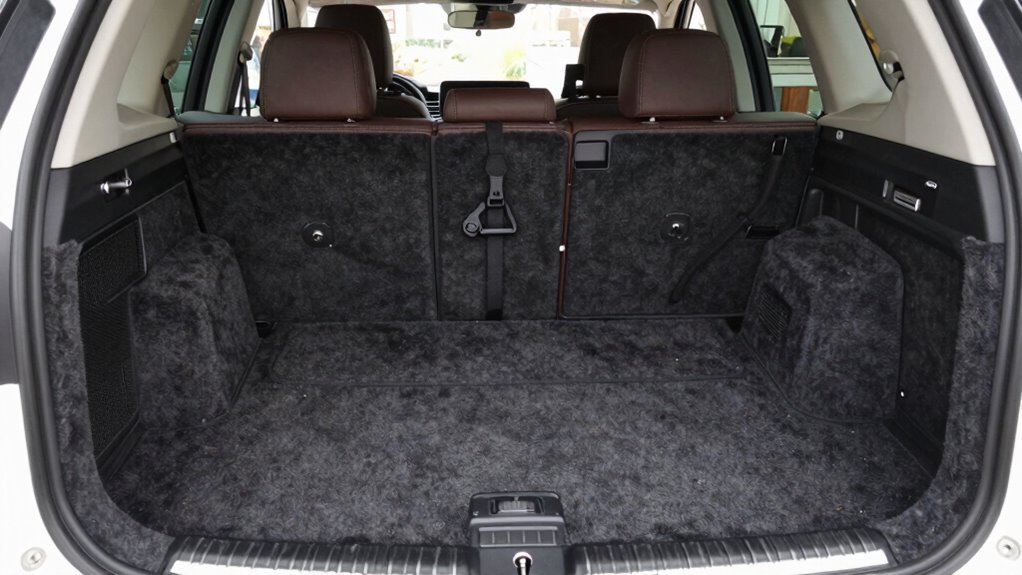
You need to contemplate the safety risks when choosing between the cargo area and back seat. In the cargo space, there’s a higher chance of ejection during crashes or sudden stops, especially if your pet isn’t secured. Meanwhile, deploying airbags in the back seat can pose hazards, particularly for unrestrained passengers or pets. Incorporating foam rolling techniques into your routine can help improve your overall recovery and reduce stress, indirectly supporting safer driving habits. Additionally, understanding privacy policies related to your vehicle’s data collection can inform you about how your driving information might be used or stored. Being aware of vehicle safety features can further enhance your ability to choose the safest spot for your dog. Recognizing contrast ratio and its impact on visibility can help you better assess your vehicle’s safety during different lighting conditions, ensuring your pet’s safety in various scenarios. Recognizing vehicle safety regulations can also guide you in making informed decisions that prioritize your pet’s safety during travel.
Risk of Ejection
The risk of ejection during a crash varies markedly between the cargo area and the back seat, with the latter generally offering better protection. In the cargo area, your dog is more vulnerable to ejection due to lack of vehicle insulation and restraints. Without proper cargo organization, loose items can become projectiles, increasing the risk of injury or ejection. The back seat, especially when equipped with seat belts or harnesses, keeps your dog securely in place, reducing ejection chances. Proper vehicle insulation also helps dampen crash forces, providing additional safety. Ensuring your cargo is organized prevents sudden shifts that could cause your pet to be thrown from the vehicle. Using appropriate restraints like crash-tested harnesses significantly enhances your pet’s safety during transit. Additionally, understanding vehicle safety features can help you choose the best setup for your pet’s protection. Implementing secure anchoring points in the back seat further minimizes movement and ejection risks. Proper seat belt placement and the use of crash-tested harnesses are essential for maximizing safety. Overall, the back seat, with appropriate restraints, markedly lowers the ejection risk compared to the cargo area.
Impact of Sudden Stops
During sudden stops, the cargo area poses significant safety risks because loose items and unrestrained pets can be thrown forward with force, increasing the chance of injury. Without proper restraint, your pet in trunk storage can become a dangerous projectile. Using a seat belt designed for your pet reduces this risk by keeping them secure. Here are key points to contemplate: 1. Items in trunk storage can become projectiles during abrupt stops, posing a threat to both your pet and passengers. 2. Unrestrained pets in the back seat are at risk of injury if the vehicle suddenly halts. 3. Properly securing your pet with a seat belt minimizes the danger of being thrown forward or ejected. Proper restraint methods are essential for ensuring your pet’s safety during travel. Additionally, understanding vehicle safety features can help you choose the best way to protect your furry friend. Research also shows that impact of sudden stops can be mitigated by using appropriate safety gear for pets.
Airbag Deployment Hazards
Unrestrained items and pets in the cargo area or back seat can become dangerous projectiles if airbags deploy unexpectedly. Airbag hazards are significant because they can cause severe injury or even death if your dog isn’t properly restrained. In the back seat, seatbelt considerations are essential; using a harness or dog seatbelt helps keep your pet secure and reduces the risk of injury during airbag deployment. Proper restraint can also prevent your pet from being thrown against the vehicle interior or windows. In the cargo area, airbags are typically not designed to protect pets, making it even riskier. Always make certain your dog is safely restrained with appropriate gear, regardless of where they ride. Understanding passenger safety protocols can help ensure your pet’s well-being during travel. Proper restraint minimizes the dangers posed by airbag deployment hazards, keeping your furry friend safer in the event of a collision. Additionally, understanding piercing care and hygiene can help prevent infections that might compromise your pet’s health if they come into contact with contaminated surfaces or objects. Regularly inspecting your vehicle’s safety features ensures they function correctly and provide maximum protection for your pet.

COOYOO Dog Seat Belt, Durability Retractable Dog Car Harness Adjustable Dog Seat Belt for Vehicle Nylon Pet Safety Seat Belts Heavy Duty & Elastic (1 Pack Black)
DURABILITY – No matter how well-trained your pup is, there’s no guarantee they won’t tug, pull, or chew…
As an affiliate, we earn on qualifying purchases.
As an affiliate, we earn on qualifying purchases.
How Do Restraints, Harnesses, and Barriers Keep Your Dog Safe?

Using proper restraints, harnesses, and barriers keeps your dog secure and prevents injuries during travel. When correctly used, they effectively limit movement and protect your pet in case of sudden stops or accidents. Understanding how these safety tools work helps you choose the best options for your dog’s safety. Additionally, selecting the appropriate gear, such as vehicle safety equipment, ensures a comfortable and secure environment for your dog during car rides. Properly designed dog travel gear can also reduce stress and make trips more enjoyable for your furry companion. Incorporating smart home safety devices can further enhance overall safety during travel and at home.
Proper Restraint Usage
Proper restraints like harnesses, barriers, and crates are essential for keeping your dog safe in the car. Using dog harnesses with seatbelt attachments guarantees your pet stays secure during sudden stops or accidents. To maximize safety, consider these tips:
- Always choose a well-fitting harness designed for car travel.
- Attach the harness securely to the car’s seatbelt system.
- Use barriers or crates for added protection, especially for larger dogs.
- Regularly inspect your storage and connectivity gear to ensure all components are secure and functioning properly.
- Investing in security features can further enhance your pet’s safety during car rides.
Proper restraint usage prevents your dog from becoming a projectile, reducing injury risk and driver distraction. Verify that the harness fits snugly without restricting breathing or movement. When correctly used, these restraints keep your dog safe and comfortable, giving you peace of mind during every trip.
Barrier Effectiveness
Restraints, harnesses, and barriers work together to keep your dog safe by preventing them from becoming a dangerous projectile during sudden stops or crashes. A well-designed barrier maintains seat comfort by creating a secure space, reducing distractions while driving. It also helps with temperature control, preventing your dog from overheating or chilling in extreme conditions. When properly secured, barriers keep your dog in a designated area, minimizing movement that could interfere with your driving or cause injury. Harnesses and barriers work in tandem to distribute impact forces evenly, reducing injury risk. This setup ensures your dog remains calm and safe, whether in the back seat or cargo area, by providing a stable environment that prioritizes their protection without sacrificing comfort or climate control.

COOYOO Dog Seat Belt,3 Piece Set Retractable Dog Car Harness Adjustable Dog Seat Belt for Vehicle Nylon Pet Safety Seat Belts Heavy Duty & Elastic
DURABILITY – No matter how well-trained your pup is, there’s no guarantee they won’t tug, pull, or chew…
As an affiliate, we earn on qualifying purchases.
As an affiliate, we earn on qualifying purchases.
What Are the Pros and Cons of Using a Crate in the Cargo Area?
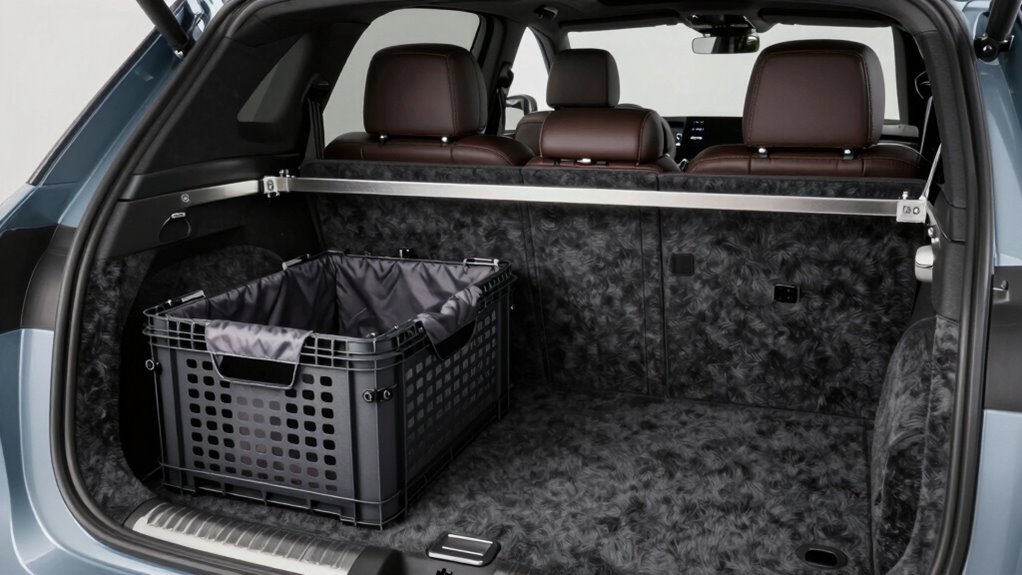
Placing a crate in your SUV’s cargo area can offer both safety and convenience, but it’s important to weigh the advantages against potential drawbacks. Using a crate can keep your dog secure during drives and prevent distractions. However, consider these pros and cons:
- Safety: A sturdy crate minimizes your dog’s movement, especially when paired with cargo netting, reducing injury risk.
- Accessibility: Unlike dog seat belts, crates can be more comfortable for larger or anxious dogs, providing a cozy space.
- Ventilation and Security: Ensure proper airflow and avoid loose items that could shift, but be mindful that a crate might limit quick access to your pet in emergencies.
How Do I Decide the Best Spot for My Dog in My SUV?

Choosing the right spot for your dog in your SUV is key to ensuring their safety and comfort during travel. To decide, consider your pet’s size, behavior, and travel habits. Smaller dogs often do well in the back seat, where they can see out the window and stay close to you. Larger dogs might be safer in the cargo area or secured with a harness in the back seat. Think about vehicle safety: a secure spot reduces distractions and prevents injury during sudden stops or accidents. Also, evaluate your pet’s comfort—some dogs prefer the open space of the cargo area, while others feel safer closer to their owner. Ultimately, the best spot balances safety, comfort, and your pet’s individual needs for pet travel.
How Can I Secure My Dog in Any Location During Travel?

To keep your dog safe during travel, securing them with the right equipment is essential, regardless of where they are in your vehicle. Understanding your dog’s behavior helps you select the best restraint system, and regular vehicle maintenance guarantees safety features work properly. To secure your dog effectively:
- Use a crash-tested harness or seatbelt attachment tailored for dogs, preventing sudden movements.
- Install a secure barrier or crate that fits your vehicle’s layout, especially if traveling in the cargo area.
- Double-check all equipment before each trip to ensure it’s in good condition and properly positioned.
Final Tips for Keeping Your Dog Safe on SUV Trips
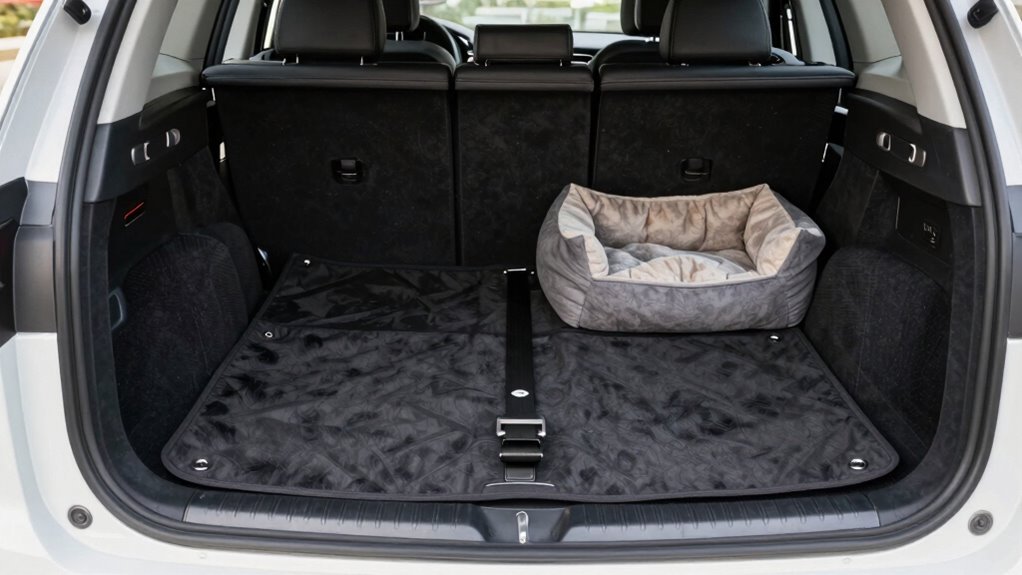
Ensuring your dog’s safety on SUV trips requires careful planning and attention to detail. Start by always using a well-fitting harness or pet seat belt to keep your dog secure during travel. Consider using a crash-tested crate if your dog prefers a confined space, especially for longer trips. Pack essential safety tips, like water, a leash, and familiar toys, to keep your pet comfortable and calm. Avoid letting your dog stick their head out the window, as debris and sudden stops can cause injuries. Regular breaks are vital; they help prevent fatigue and allow your dog to stretch. Prioritize your pet’s safety by preparing in advance and staying alert throughout your trip. These safety tips will help ensure a smooth, secure pet travel experience.
Frequently Asked Questions
Are There Specific Dog Breeds Better Suited for Cargo Areas?
Some dog breeds are better suited for cargo area safety, especially those with calmer temperaments and moderate sizes. Breeds like retrievers or beagles often handle cargo areas well if properly secured. However, always prioritize cargo area suitability by using crates or harnesses, regardless of breed. Remember, ensuring your dog’s safety depends more on securing them properly than on breed alone, so choose the right setup for your specific dog.
How Does Weather Affect Safety in the Cargo Area Versus Back Seat?
Rain protection and temperature regulation are vital, and weather heavily impacts safety in both spots. You might think the cargo area is a fortress, but it’s less protected from rain and temperature swings. In the back seat, you have more control—use window shades, climate control, or blankets. Extreme weather can cause dangerous heat or cold, so always prioritize your dog’s comfort and safety, regardless of the spot.
Can Seat Belts Be Used Effectively in the Cargo Space?
You can’t effectively use seat belts in the cargo area, as they’re designed for the back seat. Instead, consider seat belt alternatives like harnesses or crash-tested crates for cargo area safety. These options secure your dog better and reduce injury risk during sudden stops or accidents. Always prioritize proper restraint methods to keep your pet safe, whether in the back seat or cargo space.
What Are Legal Considerations for Traveling With Dogs in SUVS?
Imagine your dog comfortably seated, gazing out the window as you drive. Legally, you must follow regulations like leash requirements and proper restraint laws to keep your pet safe. You’re responsible for knowing local laws, which vary by state or region. Keep your dog secured with a harness or in a crate, ensuring compliance with legal regulations. This keeps your furry friend safe and avoids potential fines or penalties.
How Does Vehicle Type Influence the Safest Spot for My Dog?
You should consider your vehicle interior when choosing the safest spot for your dog. In most cases, the back seat offers better protection than the cargo area, especially if you use a proper dog restraint. Restraining your dog in the back seat minimizes movement and injury during sudden stops or accidents. Avoid placing your dog in the cargo area unless it’s secured, as this area isn’t designed for pet safety.
Conclusion
Think of your SUV as a ship and your dog as the treasured cargo. Just like securing cargo prevents chaos during rough seas, using proper restraints and choosing the safest spot keeps your furry friend secure. When I once saw a dog bounce around like a ball in a moving vehicle, I realized that safety isn’t just about comfort — it’s about preventing chaos and ensuring calm. Prioritize safety, and your adventures will always stay smooth.