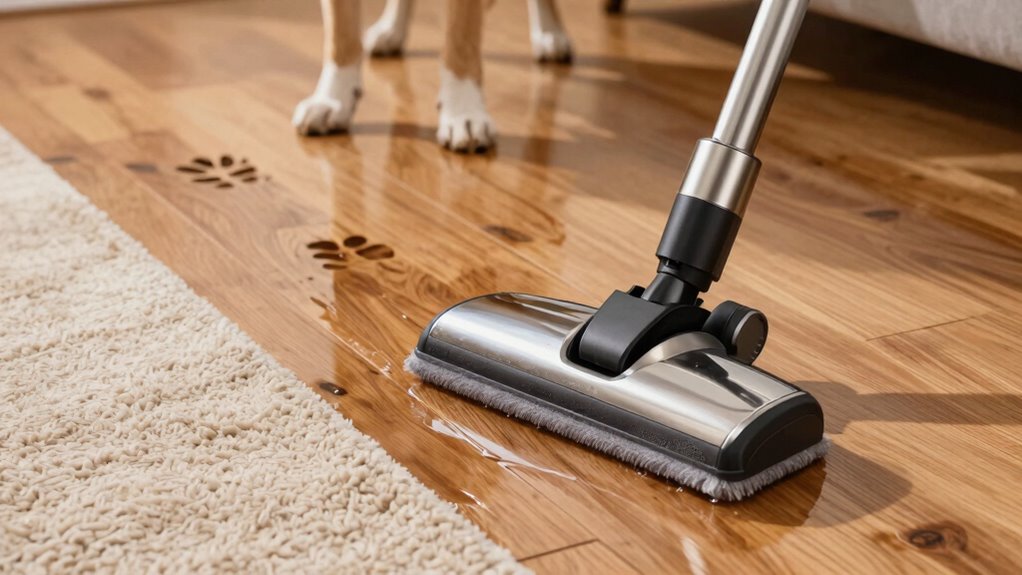

Wet-dry vacuum mops can make pet hair and odor cleanup easier on hard surfaces like hardwood and tile, but they can also pose risks to delicate or porous floors. Excess moisture may cause warping, swelling, or mold, especially if used improperly or with the wrong settings. To keep your floors safe, test first and follow manufacturer instructions. Want to know how to use yours safely? Keep exploring for helpful tips.
Key Takeaways
- Wet-dry vacuum mops effectively remove pet hair and odors on hardwood and tile floors but may damage delicate surfaces.
- Excess moisture can cause warping, swelling, or mold growth on porous or soft flooring materials.
- Proper testing and following manufacturer instructions are essential to prevent floor damage and ensure safe use.
- Not suitable for carpets or rugs, as they lack deep cleaning capabilities and may not handle pet hair effectively.
- Regular maintenance and correct water control are crucial to avoid streaks, slipperiness, or device malfunctions.
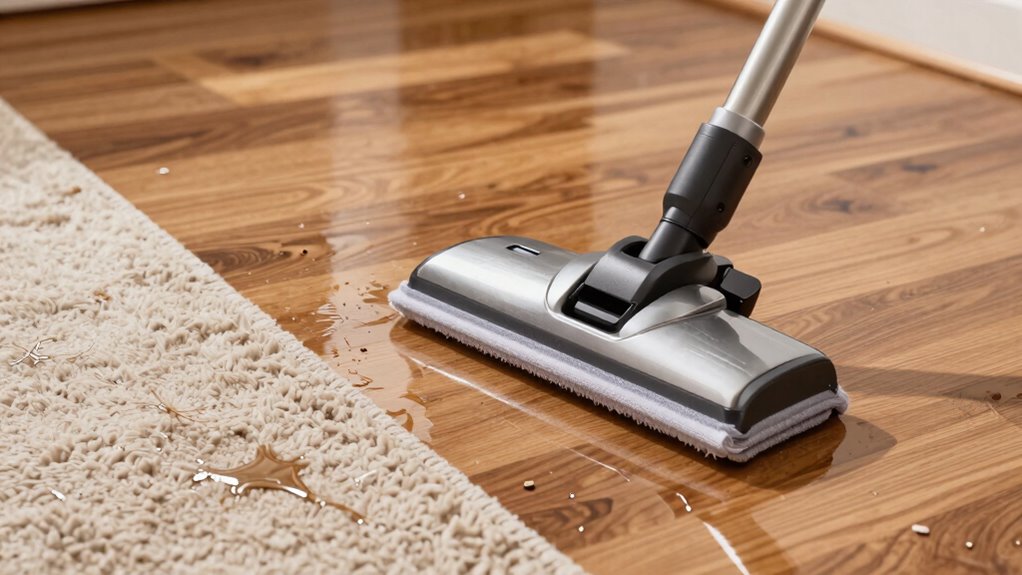
Wet-dry vacuum mops are marketed as a convenient solution, combining vacuuming and mopping into one device. They can be excellent for pet hair removal and odor control on certain floors, but they’re not suited for every surface. When you use a wet-dry vacuum mop, you might find it simplifies cleaning pet hair from hardwood or tile floors, where its suction and damp mopping capabilities work well. Pet hair tends to cling to surfaces, and these machines can pull up fur efficiently, reducing the amount that ends up on your furniture or in the air. Plus, the mopping feature helps eliminate lingering pet odors, especially if you add a suitable cleaning solution. This dual action can make your space feel fresher and cleaner after every use.
However, while these vacuum mops excel on some floors, they pose risks on others. For example, if you have delicate or porous surfaces like hardwood with a soft finish or laminate flooring, excessive moisture from the mop can cause damage over time. Water might seep into seams, causing warping, swelling, or even mold growth beneath the surface. If you’re not careful with the amount of water used, you could unintentionally ruin your floors. Furthermore, on certain types of vinyl or linoleum, the wet-vacuum process might leave behind streaks or cause the surface to become slippery, creating a safety hazard. For carpets or rugs, these devices are generally ineffective, as they don’t provide the deep cleaning needed to lift embedded pet hair or remove pet odors thoroughly. Regular maintenance of the equipment is also essential to prevent issues over time. Additionally, understanding the floor type is crucial to avoid damage, as not all surfaces react well to moisture and agitation.
Another consideration is the maintenance of the equipment itself. Wet-dry vacuum mops require regular cleaning to prevent mold or bacterial buildup in their tanks and brushes. If neglected, they can become sources of unpleasant odors, defeating the purpose of odor control. Additionally, if you don’t use the right cleaning solutions, you risk damaging your floors or leaving residues that attract more dirt and fur. It’s essential to read the manufacturer’s instructions carefully and test the device on a small, inconspicuous area first. Proper equipment maintenance is crucial to ensure the longevity and effectiveness of your cleaning device.

Bissell CrossWave Pet Pro Wet Dry Vacuum Mop, Hard Floors, 2306A
- Vacuum and mop simultaneously: Cleans wet and dry messes at once
- Pet-focused cleaning: Handles pet hair and neutralizes odors
- Tangle-free brush: Prevents hair clogs during cleaning
As an affiliate, we earn on qualifying purchases.
As an affiliate, we earn on qualifying purchases.
Frequently Asked Questions
Are Wet-Dry Vacuum Mops Safe for Hardwood Floors?
Wet-dry vacuum mops can be safe for hardwood floors if you prioritize floor protection and proper cord management. Use gentle cleaning settings and avoid excessive water to prevent damage. Always guarantee the cord is managed carefully to prevent scratches or accidental pulls. By taking these precautions, you can effectively clean your hardwood floors without risking warping, swelling, or scratches, keeping your floors looking their best.
Can These Mops Handle Pet Hair Effectively?
You’ll find that wet-dry vacuum mops can handle pet hair removal fairly well, especially since studies show vacuum efficiency drops by up to 30% when dealing with pet hair. These mops can pick up surface hair effectively, but their power may struggle with embedded fur. To maximize pet hair removal, consider combining regular vacuuming with the wet-dry mop, ensuring thorough cleaning without damaging your floors.
Do They Require Special Cleaning Solutions?
Yes, wet-dry vacuum mops often require special cleaning solutions to guarantee chemical compatibility with your floors and the device. You should follow the manufacturer’s solution recommendations to avoid damage and maintain effectiveness. Using the wrong cleaning solution can harm sensitive surfaces or clog the vacuum. Always check the labels and choose solutions designed specifically for pet homes or your particular flooring to keep everything in top condition.
Are They Noisy During Operation?
You might wonder if the loud motor and noise levels of wet-dry vacuum mops will disturb your home. They can be quite noisy during operation, especially on high power settings. The loud motor creates a ruckus that could unsettle pets or disturb your peace. However, some models feature quieter modes, allowing you to clean effectively without waking the household. It’s a trade-off worth considering for efficient cleaning.
How Often Should I Clean or Replace the Filters?
You should clean your filter regularly, ideally once a month, to maintain ideal performance. Replacement frequency depends on usage—check the manufacturer’s guidelines, but typically, filters need replacing every 3 to 6 months. Keep an eye on signs of wear or reduced suction, which indicate it’s time for a new filter. Proper filter maintenance ensures your vacuum stays effective and prolongs its lifespan.
Conclusion
Choosing the right wet-dry vacuum mop for your pet home is like walking a tightrope—balance is key. I once watched a friend struggle with a powerful model that damaged her hardwood floors, much like a tightrope walker wobbling. But with the right choice, you’ll glide smoothly, keeping your floors pristine without risking harm. Remember, the right tool isn’t just about cleaning; it’s about protecting your home’s foundation and your pet’s happiness.