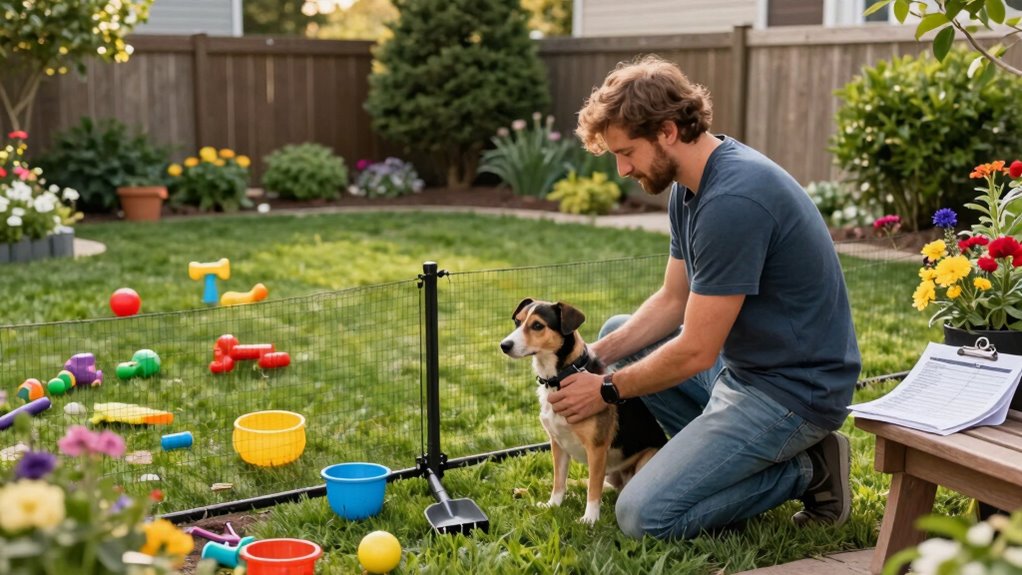

Each week, walk your yard to check for hazards like broken fence panels, loose hardware, or gaps that your dog could escape through. Remove debris, fallen branches, or sharp objects that might cause injuries, and trim overgrown bushes to keep pathways clear. Look for signs of digging or pests, and make sure plants are safe for dogs. Staying vigilant helps prevent accidents and keeps your dog safe and happy — keep going for more tips to maintain a secure yard.

Get pet supplies delivered free — and shop member deals
- Fast, free delivery on millions of items
- Access to Prime Big Deal Days deals on October 6–7
- Prime Video, Amazon Music and more included
Key Takeaways
- Inspect fences and gates for gaps, loose panels, or damage to prevent escapes.
- Remove debris, sharp objects, and hazards that could injure your dog.
- Check plants for toxicity or mold, trimming overgrowth near pathways.
- Ensure fence hardware is secure and repair any weak spots or holes.
- Conduct a visual walk-through to identify and address potential safety risks.
Your yard is your dog’s playground, but guaranteeing it’s a safe space requires regular checks. Every week, you should walk through your yard with a keen eye, making sure that everything is in order. Start with garden maintenance—look for any plants that might be toxic or harmful to your dog. Some common garden plants, like lilies or azaleas, can cause serious health issues if ingested. Remove any debris, fallen branches, or sharp objects that could hurt your dog’s paws or cause injury. Trimming overgrown bushes and keeping pathways clear not only makes your yard more inviting but also reduces hazards. Regularly inspecting the plants also helps you spot any pests or mold that could pose health risks. Being aware of garden plants, especially those that are toxic to dogs, is essential for maintaining a safe yard environment. Staying informed about dog-safe landscaping practices can further enhance your yard’s safety and appeal.
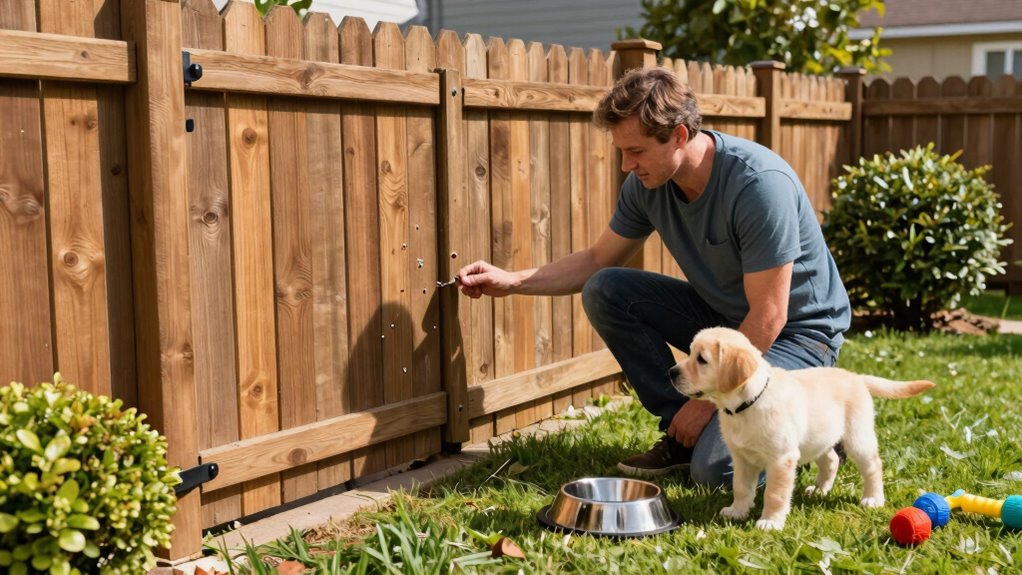
Next, turn your attention to the fence, which is your dog’s primary barrier to the outside world. Fence repairs should be on your weekly checklist because even small gaps or loose panels can be enough for a curious or anxious dog to slip through. Walk around the perimeter, checking for any rotting wood, loose nails, or leaning sections. Tighten or replace damaged parts promptly to maintain a secure boundary. If you notice areas where your dog has started to dig or chew, reinforce those spots with additional fencing or deterrents. Keeping the fence in top condition prevents escapes and keeps your dog safe from external dangers like traffic or other animals. Regularly checking the fence hardware ensures that latches and hinges remain secure and functional, preventing accidental escapes. Additionally, inspecting the ground beneath the fence for erosion or holes helps prevent tunneling attempts.
While inspecting the fence, also assess the gate mechanisms. Make sure latches are secure and functioning smoothly. A faulty latch can be an easy escape route for your dog, especially if they’re particularly curious or clever. If you spot any rust or corrosion, clean or replace the hardware to ensure it works properly. It’s also helpful to check the ground beneath the fence line for signs of digging or erosion. Filling in holes or reinforcing weak spots prevents your dog from tunneling out. Don’t forget to look up and around. Are there any weak or overhanging branches that could fall or be used by your dog as a ladder to climb out? Remove any dead or unstable limbs. Also, check that outdoor furniture or tools aren’t within reach for your dog to chew or tip over, potentially causing injuries. By doing these quick, weekly yard safety checks, you actively protect your dog from common hazards and create a secure, happy environment where they can play freely.
As an affiliate, we earn on qualifying purchases.
Frequently Asked Questions
How Often Should I Replace My Yard’s Fencing?
You should replace your yard’s fencing whenever it shows significant damage or wear, typically every 5-10 years, depending on material quality. Regular fence maintenance helps prevent pests and prolongs its lifespan. Check for loose boards, rust, or holes weekly. By staying proactive, you reduce pest entry points and guarantee your dog’s safety. If repairs become extensive, consider replacing the entire fence to maintain a secure and pest-free yard environment.
Are Certain Plants Toxic to Dogs in My Yard?
Think of your yard as a jungle full of hidden dangers. Some plants can be toxic to dogs, turning a fun space into a hazardous zone. To keep your furry friend safe, focus on pet-friendly plants and perform regular toxic plant identification. Always research or consult your vet before planting new greenery. By staying vigilant, you guarantee your yard remains a safe haven, free from toxic surprises that could harm your dog.
How Can I Dog-Proof My Garden Tools and Chemicals?
You can dog-proof your garden tools and chemicals by storing tools in a secure shed or high, locked cabinet, out of your dog’s reach. Always read and follow chemical safety labels carefully, making sure chemicals are stored away from your pet’s access. Keep hazardous substances in labeled, sealed containers, and clean up spills immediately. Regularly check your storage areas to prevent accidental exposure and guarantee your dog’s safety in your yard.
What Should I Do if I Find a Poisonous Insect or Snake?
Finding a poisonous insect or snake in your yard is like spotting a shadow lurking in the dark—you need to act quickly. First, identify the insect’s poison level, and keep your dog away. Use snake prevention tips, like clearing tall grass and installing fencing. If you encounter a snake or insect you can’t identify, stay calm, maintain distance, and contact animal control or a professional to handle the situation safely.
How Do I Safely Check for Hidden Hazards Under the Yard Debris?
To safely check for hidden hazards under yard debris, first wear gloves and boots to protect yourself. Carefully move debris aside, doing a thorough hidden object inspection to spot yard debris hazards like sharp objects, toxic plants, or animals. Keep your dog on a leash and supervise closely during this process. If you find anything dangerous, remove it immediately and double-check the area to make certain it’s safe for your pet.
Conclusion
So, there you have it—your weekly ritual of yard safety checks, because apparently, your dog’s life hinges on your vigilance. Ignore these tips, and you might just turn your backyard into a canine obstacle course of hazards. Who knew that a simple sweep for toxins or loose fencing could be the difference between a happy, healthy pup and a veterinary bill extravaganza? Stay vigilant, or risk becoming that pet parent everyone whispers about—“Did you hear about…?”
Halloween Picks
halloween
As an affiliate, we earn on qualifying purchases.