
If you want a healthy environment for your pets, watch for high humidity, which can promote mold and bacteria, or low humidity, that causes dry skin and breathing problems. Elevated levels of pet allergens signal the need for more cleaning or air purifiers, while high VOCs or particulate matter suggest pollution sources that should be addressed. To keep your pets safe and comfortable, paying attention to these environmental cues is key—if you read on, you’ll find out more.
Key Takeaways
- Keep humidity levels between 30-50% to prevent mold, bacteria, and respiratory issues for pets.
- Watch for high allergen particle counts indicating the need for cleaning or air purification.
- Monitor VOC levels to identify and reduce exposure to chemical pollutants from cleaners and paints.
- Track particulate matter to ensure air is free from fine dust and pollutants that can harm pets’ lungs.
- Use real-time data to adjust ventilation, cleaning, and environment controls proactively for pet health.

If you have pets at home, monitoring air quality is essential for ensuring their health and well-being. Pets are often more sensitive to environmental changes, especially when it comes to indoor air. One key factor to watch is indoor humidity. Too high, and it can create a breeding ground for mold, bacteria, and dust mites—all of which can trigger allergies or respiratory issues in your pets. Too low, and your pets’ skin and respiratory tracts may become dry and irritated. An air quality monitor that tracks indoor humidity helps you maintain a balanced environment, preventing these problems before they start.
Monitoring indoor humidity protects pets from allergies, respiratory issues, and skin dryness.
Another critical component to keep an eye on is pet allergen levels. Pet allergens, mainly dander, saliva, and urine particles, tend to linger in the air and settle on surfaces, contributing to allergic reactions or asthma attacks in both pets and humans. An air quality monitor that detects pet allergen levels gives you real-time insight into how much allergen is present. If the readings are high, it’s a sign that you should increase cleaning frequency, improve ventilation, or consider air purification options. Being aware of these levels helps you take proactive steps to reduce allergens and create a safer environment for your pets.
Certain air quality monitors also measure volatile organic compounds (VOCs) and particulate matter, which can further affect your pets’ health. Elevated VOC levels might indicate the presence of cleaning chemicals, paints, or other pollutants that can irritate your pets’ respiratory systems. Particulate matter, especially fine particles, can also be inhaled deeply into the lungs, leading to health issues. When these readings rise, it’s a clear sign that you need to improve ventilation or eliminate sources of pollution. Additionally, understanding indoor air quality can help you make more informed choices about home improvements and cleaning routines that benefit your pets’ health. Regular monitoring of air quality can also help identify patterns or sources of pollution that you might not notice otherwise. Maintaining optimal air quality is crucial because air pollution can significantly impact your pets’ overall health and longevity.
While all these readings are important, it’s crucial to interpret them within the context of your home. For example, if your indoor humidity is consistently high, consider using a dehumidifier. If pet allergen levels are elevated, increase cleaning routines, especially in bedding and carpets. Keep in mind that a good air quality monitor doesn’t just provide numbers; it helps you understand what’s happening in your environment and guides you toward actionable solutions to keep your pets healthy. Regular monitoring of these factors also allows you to prevent health issues before they develop, saving your pets from discomfort and potential illness.
In the end, paying attention to these readings isn’t just about comfort; it’s about actively safeguarding your pets’ health. When you monitor indoor humidity, pet allergen levels, and other pollutants, you create a healthier, happier space for your furry friends to thrive.
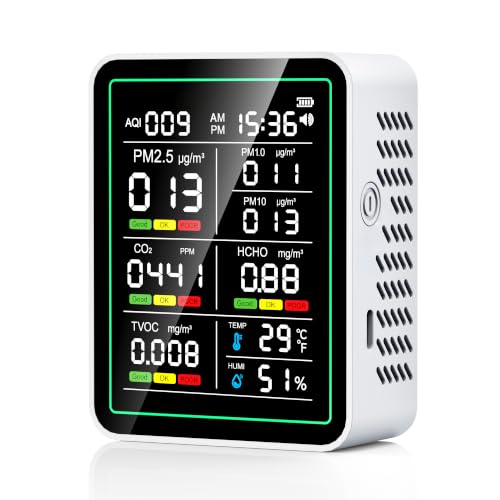
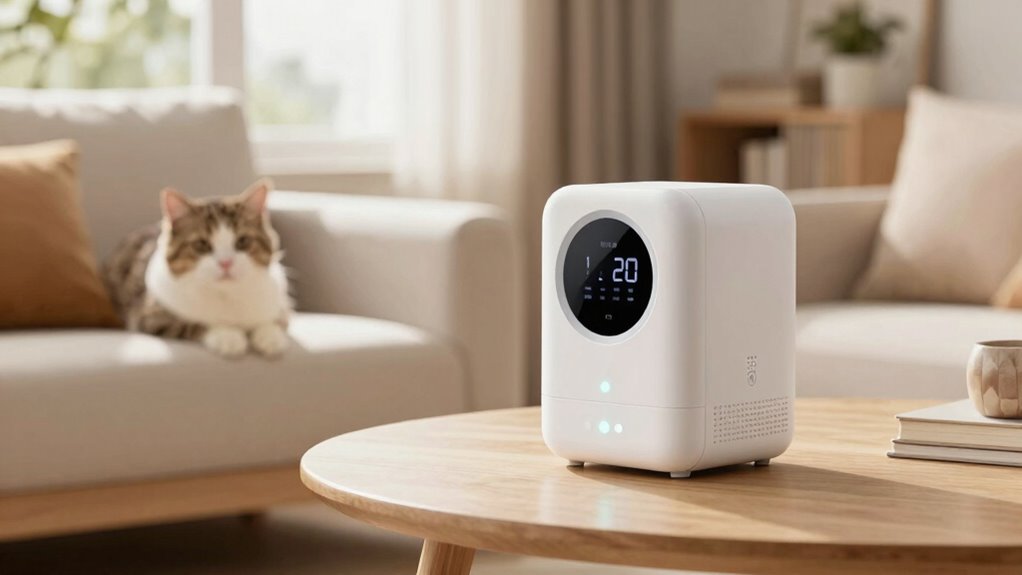
ZEMEOLLO Air Quality Monitor Indoor, 10-in 1 Smart Air Quality Tester
- 10-in-1 Multi-Gas Detection: Monitors CO₂, HCHO, TVOC, benzene, PM2.5, PM10
- High-Definition Color Display: Real-time data with visual alerts
- Intelligent Data Visualization: Automatic environmental quality reports
As an affiliate, we earn on qualifying purchases.
As an affiliate, we earn on qualifying purchases.
Frequently Asked Questions
How Often Should I Calibrate My Pet Home Air Quality Monitor?
You should calibrate your pet home air quality monitor every 1 to 3 months to guarantee sensor accuracy. Regular calibration helps maintain precise readings, especially if the monitor is exposed to dust, pet dander, or smoke. If you notice inconsistent or abnormal readings, increase calibration frequency. Proper calibration ensures your monitor provides reliable data, helping you keep your pet’s environment safe and healthy.
Can Air Quality Monitors Detect Pet Allergens Specifically?
Yes, air quality monitors can detect pet allergens like pet dander, especially if they measure particulate matter (PM) levels. Higher PM readings often indicate increased pet dander in the air. While some monitors specifically target allergen detection, most focus on general air quality and particulate levels. Regularly checking these readings helps you identify when pet dander is high, so you can take steps to improve indoor air quality for allergy relief.
Are There Monitors That Track Pet Odor Levels?
Yes, there are air quality monitors with pet odor sensors that track pet odor levels effectively. These monitors provide real-time air quality alerts, helping you identify when pet odors become noticeable. By monitoring pet odor levels, you can take prompt action to improve your home’s air quality, ensuring a fresher environment for both you and your pets. Look for devices specifically designed to detect pet-related smells for best results.
What Is the Ideal Placement for an Air Quality Monitor in a Pet Home?
You should place your air quality monitor in areas with good air circulation, like central rooms or near pet activity zones. Keep it away from direct sunlight or drafts to guarantee accurate readings. Position it within your safety zones—places where you and your pets spend most of your time—so you can easily monitor air quality and address issues promptly. Regular placement adjustments help maintain a healthy environment for everyone.
How Do I Interpret Sudden Spikes in Air Quality Readings?
When you see sudden spikes in air quality readings, it likely means there’s a temporary increase in air pollution, such as pet dander, odors, or other pollutants. Remember, sensor accuracy can affect readings, so consider if the monitor’s placement or recent activities might influence results. Quickly ventilate the space if needed, and monitor the pattern to determine if the spike was a one-time event or a recurring issue.
Conclusion
Even if your home smells fresh, air quality monitors can reveal hidden pollutants that impact your pet’s health. You might think, “My pet seems fine, so I don’t need one.” But, subtle signs often go unnoticed until health issues arise. Investing in a monitor gives you peace of mind and helps you create a safer environment. After all, a healthier home means happier pets—and that’s worth every penny.