
Your dog’s poop color and texture can reveal a lot about their health. A medium-brown, well-formed stool usually means good digestion and proper hydration. Changes like black or bloody stool may signal bleeding, while green or yellow can suggest dietary issues or rapid transit. Soft or watery stool might point to infections or diet problems. Paying attention to these signs helps catch issues early. Keep exploring to better understand what your dog’s poop might be telling you.
Key Takeaways
- Medium-brown, well-formed stool indicates good digestion and proper nutrient absorption.
- Black or tarry stool signals possible upper GI bleeding, requiring prompt veterinary attention.
- Greenish stool may result from grass ingestion or rapid intestinal transit, often harmless.
- Loose or watery stool can suggest dietary issues, infections, or stress.
- Mucus or blood in stool indicates inflammation or irritation needing veterinary evaluation.
Understanding your dog’s poop color and texture can provide valuable clues about their health. When you pay close attention to these signs, you can catch potential health issues early and help maintain your dog’s overall well-being. The color and consistency of your pup’s stool are closely linked to their dog digestive health and pet dietary habits. Changes in either can signal a variety of health concerns, from minor digestive upset to serious underlying conditions.
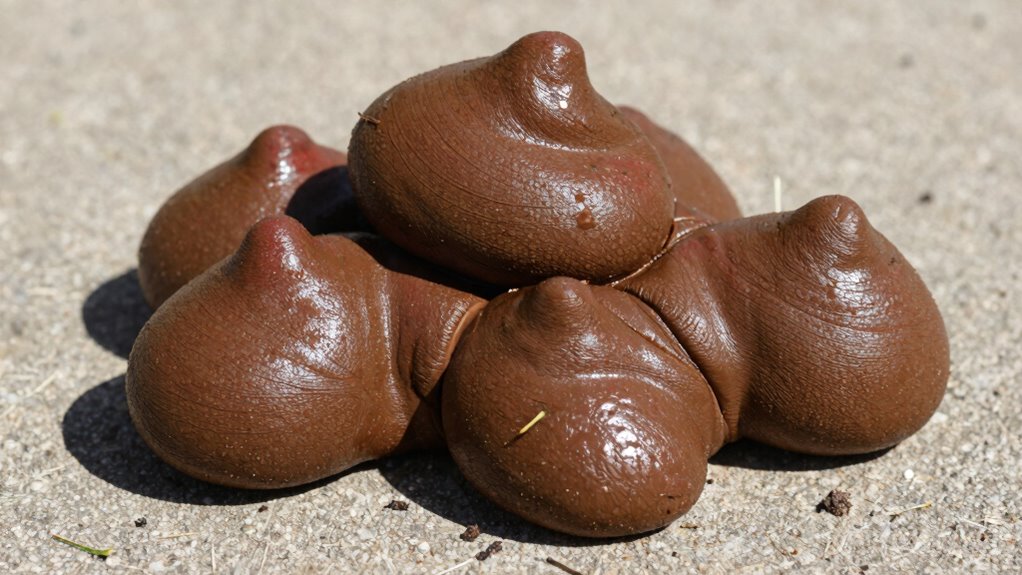
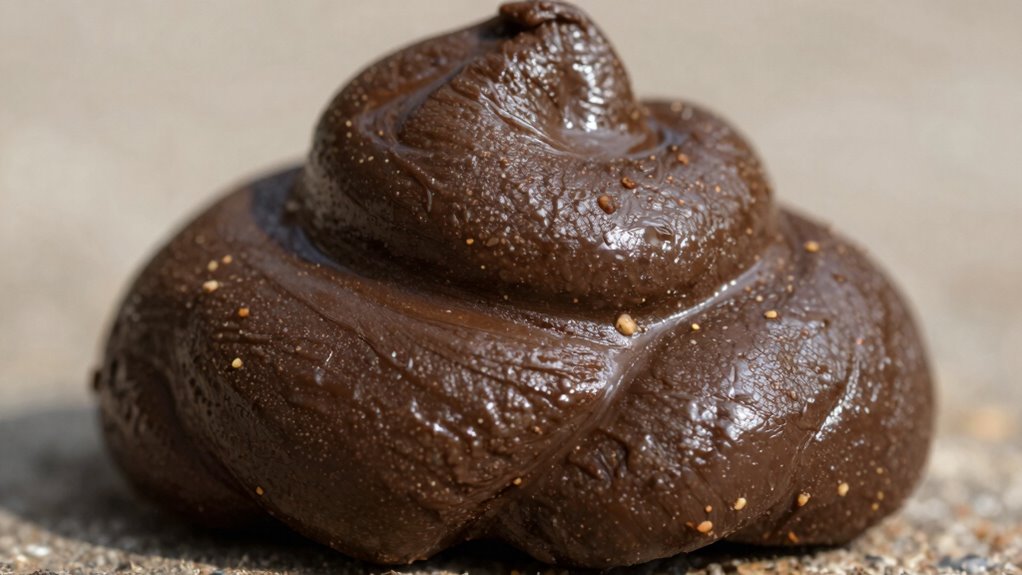
If your dog’s poop is a healthy, medium-brown, that’s usually a good sign they’re digesting their food properly. This typical coloration indicates that their digestive system is functioning well, efficiently absorbing nutrients from their diet. On the other hand, if you notice black or tarry stool, it could mean bleeding in the upper gastrointestinal tract, which requires prompt veterinary attention. Bright red blood in the stool, known as hematochezia, might indicate bleeding lower in the GI tract or anal irritation. These color changes often relate to pet dietary habits or underlying health issues that need to be addressed.
Greenish stool can sometimes be normal, especially if your dog has recently eaten grass or has a diet rich in green vegetables. However, if the stool remains green for several days, it might suggest rapid transit through the intestines or the ingestion of certain medications or foods. Yellow or mustard-colored stool can indicate malabsorption or liver issues, while pale or clay-colored poop might point to problems with bile production. These variations in color serve as important clues about your dog’s digestive health and whether their diet needs adjustment.
Texture also plays a crucial role in understanding your dog’s health. Firm, well-formed stool suggests good digestion and appropriate fiber intake. Loose or watery stool, however, could reflect dietary indiscretions, stress, infections, or food intolerances. Consistently hard or dry stool might point to dehydration or insufficient fiber intake. If your dog’s poop contains mucus or blood, it could indicate inflammation or irritation in the gastrointestinal tract. Recognizing these textures helps you identify if your pet’s diet needs refining or if there’s an underlying health problem.

Nature's Diet® Digestive Carrots – Dehydrated Carrot Dog Food Topper for Diarrhea Relief and Improved Digestion, Fiber for Dogs Keep Poop Firm, Gut Health, Firm Stool, Daily Supplement
- Flexible Feeding Options: Feed dry or rehydrate with water
- Enhanced Nutrient Absorption: Rehydrate with warm water and salmon oil
- Supports Digestive Health: Helps alleviate diarrhea and improve digestion
As an affiliate, we earn on qualifying purchases.
As an affiliate, we earn on qualifying purchases.
Frequently Asked Questions
How Often Should My Dog’s Stool Change Color Naturally?
Your dog’s stool color can change naturally every few days, influenced by diet and health. Generally, you should expect minor variations in color, but consistent changes or unusual shades might signal a health issue. Keep an eye on stool consistency, which should be firm yet moist. Sudden or persistent color shifts, especially accompanied by changes in stool texture, could indicate a problem, so consult your vet if you notice anything unusual.
Can Diet Influence the Texture of Dog Poop?
Did you know diet impacts up to 70% of your dog’s stool consistency? Yes, what your dog eats directly influences texture variations in their poop. A high-fiber diet can produce firmer stool, while foods with low fiber may lead to softer, looser stool. Sudden diet changes can cause temporary texture shifts. Monitoring your dog’s diet helps maintain healthy, consistent poop and signals overall digestive health.
When Should I Be Concerned About Persistent Changes in Stool Color?
You should be concerned about persistent changes in stool color if you notice unusual hues like black, red, or pale shades lasting more than a day. These can indicate health issues requiring veterinary visits. Regular dog grooming helps you monitor these changes easily. If you see consistent color shifts, don’t delay—consult your vet promptly to guarantee your dog’s health and catch potential problems early.
Are There Any Home Remedies for Abnormal Stool Textures?
You can try natural remedies like adding fiber-rich foods such as oats, pumpkin, or psyllium to your diet to improve abnormal stool textures. Fiber supplements are also effective in promoting regularity and firming stool. Staying well-hydrated is essential, too. However, if your stool remains persistently abnormal or you experience discomfort, consult a veterinarian promptly to rule out underlying health issues.
How Does Dehydration Affect My Dog’s Poop Appearance?
When your dog’s hydration levels drop, expect changes in stool consistency—drier, firmer, and more pellet-like. Dehydration causes your dog’s body to absorb more water from the intestines, leading to harder, crumbly poop. This change signals dehydration, so you should encourage your dog to drink more water. Maintaining proper hydration keeps stool soft and normal, preventing discomfort and potential health issues related to dehydration.
Conclusion
By paying attention to your dog’s poop color and texture, you become a detective uncovering clues about their health—like a skilled investigator. If you notice anything unusual, it’s a sign to consult your vet, just as a compass guides a traveler through unfamiliar terrain. Staying observant helps you catch problems early, keeping your furry friend happy and healthy. Remember, their poop tells a story—so listen closely and act wisely.