
Before giving your dog a supplement, ask your vet if the supplement is necessary and safe for your pet’s specific health needs. Inquire about the proper dosage, potential side effects, and ingredient safety, especially with natural labels. Check if the supplement could interact with any medications or health conditions. Make sure the product is reputable. If you’d like to learn more about making informed choices for your dog’s well-being, keep exploring these important questions.

Get pet supplies delivered free with Prime
- Fast, free delivery on millions of items
- Prime Video, Amazon Music and more included
- Member-only deals all year
Key Takeaways
- Is the dog’s current diet balanced and meeting all nutritional needs?
- Have I consulted a veterinarian about the supplement’s safety, dosage, and potential interactions?
- Are the supplement’s ingredients scientifically backed, safe, and free from artificial additives?
- Am I following proper dosage instructions and monitoring my dog for adverse reactions?
- Do I understand the supplement’s role and ensure it complements rather than disrupts my dog’s natural nutrition?
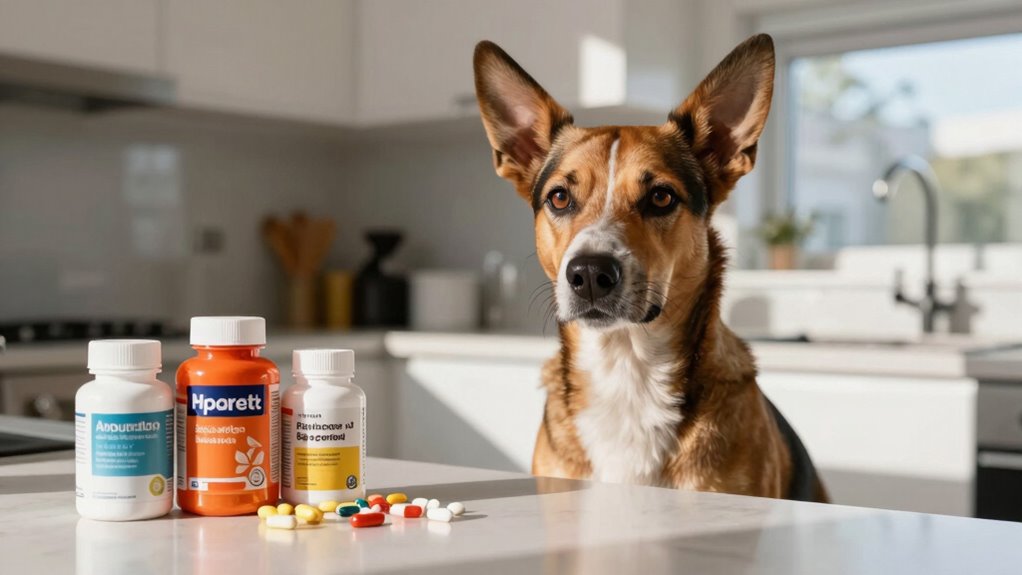
Before giving your dog any supplement, it’s essential to ask the right questions to guarantee safety and effectiveness. Your dog’s health depends on making informed choices, especially when it comes to their diet and any added nutrients. Starting with questions about your dog’s current diet helps determine if a supplement is necessary at all. If your dog already eats a balanced, nutritious diet, additional supplements might not be needed and could even cause harm. Understanding your dog’s diet helps you identify nutritional gaps and decide whether a supplement will genuinely benefit your pet or disrupt their natural balance.
Assess your dog’s diet first to determine if supplements are necessary or could cause harm.
Next, it’s crucial to consider supplement safety. Not all supplements are created equal, and some may contain ingredients that interact negatively with medications or underlying health issues. Ask your veterinarian about the safety of the specific supplement you’re considering. They can advise you on appropriate dosages, potential side effects, and whether the supplement is suitable for your dog’s age, breed, or health condition. Remember, just because a supplement is labeled “natural” doesn’t automatically mean it’s safe for your dog. You need to verify the quality, source, and manufacturing standards of the product. Additionally, understanding pet health and how supplements fit into overall wellness can help you make more informed decisions. Being aware of supplement safety concerns ensures you’re choosing products that won’t inadvertently cause harm. It’s also helpful to learn about nutritional needs specific to your dog’s breed and life stage, as these can influence supplement choices. A good understanding of nutritional gaps can help you determine if supplementation is truly necessary.
Another important question involves the ingredients. Carefully review the label and ask: Are the ingredients backed by scientific research? Are there any artificial additives, fillers, or preservatives that could upset your dog’s stomach or cause allergic reactions? Knowing exactly what’s inside the supplement helps you gauge its quality and safety. If you’re unsure about certain ingredients, consult your vet to understand their effects and whether they align with your dog’s specific needs.
You should also ask about the proper dosage and administration. Giving too much of a supplement can be as harmful as giving too little. Clarify with your vet or the product instructions how much and how often you should give the supplement. Observe your dog closely after starting any new supplement, watching for signs of adverse reactions like vomiting, diarrhea, or changes in behavior. Regular check-ins with your vet can help track your dog’s response and adjust the dosage if necessary. Additionally, understanding the role of biodiversity in pet health can help you make choices that support both your dog’s well-being and the environment.
Ultimately, your goal is to enhance your dog’s health safely. Asking these questions about your dog’s diet, supplement safety, ingredients, and proper dosage ensures you’re making well-informed decisions. Supplementing thoughtfully can support your dog’s well-being, but only when done with careful consideration and professional guidance.
dog supplement safety and dosage
As an affiliate, we earn on qualifying purchases.
As an affiliate, we earn on qualifying purchases.
Frequently Asked Questions
Can Supplements Replace a Balanced Diet for My Dog?
Supplements can’t replace a balanced diet for your dog. While they can address specific dietary deficiencies, they shouldn’t be the main source of nutrition. Relying solely on supplements might lead to nutrient imbalances or overdose, risking your dog’s health. Always consider supplement safety and consult your vet before adding anything. A well-rounded, nutritionally complete diet is essential, with supplements used only to support specific needs under professional guidance.
Are There Natural or Organic Supplement Options Available?
Yes, there are natural and organic supplement options available for your dog. Look for herbal remedies made from high-quality ingredients, and always check for organic certifications to guarantee purity and safety. These options can support your dog’s health naturally, but it’s essential to consult your vet first. Organic-certified supplements often have fewer chemicals and additives, making them a better choice for dogs with sensitivities or allergies.
How Do I Identify if My Dog Needs a Supplement?
You can identify if your dog needs a supplement by observing for dietary deficiencies and behavioral changes. Look for signs like dull coat, poor appetite, or unexplained fatigue, which may indicate nutritional gaps. If your dog shows unusual behavior, such as increased irritability or lethargy, it could also signal a need for supplements. Always consult your vet before adding anything to verify it’s appropriate and safe for your dog’s specific health needs.
Can Supplements Cause Any Long-Term Health Issues?
Around 70% of dog owners believe supplements are harmless, but they can cause long-term health issues if misused. Supplements may lead to potential nutrient imbalances or overdose risks, which could harm your dog over time. It’s essential to consult your vet before giving any supplement, ensuring proper dosage and necessity. Unsupervised supplementation might seem safe initially but can cause serious health problems later on.
Should I Consult a Veterinarian Before Giving Supplements Regularly?
Yes, you should consult a veterinarian before giving your dog supplements regularly. They can evaluate your dog’s dietary restrictions and guarantee supplement safety, preventing potential adverse effects or interactions with medications. A vet’s guidance helps tailor the right supplement plan, considering your dog’s specific health needs. This step minimizes risks and ensures your dog benefits from supplements without compromising their well-being.
Conclusion
Just as a wise shepherd knows his flock well before guiding them, you must understand your dog’s unique needs before introducing supplements. Asking the right questions ensures you’re not blindly following trends but making informed decisions that safeguard your pup’s health. Remember, even the most carefully crafted potion can do more harm than good if given without proper knowledge—so proceed with caution, and treat your dog’s well-being as your highest priority.
Halloween Picks
halloween
As an affiliate, we earn on qualifying purchases.