Supplements for dogs like probiotics and fish oil can boost your pet’s health by supporting their coat, joints, and immune system. Probiotics help with digestion and gut health, especially if your dog has sensitive stomachs or recently took antibiotics. Fish oil provides omega-3 fatty acids that reduce inflammation and improve skin and coat quality. To guarantee safety and effectiveness, it’s best to choose high-quality products and consult your vet—there’s more to discover about making the right choices for your dog’s wellness.

Get pet supplies delivered free with Prime
- Fast, free delivery on millions of items
- Prime Video, Amazon Music and more included
- Member-only deals all year
Key Takeaways
- Choose high-quality supplements like probiotics and fish oil from reputable brands to ensure safety and effectiveness.
- Consult a veterinarian before adding any new supplements to determine appropriate types and dosages.
- Probiotics help maintain healthy gut bacteria, improve digestion, and support recovery after antibiotics.
- Fish oil provides omega-3 fatty acids that promote healthy skin, coat, and joint health in dogs.
- Proper storage and adherence to recommended dosages are essential to maximize supplement benefits and prevent adverse effects.
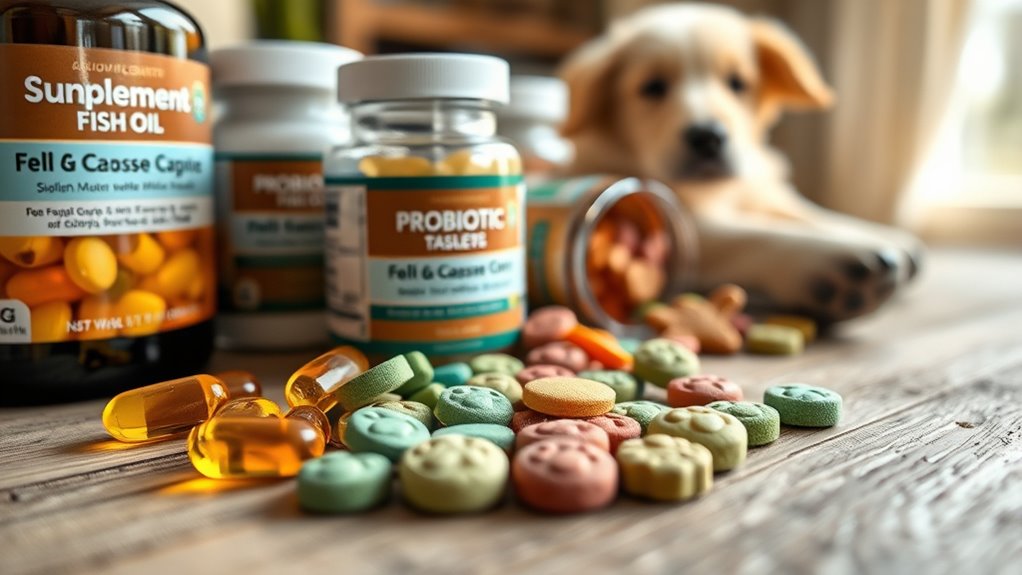
Supplements for dogs can be a valuable way to support your pet’s health and well-being, especially if they have specific nutritional needs or health concerns. When considering adding supplements to your dog’s diet, it’s important to understand their nutritional benefits and guarantee supplement safety. Properly chosen supplements can enhance your dog’s coat, support joint health, and promote overall vitality. For example, fish oil is popular because it provides omega-3 fatty acids, which help reduce inflammation, improve skin and coat condition, and support brain health. These benefits can be especially noticeable in older dogs or those with dry skin.
However, it’s essential to be cautious about supplement safety. Not all products are created equal, and some may contain ingredients that are harmful or not suitable for your dog’s specific needs. Always opt for high-quality supplements from reputable brands, and consult your veterinarian before introducing anything new. They can recommend appropriate dosages based on your dog’s size, age, and health status, reducing the risk of adverse effects. Over-supplementing can lead to nutrient imbalances, so following professional guidance is key.
Probiotics are another popular supplement that offers significant nutritional benefits. They help maintain a healthy balance of gut bacteria, which can improve digestion and nutrient absorption. If your dog has a sensitive stomach, experiences frequent diarrhea, or has recently undergone antibiotics, probiotics might be a good addition to their diet. When choosing probiotics, look for products with strains that are proven to be safe and effective for dogs, and check the expiration date to guarantee potency. Remember, supplement safety includes proper storage—keeping probiotics in a cool, dry place preserves their effectiveness.
Vitamins and minerals also play a crucial role in a dog’s health, especially if your pet has a limited diet or specific health conditions. Supplements can fill nutritional gaps, but they shouldn’t replace a balanced diet. Always discuss these options with your vet to determine what’s necessary and safe. Keep in mind that excessive supplementation of certain vitamins, like vitamin D or calcium, can be toxic, so moderation and professional advice are essential.
As an affiliate, we earn on qualifying purchases.
Frequently Asked Questions
Can Supplements Replace a Balanced Diet for Dogs?
No, supplements can’t substitute a natural diet for your dog. While they can support overall health, relying solely on supplements leads to supplement dependence and misses essential nutrients found in balanced meals. You should focus on providing a well-rounded, nutritious diet and use supplements only as a complement when advised by your vet. This approach ensures your dog gets everything they need without sacrificing the benefits of a natural diet.
How Do I Choose the Right Probiotic for My Dog?
Choosing the right probiotic for your dog is like picking the perfect key for a lock: it needs to fit well. Look for products with proven probiotic strains supported by research. Check the label for storage instructions—some require refrigeration to stay effective. Consider your dog’s specific needs, like digestion or immune support, and consult your vet to make sure the probiotic aligns with your pet’s health.
Are There Any Side Effects of Fish Oil for Dogs?
Fish oil risks are generally low, but some supplement side effects include upset stomach, diarrhea, or a fishy odor. You might notice your dog licking their paws more or a change in coat texture. To prevent these effects, start with a small dose and monitor your dog closely. Always consult your vet before adding fish oil to confirm it’s safe and appropriate for your pet’s specific needs.
How Often Should I Give My Dog Supplements?
You should follow dosage guidelines and supplement timing carefully to keep your dog safe. Typically, give supplements daily or as directed by your vet, but it varies based on your dog’s size, age, and health needs. Always check the product label and consult your vet for personalized advice. Regular, consistent supplementation helps ensure your dog benefits without risking overdose or side effects.
Can Supplements Help With Specific Dog Health Issues?
Supplements can definitely help with specific dog health issues, especially if your pup has nutritional deficiencies or chronic conditions. They support essential functions like digestion, joint health, and skin. Consult your vet to determine the right supplements and dosages tailored to your dog’s needs. Regular use, combined with proper diet and care, can improve your dog’s overall health and quality of life.
Conclusion
So, next time you’re considering supplements for your dog, remember that what works for one may also benefit another—sometimes it’s just a matter of trying. Whether it’s probiotics, fish oil, or something else, these additions can support your pup’s health in unexpected ways. After all, many pet owners find that the right supplement often comes when they least expect it, proving that sometimes, a little extra care makes all the difference.
Halloween Picks
halloween
As an affiliate, we earn on qualifying purchases.