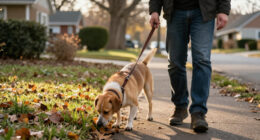
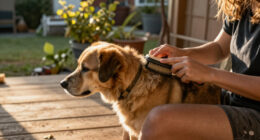
To do a quick five-minute dog wellness check at home, start by inspecting your dog’s coat for shine, smoothness, and signs of bald patches or irritation. Gently feel along the ribs to guarantee proper weight and check the eyes, ears, and mouth for clarity, cleanliness, and signs of infection. Observe your dog’s behavior and activity levels, and pay attention to bathroom habits. Continuing with this routine can help you spot issues early and keep your dog happy and healthy.

Get pet supplies delivered free with Prime
- Fast, free delivery on millions of items
- Prime Video, Amazon Music and more included
- Member-only deals all year
Key Takeaways
- Conduct a coat and skin check for shine, smoothness, and signs of irritation or allergies.
- Assess body condition by feeling along ribs and monitoring weight for a healthy balance.
- Examine eyes, ears, and mouth for clarity, cleanliness, and signs of infection or dental issues.
- Observe your dog’s behavior and activity levels for sudden changes or signs of discomfort.
- Monitor bathroom habits, including stool and urine consistency and frequency, for early health indicators.

Have you ever wondered if your dog is truly healthy? Performing a quick wellness check at home can give you peace of mind and help catch potential issues early. In just five minutes, you can assess your dog’s overall health by focusing on key areas, such as a basic nutritional assessment and behavior monitoring. These simple steps enable you to notice subtle changes that might indicate a problem, encouraging timely vet visits if needed.
Start by observing your dog’s coat and skin. A healthy coat should be shiny and smooth, with no bald patches or signs of excessive scratching. Check the skin for redness, swelling, or lesions, which could suggest allergies or infections. While doing this, take note of your dog’s weight and body condition. Is your dog maintaining a healthy weight? Feeling along their ribs should reveal a slight, but not excessive, fat covering. If you notice weight loss or gain, it might be time for a more detailed nutritional assessment to ensure your dog’s diet is balanced and appropriate.
Check your dog’s coat, skin, and body condition regularly for signs of health issues.
Next, look into your dog’s eyes, ears, and mouth. Clear, bright eyes without discharge or redness are signs of good health. Gently lift the ears to check for foul odors, excessive wax, or signs of infection. When examining the mouth, look for clean teeth and pink gums. Bad breath, drooling, or swollen gums could point to dental issues or other health concerns that need veterinary attention. Understanding canine anatomy can help you better interpret what you see during these checks. Additionally, indicators of health such as these are useful in early detection of potential problems. Being familiar with common health issues can also help you recognize warning signs more effectively.
Behavior monitoring is equally important during your wellness check. Observe your dog’s energy levels—are they playful and alert, or unusually lethargic? A sudden change in activity can signal discomfort or illness. Watch how your dog interacts with you and other pets. Any signs of withdrawal, aggression, or anxiety could indicate underlying health or behavioral issues. Also, pay attention to their bathroom habits: consistency, frequency, and appearance of stool and urine. Changes here can be early indicators of health problems. Additionally, regularly checking your dog’s health can help you stay proactive in maintaining their wellness. Remember, staying attentive to these signs fosters a stronger bond and better understanding of your pet’s needs.
As an affiliate, we earn on qualifying purchases.
Frequently Asked Questions
How Often Should I Perform This Wellness Check on My Dog?
You should perform the wellness check weekly to stay on top of your dog’s health. During this, monitor their diet, check for any changes in eating habits, and observe their exercise routines. Regular checks help you spot early signs of health issues, ensuring your dog remains happy and healthy. Adjust the frequency if your dog has health concerns or is aging, but weekly is a good general guideline.
What Signs Indicate My Dog Needs Immediate Veterinary Care?
If your dog shows sudden behavior changes or a loss of appetite, you should seek immediate veterinary care. Don’t ignore these signs—they could indicate serious issues like illness or pain. Even if your dog seems otherwise fine, persistent or worsening symptoms warrant prompt attention. Acting quickly can make a huge difference in your dog’s recovery and guarantee you catch potential emergencies early. Trust your instincts and consult a vet when in doubt.
Can I Perform This Check on Puppies or Senior Dogs?
Yes, you can perform this check on puppies and senior dogs, but with some adjustments. For puppy health, handle gently and be extra cautious, as their bodies are delicate. For senior dogs, pay attention to age-related issues like arthritis or sensory decline. Always observe their comfort and avoid stressing them. This quick check helps monitor overall health but consult a vet for specific concerns related to puppy health or senior dog needs.
Are There Any Tools or Supplies Needed for the Wellness Check?
Think of this as your dog’s modern-day knight’s toolkit. You’ll need basic grooming tools like a brush and nail clippers, and hygiene supplies such as wipes or mild shampoo. These supplies help you comfortably check your dog’s coat, ears, teeth, and paws. With these simple tools, you can quickly spot any issues and keep your dog healthy, making your wellness check both effective and easy.
How Do I Differentiate Between Normal and Abnormal Findings?
You differentiate between normal and abnormal findings through a behavior assessment and symptom recognition. Notice if your dog’s behavior changes, like reduced activity, lethargy, or aggression. Check for abnormal symptoms such as unusual swelling, discharge, or difficulty breathing. Trust your instincts—any unexpected signs or discomfort indicate something’s off. Regularly monitoring helps you catch issues early, ensuring you seek vet care promptly if needed.
Conclusion
Taking just five minutes to do a quick wellness check can make a big difference in your dog’s health. By staying attentive to their eyes, ears, skin, and overall behavior, you’re better equipped to catch any issues early. Isn’t your loyal companion’s happiness and well-being worth those few moments? Regularly checking in shows you care and keeps your furry friend happier and healthier for years to come. After all, isn’t their love worth every effort?
Fall Picks
fall essentials
As an affiliate, we earn on qualifying purchases.