Before setting up a heated dog house, inspect the insulation to confirm it retains heat and blocks drafts. Check that any electric heater is specifically designed for pets, with safety features like an automatic shut-off, and place it on a stable, elevated surface away from bedding or toys. Also, examine cords for damage and secure them safely to prevent chewing. Taking these safety checks seriously helps protect your dog from hazards and keeps them warm. Continue to discover essential tips for safe heating.

Get pet supplies delivered free with Prime
- Fast, free delivery on millions of items
- Prime Video, Amazon Music and more included
- Member-only deals all year
Key Takeaways
- Ensure the dog house is well-insulated to maintain warmth and reduce reliance on electric heating.
- Use heaters specifically designed for pets, with safety features like automatic shut-off.
- Place the heater on a stable, elevated surface away from bedding and flammable materials.
- Regularly inspect electrical cords for damage and secure them to prevent chewing or tripping hazards.
- Verify all electrical components are in good condition and free of frays or exposed wires before use.
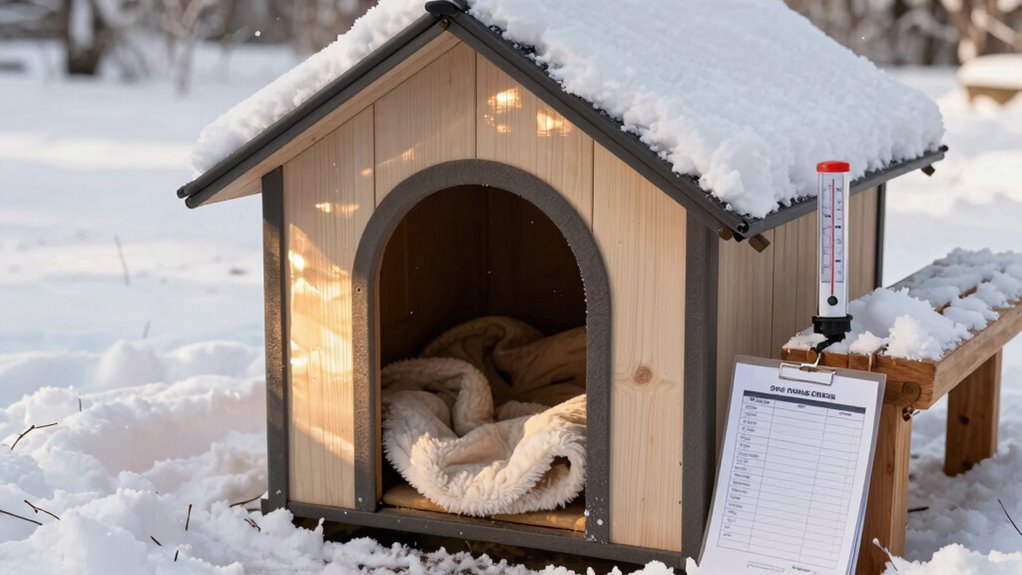
When the weather turns cold, keeping your dog warm and comfortable becomes a top priority, and heated dog houses are an excellent solution. Before you set one up, it’s essential to do some safety checks to guarantee your furry friend stays cozy without risking harm. The first step is to evaluate the dog house insulation. Proper insulation is key because it helps retain heat and keeps cold drafts out. Look for a dog house that has good insulation materials, such as foam boards or insulated panels, or consider adding insulation yourself if the structure isn’t already equipped. A well-insulated house helps maintain a stable temperature, reducing the need for excessive heating and conserving energy. It also minimizes the risk of your dog getting too cold, especially in harsh winter climates.
Next, you want to pay close attention to electric heater safety. If you’re planning to use an electric heater inside the dog house, ensure it’s specifically designed for pet use or small spaces. Never use a regular space heater that isn’t meant for pets, as it can pose fire hazards or cause burns. Check that the heater has safety features such as automatic shut-off if it tips over or overheats. Keep the heater away from the dog’s bedding, toys, and any other flammable materials. Proper placement is key—position the heater on a stable, elevated surface to prevent accidental tipping and ensure it doesn’t block your dog’s access to the door. When installing, verify that the electrical cords are in good condition, free of frays or exposed wires, and that they’re protected from chewing by your dog. Using a cord cover or securing the cord along a wall can prevent accidents and damage. Additionally, considering electric wiring safety is crucial to avoid electrical hazards. Regularly inspecting the electrical components and understanding pet-safe electrical devices can further enhance safety. Ensuring your dog’s environment is safe from electrical hazards and other risks is vital for a secure and warm winter shelter.
heated dog house with safety features
As an affiliate, we earn on qualifying purchases.
As an affiliate, we earn on qualifying purchases.
Frequently Asked Questions
How Do I Choose the Right Size Heated Dog House?
To choose the right size heated dog house, measure your dog’s height and length, then add a few inches for comfort. Focus on material durability to guarantee longevity, and check insulation quality to keep your dog warm. A properly sized house prevents drafts and overcrowding, giving your dog a cozy shelter. Remember, a house that’s too small or too large can impact safety and comfort, so size carefully based on these factors.
Are Heated Dog Houses Energy-Efficient for Long-Term Use?
Did you know that properly insulated heated dog houses can save up to 30% on energy costs? They’re generally energy-efficient for long-term use, especially if you choose models with thermostats and energy-saving features. These options reduce energy consumption and minimize environmental impact, making them a smart investment. By maintaining consistent warmth without overusing electricity, you help your pet stay comfortable while also saving on energy bills.
What Safety Features Should I Look for in a Heated Dog House?
You should look for safety features like proper indoor heating to prevent overheating and guarantee consistent warmth. Thermal insulation is essential, as it helps maintain a stable temperature inside the dog house. Check that the heating system has automatic shut-off or temperature controls to avoid hazards. Additionally, make sure the house is well-ventilated, sturdy, and free from exposed wires, providing a safe environment for your dog during cold weather.
Can Heated Dog Houses Be Used Outdoors Year-Round?
Imagine your dog nestled comfortably inside a heated dog house, its warmth glowing softly against the cold climate outside. Yes, heated dog houses can be used outdoors year-round, provided they have proper insulation and safety features. Indoor heating elements help keep your pup warm during harsh winters, making it suitable for cold climates. Just make certain you check the weather resistance and safety standards to protect your furry friend from the elements.
How Often Should I Inspect the Heating Element for Safety?
You should inspect the heating element regularly, ideally once a month, to guarantee proper safety and temperature regulation. Check for signs of wear, damage, or corrosion, especially around insulation materials that might affect heat distribution. Keep the insulation intact to maintain consistent warmth, and ensure the heating element functions correctly without overheating. Regular inspections help prevent potential hazards and keep your dog comfortably warm in their heated house.
Conclusion
Before you set up a heated dog house, aren’t safety checks worth the extra effort? Ensuring proper insulation, secure electrical connections, and adequate ventilation might seem like small steps, but they’re essential for your dog’s well-being. After all, isn’t their comfort and safety worth your time? Taking these precautions not only protects your furry friend but also gives you peace of mind. So, why not prioritize safety first and enjoy the warmth together?
Halloween Picks
halloween
As an affiliate, we earn on qualifying purchases.