
Herbal remedies can benefit your dog, but their safety depends on proper selection, dosing, and veterinary guidance. Not all herbs are safe; some, like garlic and onions, are toxic, while others may cause side effects or interact with medications. Always consult a veterinarian experienced in herbal medicine before giving any remedies to guarantee they are appropriate and safe for your dog. To keep your furry friend healthy, understanding the risks and proper use is essential.
Key Takeaways
- Not all herbal remedies are safe for dogs; consult a veterinarian experienced in herbal medicine before use.
- Proper dosing is essential; human dosages may be unsafe for dogs and can cause adverse reactions.
- Some herbs, like garlic and onions, are toxic to dogs and should be avoided entirely.
- Herbs can interact with medications; professional guidance is necessary to prevent harmful interactions.
- Monitor your dog closely for any side effects and discontinue use if adverse symptoms occur.
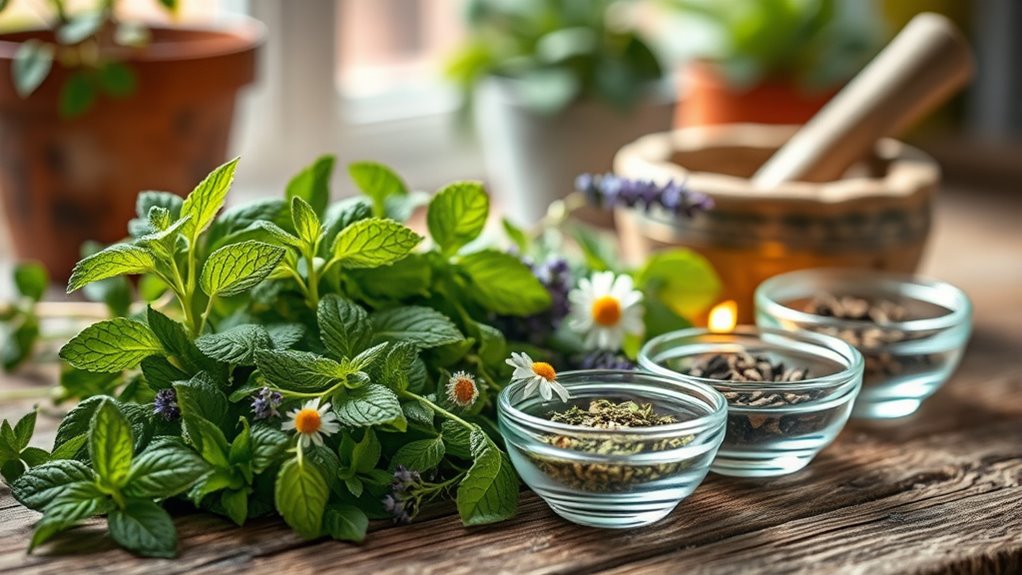
Herbal medicine and natural remedies have gained popularity as people seek alternative ways to support their health and well-being. Many pet owners wonder if these options are safe for their dogs, especially since natural doesn’t always mean risk-free. When considering herbal treatments for your dog, it’s essential to understand treatment safety. Not all herbs are suitable for canine use, and some can cause adverse reactions if improperly dosed or administered. You need to be cautious, as even natural ingredients can have side effects or interact negatively with medications your dog might already be taking. Always consult with a veterinarian experienced in herbal medicine before giving your dog any herbal remedy, and never assume that what works for humans is safe for dogs.
Another aspect to keep in mind is herbal interactions. Some herbs may interact with medications or other supplements your dog is on, potentially reducing their effectiveness or causing harmful side effects. For example, herbs like garlic or onions, often thought to be natural remedies for certain conditions, can be toxic to dogs in larger quantities. Conversely, herbs like turmeric may have beneficial anti-inflammatory properties but could interact with blood-thinning medications, increasing the risk of bleeding. Understanding these interactions is essential to guarantee your dog’s treatment remains safe.
When exploring herbal options, research becomes your best ally. Not all herbs are created equal, and some have well-documented safety profiles in dogs, while others are risky. You should look for reputable sources or consult a holistic veterinarian who can guide you toward safe choices. Proper dosing is another key factor—what’s safe for a small dog might be dangerous for a larger one. Never guess or rely on human dosages, as this can lead to unintended harm.
Monitoring your dog closely during any herbal treatment is necessary. Watch for signs of allergic reactions, gastrointestinal upset, or unusual behavior. If you notice any adverse effects, stop the treatment immediately and seek veterinary advice. Remember, herbal treatments should complement, not replace, conventional veterinary care unless specifically advised by your vet.

The Herbal Dog: Holistic Canine Herbalism Applications and Practice (Sacred Planet)
As an affiliate, we earn on qualifying purchases.
As an affiliate, we earn on qualifying purchases.
Frequently Asked Questions
Can Herbal Remedies Replace Traditional Veterinary Medicine?
Herbal remedies shouldn’t substitute traditional veterinary medicine, as they can pose risks like herbal toxicity and interactions with medications. You need to consult your vet before using any natural treatments, since some herbs may be harmful or interfere with prescribed drugs. While herbs can support your dog’s health, they shouldn’t be the sole treatment, especially for serious conditions. Always prioritize professional advice to ensure your pet’s safety.
Are There Specific Herbs Safe for All Dog Breeds?
Think of herbal safety like a garden where each plant’s harmony depends on the soil. Some herbs are safe for all breeds, like chamomile and ginger, but others require breed considerations. Always check with your vet before introducing new herbs, as individual dogs may react differently. Remember, what’s safe for one breed might not suit another, so prioritize expert guidance to keep your furry friend healthy.
How Do I Identify Adverse Reactions to Herbal Treatments?
You spot adverse reactions by observing your dog closely after herbal treatments. Watch for symptoms like vomiting, diarrhea, lethargy, or changes in behavior. Pay attention to dosage considerations, as giving too much can cause issues, and be aware of herbal interaction risks with other medications. If you notice any abnormal signs, stop the remedy and consult your veterinarian immediately to guarantee your dog’s safety.
What Are the Best Natural Remedies for Canine Anxiety?
Think of natural anxiety remedies for your dog as a gentle lullaby. You can try dog calming herbs like chamomile, valerian root, or lavender, which many pet owners find effective. Incorporate these into your pup’s routine or use calming sprays and supplements. These natural remedies can help ease your dog’s nerves, making stressful situations, like thunderstorms or fireworks, more manageable. Always consult your vet before starting any new treatment.
Are Herbal Supplements Regulated and Quality-Controlled?
Herbal supplement regulation varies, and you should know that quality assurance standards often differ between brands. Some products undergo rigorous testing, ensuring safety and consistency, while others may lack proper regulation. Always choose reputable brands that adhere to strict quality assurance standards. This helps protect your dog from potential contaminants or ineffective ingredients. By doing your research and selecting certified supplements, you can better guarantee your pet’s safety and well-being.
Conclusion
While herbal medicines and natural remedies might seem like a gentle breeze compared to pharmaceuticals, they can still carry hidden storms. Always consult your vet before trying anything new, as even natural ingredients can upset your dog’s delicate balance. Think of these remedies as a double-edged sword—you want to harness their benefits without inviting unnecessary risks. When in doubt, prioritize your dog’s safety, because their well-being is the shining star guiding your choices.