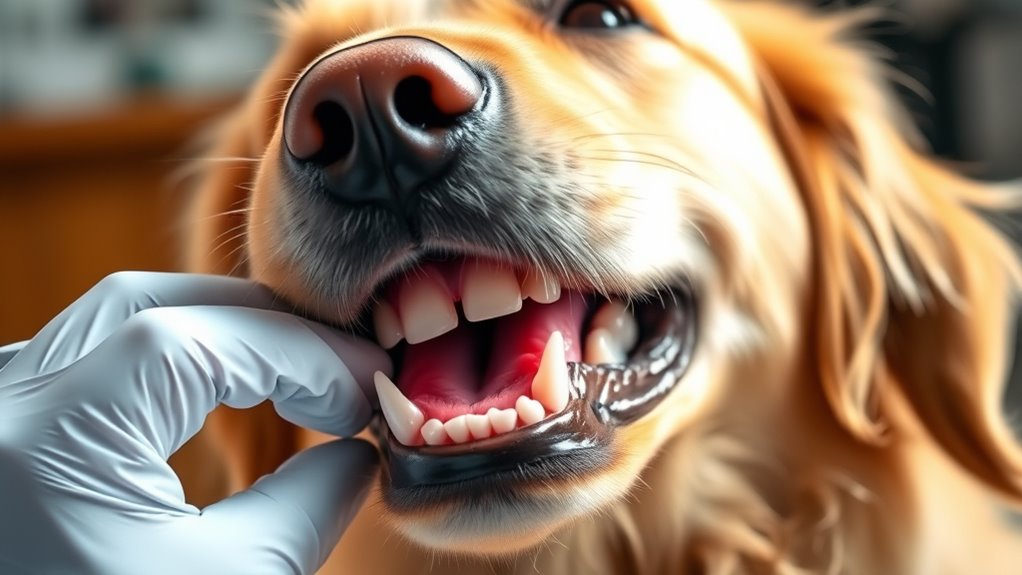
Maintaining your pet’s dental health is essential because poor oral hygiene can cause more than just bad breath. It may lead to plaque, gum disease, or infections that can affect the entire body and shorten their life. Regular brushing, vet check-ups, and professional cleanings help prevent serious health issues. Small daily efforts can make a big difference in your pet’s well-being—continue to learn how you can keep your furry friend healthier and happier.
Key Takeaways
- Regular dental care prevents plaque buildup, gum disease, and infections that can impact your pet’s overall health.
- Good oral hygiene reduces the risk of serious health issues caused by bacteria entering the bloodstream.
- Consistent tooth brushing and professional cleanings help maintain fresh breath and prevent pain or discomfort.
- Early detection of dental problems during vet visits ensures timely treatment and avoids costly complications.
- Overall oral health supports your pet’s vitality, longevity, and happiness by preventing painful and systemic health issues.

Maintaining your pet’s oral hygiene is essential for their overall health and happiness. One of the most noticeable signs of poor dental health in dogs is bad dog breath, which can be more than just an unpleasant smell. It often signals underlying issues like plaque buildup, gum disease, or even infections that can affect your pet’s entire body. Regularly addressing your dog’s oral health helps prevent these problems from developing into more serious health concerns. The key to good dental hygiene starts with simple, consistent tooth brushing. By dedicating a few minutes each day to brushing your dog’s teeth, you can markedly reduce plaque and tartar accumulation, which are the main culprits behind bad dog breath and dental decay. Tooth brushing isn’t just about freshening their breath; it’s a proactive step to keep their mouth healthy. Using a toothbrush designed specifically for dogs, along with pet-safe toothpaste, makes the process easier and more effective. You should aim to brush your dog’s teeth at least a few times a week, if not daily, depending on their needs and tolerance. When you start, approach the task gently, using treats and praise to create a positive experience. It’s important to be patient and consistent, as many dogs initially resist having their teeth brushed. Over time, they’ll become accustomed to it, and it will become a routine part of their care. Besides tooth brushing, regular veterinary check-ups are crucial for maintaining your pet’s oral health. Your vet can spot early signs of dental issues that might be invisible to you, such as loose teeth or gum inflammation. They may also recommend professional cleanings to remove stubborn tartar that brushing alone can’t eliminate. Proper dental care isn’t just about preventing bad breath—it’s about safeguarding your pet’s overall health. Dental problems can lead to more serious infections that travel through the bloodstream, affecting the heart, liver, and kidneys. Increasingly, automation in veterinary care, including dental procedures, is improving diagnosis and treatment options. By staying consistent with tooth brushing and professional cleanings, you’re not only improving your dog’s breath but also helping them live a longer, healthier life. Remember, small efforts like daily tooth brushing can make a big difference in your pet’s well-being. When you prioritize their dental health, you’re showing them love and care that extends far beyond a fresh breath. So invest a few minutes each day, use the right tools, and keep a close eye on their oral health. Your efforts will pay off in a happier, healthier pet with fewer dental issues and better overall vitality.
Frequently Asked Questions
How Often Should I Schedule Professional Dental Cleanings for My Pet?
You should schedule professional dental cleanings for your pet every one to two years, depending on their dental health and your vet’s recommendations. Regular pet checkups help monitor dental frequency needs and catch potential issues early. If your pet has dental problems or is prone to plaque buildup, more frequent cleanings might be necessary. Consistent dental care guarantees your pet stays healthy and comfortable, supporting their overall well-being.
Are There Specific Signs of Dental Issues to Watch for in Pets?
Think of your pet’s mouth as a window into their health—bad breath and tooth discoloration are the first alarms you shouldn’t ignore. Watch for redness, swelling, bleeding gums, and difficulty eating, which signal dental issues. Regularly check their teeth and gums, and consult your vet if you notice these signs. Early detection keeps their smile bright and overall health in top shape.
Can Diet Alone Improve My Pet’s Oral Health?
Diet alone can help improve your pet’s oral health, especially when you choose pet dental diets designed for oral health nutrition. These diets contain ingredients that reduce plaque buildup and strengthen teeth. However, diet isn’t enough on its own; regular brushing and veterinary checkups are essential for maintaining ideal oral health. Combining proper nutrition with consistent dental care keeps your pet’s mouth healthy and prevents serious health issues.
What Are Safe and Effective Dental Treats or Chews?
Imagine your pet happily gnawing on a treat that cleans teeth with each bite. Safe and effective dental treats or chews feature healthy dental ingredients like dental rubber and natural enzymes, ensuring treat safety. Look for products with the Veterinary Oral Health Council (VOHC) seal, which guarantees they help reduce plaque and tartar. Always choose treats designed for your pet’s size and health, and consult your vet for personalized recommendations.
How Do I Introduce My Pet to Regular Dental Care Routines?
You should start pet dental training by introducing a pet toothbrush gradually. Begin by letting your pet sniff and explore the toothbrush, then gently brush their teeth for a few seconds, praising them afterward. Use positive reinforcement, like treats, to encourage cooperation. Consistency is key—practice daily, and soon your pet will associate dental care routines with comfort and rewards, making regular brushing a stress-free part of their routine.
Conclusion
Think of your pet’s mouth as a garden. Regular brushing and dental care are like tending to the soil, preventing weeds of plaque and disease from taking root. When you nurture this garden, you protect your furry friend’s health and happiness, allowing them to thrive and play. Remember, a well-maintained garden blooms brighter—and so does your pet’s overall well-being. Invest in their dental health today, and watch your bond grow stronger every day.