
Understanding raw diets means recognizing they include uncooked meats, bones, fruits, and vegetables aimed at mimicking a wild dog’s diet. They can improve coat health, reduce allergies, and boost energy, but come with risks like harmful bacteria and choking hazards from bones. Proper sourcing, handling, and vet guidance are essential to keep your dog safe. If you want to understand how to balance these benefits and risks for your pet, there’s more to learn ahead.
Key Takeaways
- Raw diets mimic wild canines, offering potential benefits like improved coat health and increased energy.
- They consist of uncooked meat, bones, fruits, and vegetables, with homemade and commercial options available.
- Risks include bacterial contamination and choking hazards from bones, requiring careful sourcing and handling.
- Transitioning to a raw diet needs careful planning, veterinary guidance, and ongoing monitoring for nutritional balance.
- Weigh the benefits against risks, consult professionals, and prioritize high-quality ingredients for your dog’s safety and health.
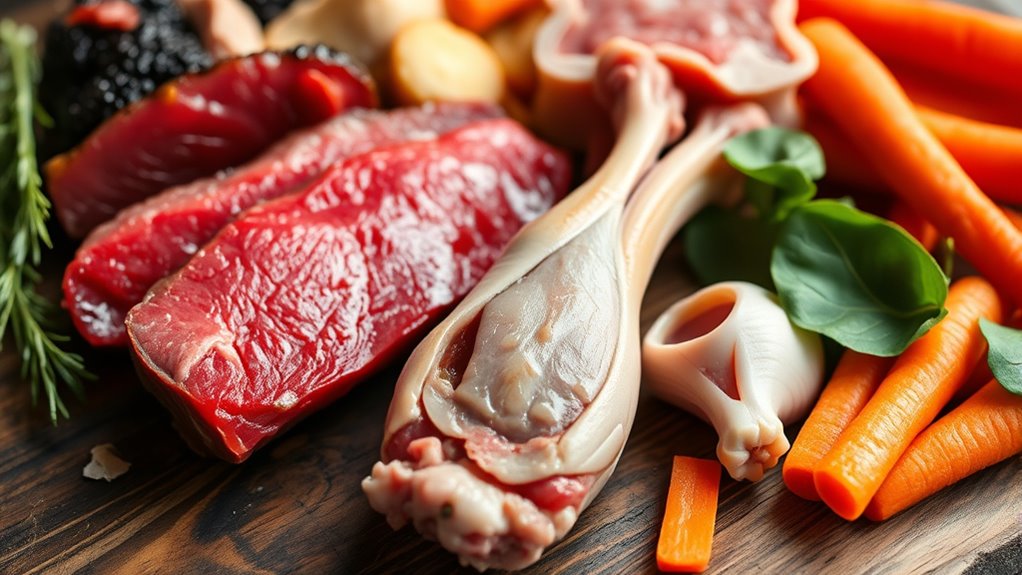
Are raw diets right for your pet? This question is at the heart of many pet owners’ minds when considering whether to switch to this type of feeding. Raw diets typically consist of uncooked meat, bones, fruits, and vegetables, aiming to mimic what dogs might have eaten in the wild. You might be exploring homemade recipes to give your dog a personalized, natural diet, or you could be leaning toward commercial options designed specifically for raw feeding. Both choices have their pros and cons, and understanding them can help you make an informed decision. Homemade recipes allow you to control every ingredient, ensuring freshness and tailoring the diet to your dog’s specific needs. However, creating balanced and safe recipes requires knowledge of canine nutrition, and there’s a risk of nutritional gaps if not carefully formulated. On the other hand, commercial options provide convenience and are often developed by veterinary nutritionists to meet nutritional standards. These pre-made raw diets eliminate the guesswork involved in balancing homemade meals, making them a popular choice for busy pet owners.
While many believe that raw diets can improve coat health, reduce allergies, and increase energy levels, they also carry potential risks. Raw meat can harbor harmful bacteria like Salmonella or E. coli, which might infect your dog or even spread to humans in your household. Bones, especially when not prepared properly, can pose choking hazards or cause internal injuries. Ensuring your dog’s safety means sourcing high-quality ingredients from reputable suppliers and following proper handling practices. Moreover, raw diets might not be suitable for all dogs, particularly those with compromised immune systems or certain health conditions. Consulting your veterinarian before making any drastic dietary changes is essential to avoid unintended health issues.
Transitioning to a raw diet requires careful planning and ongoing monitoring. Regular veterinary checkups can help identify nutritional deficiencies or health changes early. Be prepared to adjust your pet’s diet over time, based on their response and nutritional needs. Additionally, understanding vet-approved raw diet protocols is crucial for ensuring your pet’s safety and nutritional balance. Remember, the goal isn’t just to feed raw but to do so thoughtfully, prioritizing your dog’s health and safety. Whether you opt for homemade recipes or commercial options, understanding the potential benefits and risks will help you provide a diet that supports your pet’s well-being. Ultimately, the decision should be based on thorough research, professional advice, and your pet’s individual health profile.

Raw and Natural Nutrition for Dogs, Revised Edition: The Definitive Guide to Homemade Meals
As an affiliate, we earn on qualifying purchases.
As an affiliate, we earn on qualifying purchases.
Frequently Asked Questions
Are Raw Diets Suitable for Puppies or Senior Dogs?
Raw diets can be suitable for puppies and senior dogs, but you need to tailor their nutrition carefully. For puppies, focus on supporting growth with balanced raw ingredients that meet their developmental needs. For seniors, guarantee the diet addresses joint health and easy digestion. Always consult your vet before switching, as raw diets require careful planning to meet puppy nutrition and senior dietary needs effectively and safely.
How Do Raw Diets Affect a Dog’s Dental Health Long-Term?
Did you know that 80% of dogs show signs of dental disease by age three? Raw diets can help reduce long-term dental issues by naturally scraping away dental plaque and tartar buildup. Chewing on raw meaty bones stimulates gums and keeps teeth cleaner. However, improperly prepared bones may cause fractures, so make certain you’re giving safe, appropriate options. This proactive approach supports your dog’s dental health over the years.
What Are the Signs of an Inadequate Raw Diet?
If your dog shows signs of an inadequate raw diet, you’ll notice nutritional deficiencies like dull coat, lethargy, or weight loss. Digestive issues such as diarrhea, vomiting, or constipation can also occur. Keep an eye out for these symptoms, as they suggest your dog isn’t getting balanced nutrition. Address these early by consulting your vet and adjusting the diet to prevent long-term health problems.
Can Raw Feeding Help With Specific Health Conditions?
Imagine your dog fighting off health issues like a warrior—raw diets benefits can support specific health conditions. For example, they may help manage allergies, improve digestion, or boost joint health. You might notice increased energy or shinier coat. While raw feeding can support health condition management, consult your vet to confirm it’s tailored to your dog’s unique needs, making the benefits truly effective.
How Do I Transition My Dog Safely to a Raw Diet?
To shift your dog safely to a raw diet, start gradually by replacing part of their usual food with homemade treats and raw pieces. Keep a consistent feeding schedule, offering small portions multiple times a day. Watch for any signs of digestive upset, and adjust slowly over a week or two. This approach helps your dog adapt comfortably while ensuring they receive balanced nutrition.

IRIS USA Airtight Dog Food Storage Container, Up to 30 lbs, Attachable Wheels, for Dog Cat Bird and other Pet Food Storage Bin, Keep Fresh, Easy Mobility, BPA Free, Black
Food Storage for All Pets: Keep dog kibble, cat dry food, bird seed, pellets, and treats fresh and…
As an affiliate, we earn on qualifying purchases.
As an affiliate, we earn on qualifying purchases.
Conclusion
Switching to a raw diet for your dog is like opening a box of chocolates—full of surprises, some sweet, some not. While it can boost your pup’s health and happiness, it’s essential to weigh the risks and do your homework. Think of it as steering through a forest—you need a map and caution to avoid pitfalls. By understanding both the benefits and dangers, you can make the best choice to keep your furry friend thriving.

SPOT Bam-Bones Plus T Bone – Bamboo Fiber & Nylon Dog Chew Toy for Moderate to Aggressive Chewers, Durable Long Lasting & Non-Splintering, Beef Flavor Toy for Adult Dogs & Puppies Under 60 lbs, 6 in
Helps Eliminate Destructive Chewing – This sturdy t bone dog chew toy offers a safe outlet for aggressive…
As an affiliate, we earn on qualifying purchases.
As an affiliate, we earn on qualifying purchases.

Ultimate Guide to Starting a Raw Dog Food Diet: The Complete Beginner's Handbook to Raw Feeding for Dogs: A Step-by-Step Guide for Optimal Canine Health
As an affiliate, we earn on qualifying purchases.
As an affiliate, we earn on qualifying purchases.