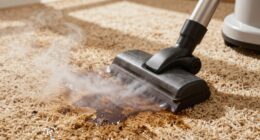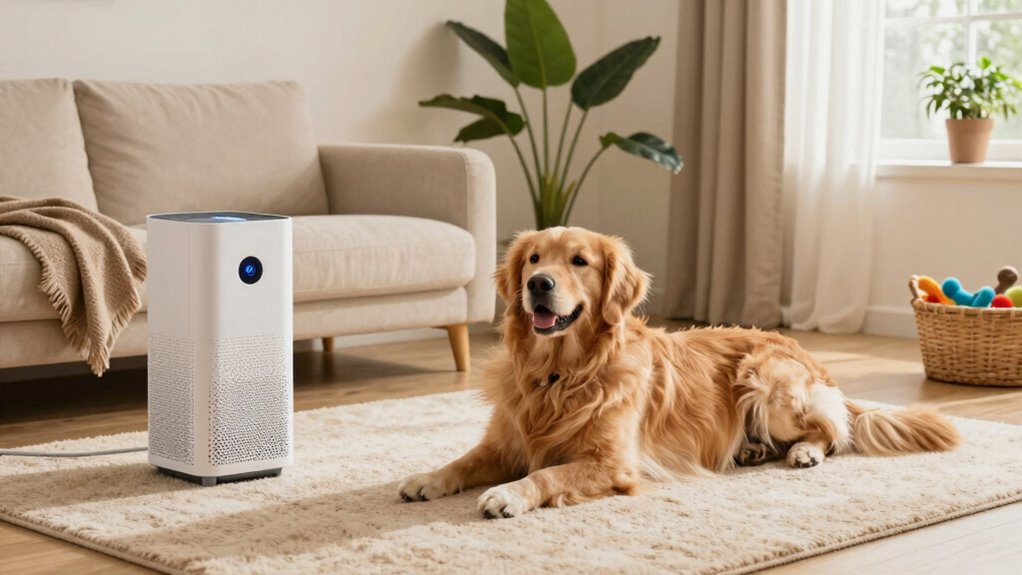

To reduce dog dander at home without creating a sterile environment, focus on regular grooming with brushing and baths, use HEPA air purifiers, and vacuum frequently. Opt for easy-to-clean flooring and furniture like hardwood or microfiber. Maintain good ventilation by opening windows or using fans, and wash pet bedding often. Incorporate pet-friendly, low-shedding plants to improve air quality. Keep dander levels low with simple strategies—you’ll find tips that can help if you continue exploring.
Key Takeaways
- Regularly brush and bathe your dog to reduce loose fur and dander without over-sanitizing your home.
- Use HEPA air purifiers and improve ventilation to capture airborne dander while maintaining a natural environment.
- Choose easy-to-clean, pet-friendly furniture and flooring that minimize dander buildup and are simple to maintain.
- Maintain a consistent grooming schedule and wash bedding weekly to control allergens without making your home sterile.
- Incorporate pet-safe plants and proper cleaning routines to naturally improve air quality and reduce allergens effectively.

MOOKA Air Purifiers for Home Large Room up to 1076ft², H13 True HEPA Air Filter Cleaner, Odor Eliminator, Remove Smoke Dust Pollen Pet Dander, Night Light, B-D02L White
MOOKA B-D02L AIR PURIFIER FOR LARGE ROOM: With the high-efficiency filtration system, the air purifier covers an area…
As an affiliate, we earn on qualifying purchases.
As an affiliate, we earn on qualifying purchases.
What Is Dog Dander and How Does It Trigger Allergies?
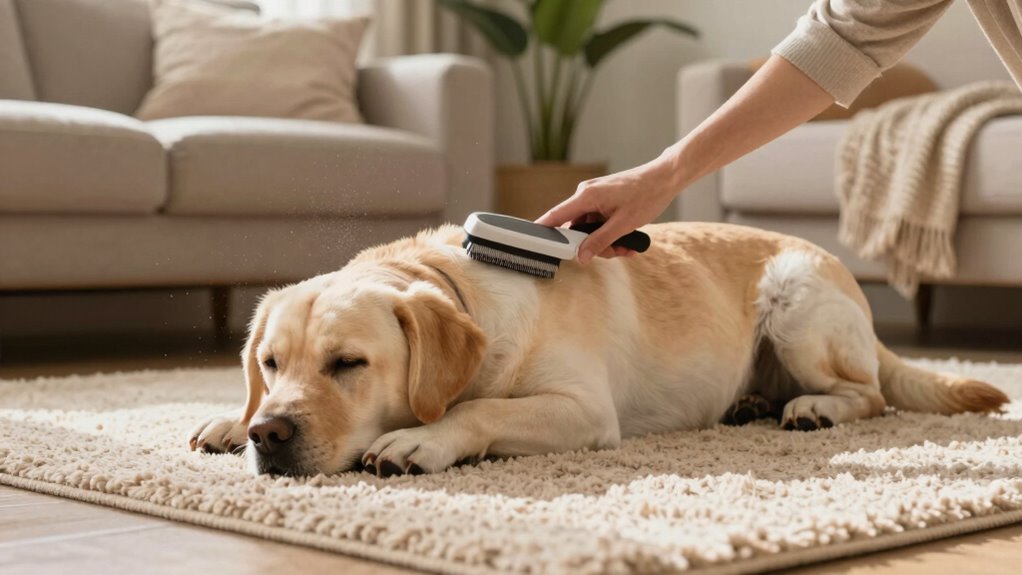
Dog dander consists of tiny skin flakes shed by dogs as they groom themselves or lose hair. These microscopic particles are a common trigger for allergies, especially in sensitive individuals. When your dog scratches, bites, or sheds, pet fur and skin flakes become airborne or settle on furniture and surfaces. Dog saliva also plays a role; when your dog licks itself, the saliva dries and adheres to fur and skin, creating allergenic proteins. As these proteins mix with shed skin flakes, they form dander that can linger in your home environment. Breathing in these allergens can cause symptoms like sneezing, coughing, or itchy eyes. Understanding that dander is a combination of skin flakes, pet fur, and saliva helps you grasp how it triggers allergic reactions. Additionally, ear wax odor can sometimes be mistaken for other smells, but understanding the composition of allergens like dander helps in managing indoor air quality effectively.

SleekEZ Dog Brush for Shedding & Dog Grooming Supplies | Pet Hair Removal Tool | Great For All Fur Types | For Short, Medium, & Long Hair Pets | Reduces Shedding by 95% | Made in USA | 5 inch
SAVE MONEY: Reduce expensive trips to the groomer. Our dog shedding brush works great as a dog brush…
As an affiliate, we earn on qualifying purchases.
As an affiliate, we earn on qualifying purchases.
How to Groom Your Dog to Minimize Dander and Shedding?

Regular brushing helps remove loose fur and dander before it falls around your home. Make sure to use the right tools and techniques for your dog’s coat type. Additionally, establishing a consistent bathing routine can help keep shedding and dander under control. Incorporating protective styling benefits can further minimize shedding by reducing the amount of hair that falls loose. Using appropriate grooming techniques tailored to your dog’s coat can also prevent excessive shedding and skin irritation. Proper grooming not only reduces shedding but also improves your dog’s overall color accuracy, ensuring they look healthy and well-maintained. Being mindful of everyday safety tips during grooming can help prevent accidental injuries to both you and your pet.
Regular Brushing Techniques
Brushing your dog regularly is one of the most effective ways to reduce dander and shedding at home. Use a brush suitable for your dog’s coat type to remove loose hair and minimize shedding. While brushing, incorporate coat conditioning by using a spray or leave-in conditioner to keep the coat healthy and reduce static, which can cause more loose fur. Regularly trimming your dog’s nails, especially during brushing sessions, helps prevent discomfort that might lead to excessive shedding or scratching. Be gentle and consistent, aiming for at least a few times a week. Proper brushing not only minimizes dander but also promotes healthy skin, reducing the chances of irritation that can increase shedding. Additionally, understanding Free Floating concepts can help you manage allergens more effectively by promoting natural, sustainable practices in your home. This simple routine keeps your home cleaner and your dog more comfortable.
Proper Bathing Routine
To effectively reduce dander and shedding, establishing a proper bathing routine is essential. Regular dog bathing helps remove loose fur, dirt, and allergens that contribute to allergy symptoms. Use a gentle, hypoallergenic dog shampoo designed for allergy prevention, and avoid over-bathing, which can dry out your dog’s skin and increase shedding. Aim to bathe your dog every 4-6 weeks, or as recommended for their breed and skin type. During bath time, thoroughly rinse out all shampoo to prevent residue buildup, which can irritate the skin. Afterward, towel dry and, if possible, use a blow dryer on a low setting. Consistent dog bathing combined with proper grooming reduces dander, making your home more allergy-friendly. Additionally, maintaining good air purifier maintenance and ensuring proper airflow around your home can further help manage airborne allergens. Incorporating grooming tools like brushes suitable for your dog’s coat type can also help minimize shedding and dander buildup. Using the right shampoo can also help maintain healthy skin and coat, further reducing allergens.

Cat Scratch Furniture Protector – Anti-Scratch, Anti-Slip & Waterproof Couch Protector (No Stretch), Pet-Friendly Sofa Protection, Easy to Clean (Measure Before Purchase, Grey Color) (Medium (118×71))
✅ ANTI-CAT SCRATCH PROTECTION THAT WORKS: Protect your sofa from claw damage with a durable cat scratch furniture…
As an affiliate, we earn on qualifying purchases.
As an affiliate, we earn on qualifying purchases.
Simple Home Changes to Reduce Dander Naturally

You can reduce dander by sticking to regular grooming routines for your dog, which helps keep loose hair and skin flakes under control. Additionally, implementing effective cleaning strategies, like vacuuming often and washing bedding regularly, makes a big difference. These simple home changes naturally lower dander levels and create a more allergy-friendly environment. Using air purifiers designed to filter pet dander can further improve indoor air quality. Incorporating pet grooming technology that tracks your dog’s grooming schedule can also help maintain consistent dander control. Maintaining consistent grooming routines ensures that dander levels stay manageable over time. Regular grooming and cleaning routines are essential components of an effective dander reduction strategy. For optimal results, consider dander monitoring devices that help you assess and adjust your efforts effectively.
Regular Grooming Practices
Regular grooming is a simple yet effective way to reduce dander and manage dog allergies at home. Consistently brushing your dog helps remove loose fur and skin flakes that trigger allergy symptoms. Using a deshedding tool or slicker brush can target undercoat hair, reducing dander further. Bathing your dog regularly with a gentle, hypoallergenic shampoo also plays a key role in allergy prevention. Be sure to rinse thoroughly and dry your dog completely to prevent skin irritation and additional dander. Regular grooming not only keeps your dog comfortable but also minimizes airborne allergens. Additionally, establishing a grooming schedule can help maintain consistent allergen control. By sticking to a routine, you can notably lower the amount of pet dander in your home, making it a more comfortable space for allergy sufferers. Proper grooming techniques can optimize your efforts and further reduce allergens. Incorporating vet-approved grooming products can enhance these benefits and ensure the health of your pet’s skin.
Effective Cleaning Strategies
Implementing simple cleaning strategies can substantially reduce pet dander and improve indoor air quality. Regularly vacuum carpets, upholstery, and pet bedding with a HEPA filter to trap dander effectively. Dust surfaces frequently using damp cloths to prevent dust from becoming airborne. Wash pet accessories and bedding weekly, especially if your dog’s nutrition includes high-protein foods that can increase dander production. Consider establishing a pet training routine to minimize shedding and ensure your dog stays calm, reducing excess dander release. Use air purifiers with HEPA filters in common areas to further filter airborne allergens. Incorporating proper grooming techniques and consistent cleaning can significantly reduce allergen levels and create a healthier environment without making your house sterile. Regular pet nutrition management can influence dander levels and improve allergy symptoms. Additionally, providing mental stimulation through toys and training can help reduce stress-related shedding and dander release. Staying proactive with cleaning supports both your pet’s comfort and your allergy management, and understanding the sources of allergens can help target your cleaning efforts more effectively.

Thorsen's Greenhouse Parlor Palm Plant, Live Indoor Plant, Neanthe Bella Palm, Natural Air Purifier, Easy to Grow, Pet Safe Plant, 4-inch Diameter Pot
About the Plant: Neanthe Bella Palm, also known as Parlor Palm, is an indoor plant grown for its…
As an affiliate, we earn on qualifying purchases.
As an affiliate, we earn on qualifying purchases.
Choosing Flooring and Furniture That Resist Dander

Choosing flooring and furniture that resist dander can markedly reduce allergy triggers in your home. Opt for hard surfaces like hardwood, tile, or vinyl, which are easier to clean and don’t trap dander like carpets do. When selecting furniture, choose pieces made from pet-safe fabrics that are tightly woven and easy to wipe down, such as microfiber or leather. Incorporate dog-friendly plants that don’t shed or trigger allergies, adding greenery without the added dander. These choices help minimize allergen accumulation and make cleaning more effective. Embracing minimalist design principles by selecting simple, durable, and low-maintenance furnishings can further enhance allergy control. Using pet-safe fabrics for furniture not only reduces allergen buildup but also ensures a safer environment for your furry friend. Additionally, selecting hypoallergenic flooring options can significantly decrease airborne allergens. Prioritizing durable, low-pile flooring and pet-safe fabrics helps create a healthier environment for allergy sufferers while still maintaining a comfortable, dog-friendly space. Incorporating easy-to-clean surfaces can also facilitate regular maintenance and allergen removal. Maintaining a consistent cleaning routine with gentle, allergen-reducing cleaning products contributes to long-term allergy management.
Smart Cleaning Habits to Keep Dander at Bay Without Irritating Allergies

To effectively keep dander at bay without irritating allergies, adopting smart cleaning habits is essential. Regularly vacuum with a HEPA filter to capture pet dander from carpets and upholstery. Clean floors and surfaces frequently, especially areas where your dog spends time. Bathe and brush your dog regularly—this reduces shedding and minimizes dander in the environment. Additionally, managing dog behavior through pet training helps limit excessive scratching or shedding caused by stress or anxiety. Keep your dog’s bedding and toys clean, washing them weekly. When cleaning, use non-toxic, allergen-reducing products and avoid harsh chemicals. Incorporating home maintenance practices that focus on allergen control can further help reduce dander levels. Consistency is key; establishing these habits helps control dander levels without making your home sterile, allowing you to enjoy your pet while minimizing allergy symptoms.
Using Air Purifiers and Good Ventilation for Allergy Relief

Using air purifiers and maintaining good ventilation can substantially reduce airborne pet dander, making your home more comfortable for allergy sufferers. Regular air purifier maintenance guarantees they operate efficiently, trapping dander and other allergens effectively. Choose models with HEPA filters and change them as recommended. Upgrading your ventilation system can also improve airflow, helping to clear indoor air of allergens more quickly. Ensure your ventilation system is well-maintained and properly balanced to avoid stagnant air spots where dander can accumulate. Keep windows open when possible to promote fresh air exchange. Combining these approaches reduces airborne allergens without making your home sterile, allowing you to enjoy your space with less allergy symptoms while keeping your environment healthy.
Designing a Dog-Friendly Space That Minimizes Dander Circulation
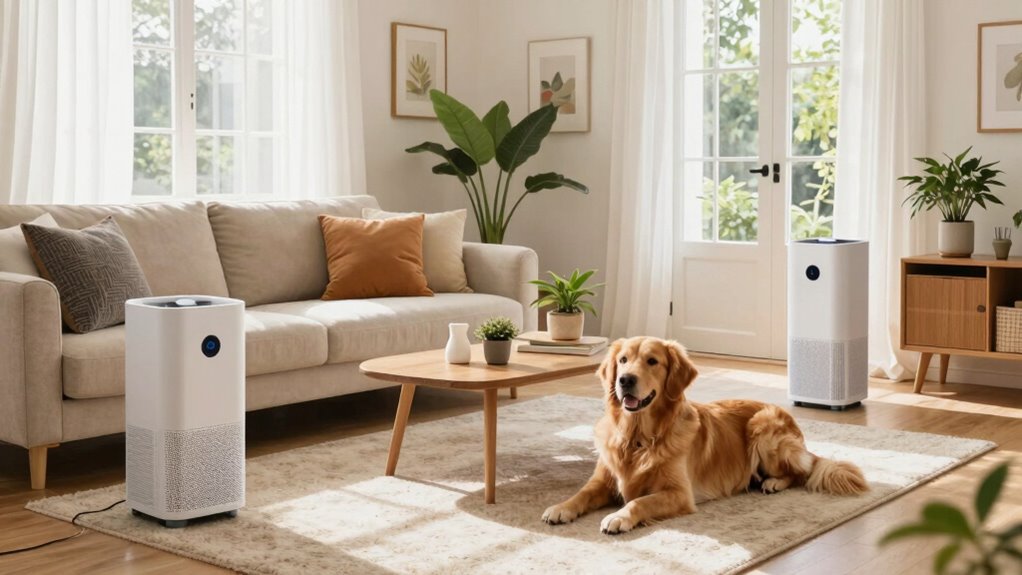
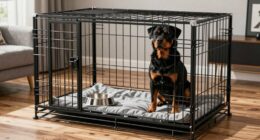
Creating a dog-friendly space that minimizes dander circulation involves thoughtful design choices that reduce allergen spread. Start by strategically placing your dog crate in a well-ventilated area, away from high-traffic zones, to limit dander buildup. Incorporate pet-friendly plants like Boston ferns or spider plants, which help filter the air naturally. Keep surfaces like floors and furniture easy to clean, reducing dander accumulation. Use a table to visualize layout ideas:
| Area | Key Feature | Benefit |
|---|---|---|
| Corner near window | Dog crate placement | Good airflow, less allergen spread |
| Living room | Pet-friendly plants | Natural air purification |
| Entryway | Easy-to-clean flooring | Dander control during entry/exit |
| Quiet spot | Minimal fabric upholstery | Less dander retention |
This setup minimizes circulation while maintaining comfort.
Daily Habits to Manage Dander Levels and Keep Allergies Under Control

Maintaining low dander levels requires consistent daily habits that actively reduce allergen buildup. Start by incorporating regular dog training to encourage behaviors that minimize shedding, like gentle grooming and avoiding excessive scratching. Proper pet nutrition also plays a role; feeding your dog a balanced diet reduces skin irritation and dander production. Daily brushing helps remove loose fur, so do it in well-ventilated areas or outside. Vacuum frequently using a HEPA filter to trap dander particles, and wipe surfaces regularly. Encourage your dog to stay off furniture and bedrooms to limit allergen spread. Keep your home well-ventilated by opening windows or using air purifiers. These habits, combined with attentive training and good nutrition, help you manage dander levels effectively without making your house sterile.
Frequently Asked Questions
Can Certain Dog Breeds Produce Less Dander Than Others?
Yes, some hypoallergenic breeds produce less dander, making them better for allergy sufferers. Breeds like poodles, Bichon Frises, and Portuguese Water Dogs shed less and trigger fewer allergy issues. To further reduce dander, you should follow dander reduction techniques such as regular grooming, frequent cleaning, and using HEPA filters. These steps help keep your home allergen-free while still enjoying the companionship of your dog.
Are There Specific Scents or Products That Help Reduce Dander?
Certain scents and products can help reduce dander. You might try using hypoallergenic sprays designed to minimize allergens and essential oils like eucalyptus or lavender, which can create a cleaner, fresher environment. Regularly spraying these around your home can help manage dander levels without making your house sterile. Just make certain you choose products safe for pets, and avoid overusing essential oils, as some can cause sensitivities.
How Does Humidity Affect Dog Dander Levels Indoors?
Some might think humidity worsens dog dander, but it actually helps. Using a humidifier benefits moisture control, preventing dander from becoming airborne and settling on surfaces. Maintaining ideal indoor humidity levels (around 40-50%) keeps dander less sticky and easier to manage. By controlling moisture, you create a healthier environment for allergy sufferers, making your home more comfortable without needing to make it overly sterile.
Can Diet Influence the Amount of Dander a Dog Sheds?
Yes, diet can influence how much dander your dog sheds. Feeding high-quality, omega-3-rich dog food can improve coat health and reduce shedding. Regular dog grooming helps remove loose fur and dander. Using air purifiers with HEPA filters captures airborne dander particles, making your home more allergy-friendly. Combined, these strategies help manage shedding and minimize allergy symptoms without making your house sterile.
Are There Natural Remedies to Soothe Allergy Symptoms Caused by Dander?
You might find relief with natural remedies like herbal remedies or homeopathy options, which many believe can soothe allergy symptoms caused by dander. While some swear by these approaches, scientific evidence varies. It’s worth trying gentle options like chamomile or eucalyptus, but always consult with a healthcare professional first. These natural remedies could help you breathe easier and reduce allergy discomfort without harsh medications.
Conclusion
By implementing these tips, you can keep your home welcoming for your furry friend without letting allergies take over. Remember, you don’t have to go overboard or turn your house into a sterile zone—small changes make a big difference. Stay consistent, be patient, and don’t lose sight of the fact that a happy dog and a comfortable home can go hand in hand. With a little effort, you’ll find the perfect balance that works for both of you.