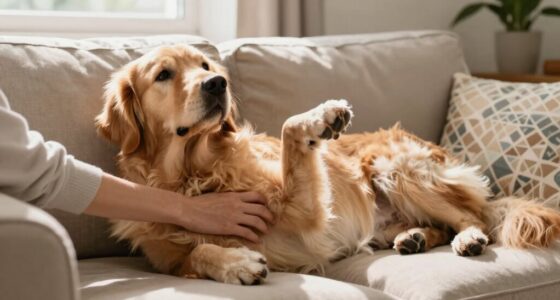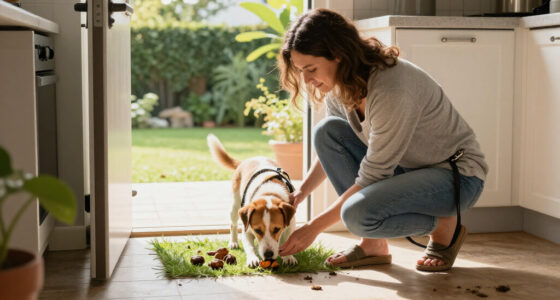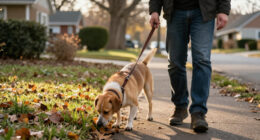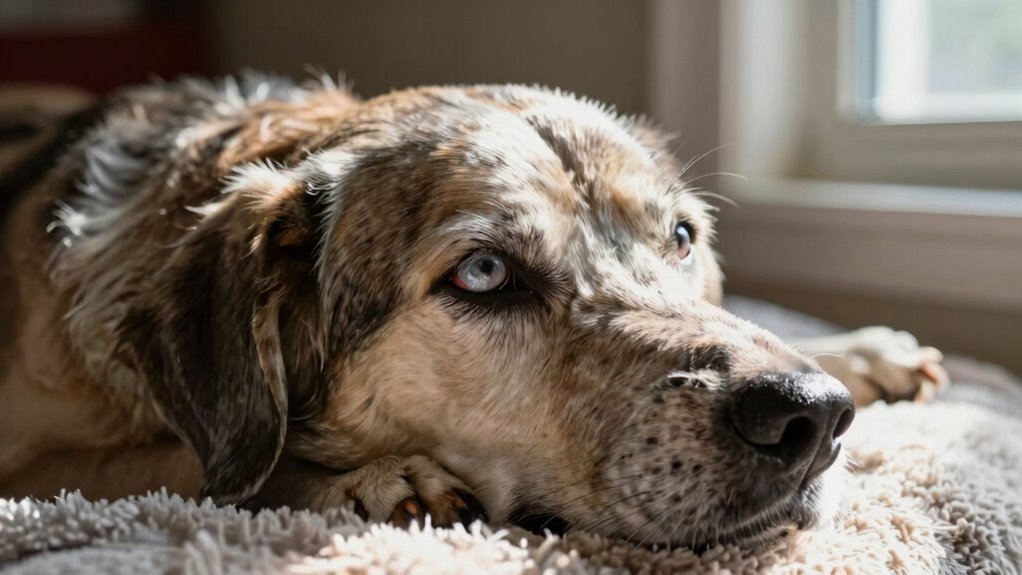

As your aging dog experiences vision changes, you can support their confidence by keeping their environment safe, predictable, and well-lit. Use familiar pathways, avoid clutter, and use clear commands and gestures. Engage them in gentle activities to stimulate their mind and body while ensuring safety. Regular vet check-ups and supplements with antioxidants can help maintain eye health. If you’d like more tips on helping your dog adapt, there’s plenty more to take into account.

Get pet supplies delivered free with Prime
- Fast, free delivery on millions of items
- Prime Video, Amazon Music and more included
- Member-only deals all year
Key Takeaways
- Keep the environment safe, predictable, and well-lit to help your dog navigate confidently.
- Use familiar pathways, toys, and bedding to reduce confusion and promote comfort.
- Engage in gentle, modified activities that stimulate their mind and body without risking injury.
- Support eye health with supplements and regular veterinary check-ups to detect early vision issues.
- Use clear commands, minimize sudden changes, and practice patience to help your dog adapt and stay confident.
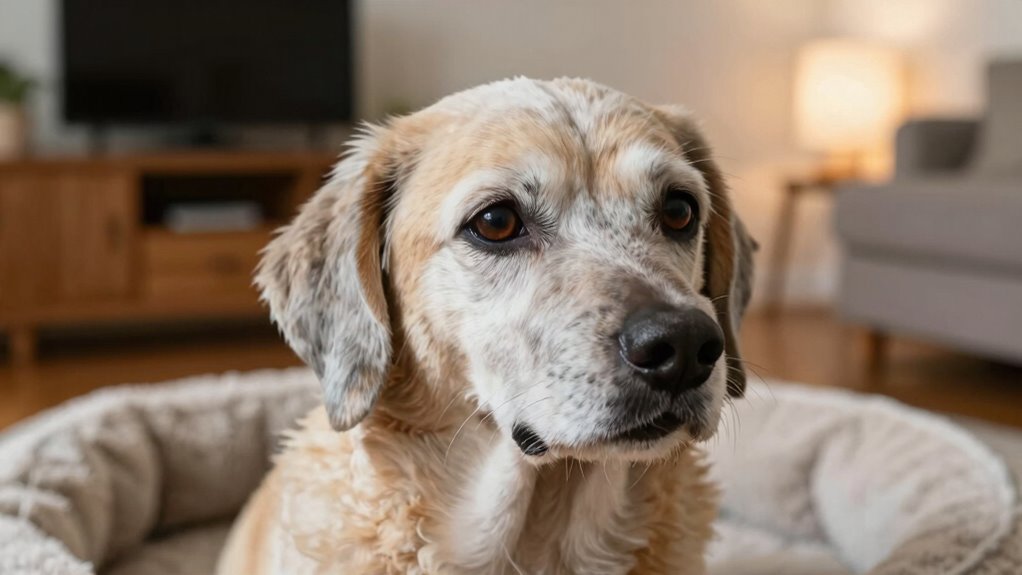
As dogs age, their vision often begins to change, affecting how they perceive their surroundings. You might notice your dog hesitating at stairs, bumping into furniture, or seeming less confident during outdoor play. These signs can be concerning, but understanding how to support your aging dog can make a significant difference. One way to help is by keeping their environment safe and predictable, reducing sudden changes that could cause confusion or fear. Using familiar pathways and avoiding clutter helps your dog navigate comfortably, preserving their confidence.
Engaging your dog in activities like dog agility can be beneficial, even for older dogs with vision issues. Modifying agility exercises to suit their needs—such as lowering jumps or avoiding overly complex courses—can help maintain their physical and mental agility. These activities stimulate their mind and body, encouraging confidence and providing a sense of accomplishment. It’s important to pay attention to how your dog responds; if they seem unsure or hesitant, slow down and give them time to adjust. Always prioritize safety to prevent injuries that could worsen their condition. Additionally, providing enrichment activities that do not rely solely on sight can help keep their mind sharp and engaged.
Supporting your dog’s eye health is crucial as they age. Eye health supplements specifically formulated for dogs can strengthen their eyesight and slow the progression of age-related eye conditions. These supplements often contain antioxidants, vitamins, and nutrients like omega-3 fatty acids, which support overall eye function and protect against damage from free radicals. Regular veterinary check-ups are also essential, as early detection of issues like cataracts or glaucoma allows for timely intervention, potentially preserving sight for longer. Furthermore, biodiversity in their environment can promote overall well-being and reduce stress, which can also positively impact eye health.
Creating a supportive environment goes beyond physical adjustments. Use clear, consistent commands and gestures, as visual cues may become less effective. Keep the surroundings well-lit, avoiding harsh or flickering lights that can cause discomfort or disorientation. Familiar toys and bedding can provide comfort, helping your dog feel secure despite changes in their vision. Patience is key; your dog might need more time to adapt to new situations or environments. By providing gentle encouragement and a stable routine, you reinforce their sense of safety and confidence. Maintaining a calm and predictable environment can help reduce anxiety associated with vision loss.
Ultimately, understanding the changes your aging dog experiences and proactively supporting their vision helps them stay active, engaged, and happy. Combining environmental modifications, appropriate activities like dog agility, and eye health supplements can make a meaningful difference in how they perceive and enjoy their world. Your attentive care ensures they continue to feel confident and loved, even as their sight gradually declines.
dog eye health supplements with antioxidants
As an affiliate, we earn on qualifying purchases.
As an affiliate, we earn on qualifying purchases.
Frequently Asked Questions
Can Vision Loss in Dogs Be Reversed With Treatment?
Vision loss in dogs can’t always be reversed, but treatment may help depending on the cause. Genetic factors often influence age-related decline, and early diagnosis is key. Vision therapy can support your dog’s remaining sight and improve confidence. Consult your vet promptly; they might recommend medications, supplements, or specialized therapies to slow progression or enhance quality of life. While reversal isn’t guaranteed, proactive care makes a big difference.
How Can I Tell if My Dog’s Vision Is Deteriorating?
You can tell if your dog’s vision is deteriorating by observing signs like bumping into objects, hesitating to move, or squinting. Regularly check your dog’s eye health and schedule a vision assessment with your vet if you notice any changes. Keep an eye on their behavior and environment, and address concerns early to help maintain their confidence and overall well-being as they age.
Are Certain Dog Breeds More Prone to Vision Problems?
Yes, certain dog breeds are more prone to vision problems due to breed susceptibility and genetic factors. For example, small breeds like Chihuahuas and Dachshunds often face cataracts, while breeds like Cocker Spaniels are prone to glaucoma. Pugs and French Bulldogs may also experience progressive retinal atrophy. Knowing your dog’s breed helps you stay alert for early signs and seek prompt veterinary care to support your dog’s eye health.
What Safety Modifications Are Best for Visually Impaired Dogs?
You should make safety modifications by adding tactile cues around your dog’s environment, like textured mats or bumpers, to help them navigate confidently. Keep accessible toys within reach and consistent in placement to reduce confusion. Remove hazards, secure loose objects, and guarantee good lighting. These steps create a safer space, helping your visually impaired dog feel more secure and independent while exploring their surroundings.
How Often Should I Have My Senior Dog’s Eyes Checked?
You should have your senior dog’s eyes checked at least once a year. Regular checkups are essential because about 50% of dogs over 10 develop age-related eye issues. During these visits, your vet can spot early signs and recommend diet improvements that support eye health. Consistent eye exams help catch problems early, ensuring your dog maintains confidence and comfort as they age.
Conclusion
As your aging dog’s vision begins to decline, your support makes a world of difference. For instance, imagine a senior pup named Max who starts losing sight; by keeping his environment consistent and using gentle verbal cues, you help him navigate confidently. Remember, patience and understanding are key. With small adjustments and lots of love, you can guarantee your dog still feels secure and happy, even as their vision changes.
Halloween Picks
halloween
As an affiliate, we earn on qualifying purchases.