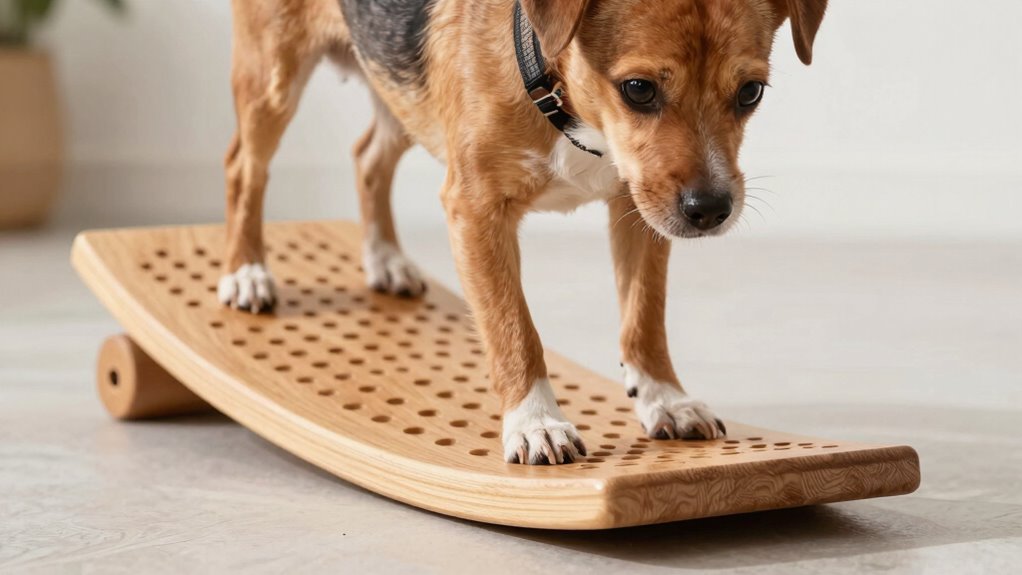

Wobble boards can be both a confidence builder and a rehab tool for your dog. When used properly, they help improve balance, coordination, and overall fitness, boosting your dog’s confidence on uneven surfaces. They also support recovery from injuries by promoting strength and stability. With guidance and patience, you can safely incorporate wobble boards into your dog’s routine. Keep exploring to discover more about how to use them effectively for your dog’s needs.

Get pet supplies delivered free — and shop member deals
- Fast, free delivery on millions of items
- Access to Prime Big Deal Days deals on October 6–7
- Prime Video, Amazon Music and more included
Key Takeaways
- Wobble boards enhance balance and coordination, boosting confidence in dogs’ movement and spatial awareness.
- They are valuable for rehabilitation, aiding recovery from injuries or surgery with tailored exercises.
- Proper training and professional guidance ensure safe use for both confidence-building and rehab purposes.
- Monitoring progress and responses prevents overexertion, making wobble boards effective for gradual confidence and strength development.
- Combining wobble boards with other therapies maximizes their effectiveness as both confidence and rehab tools.
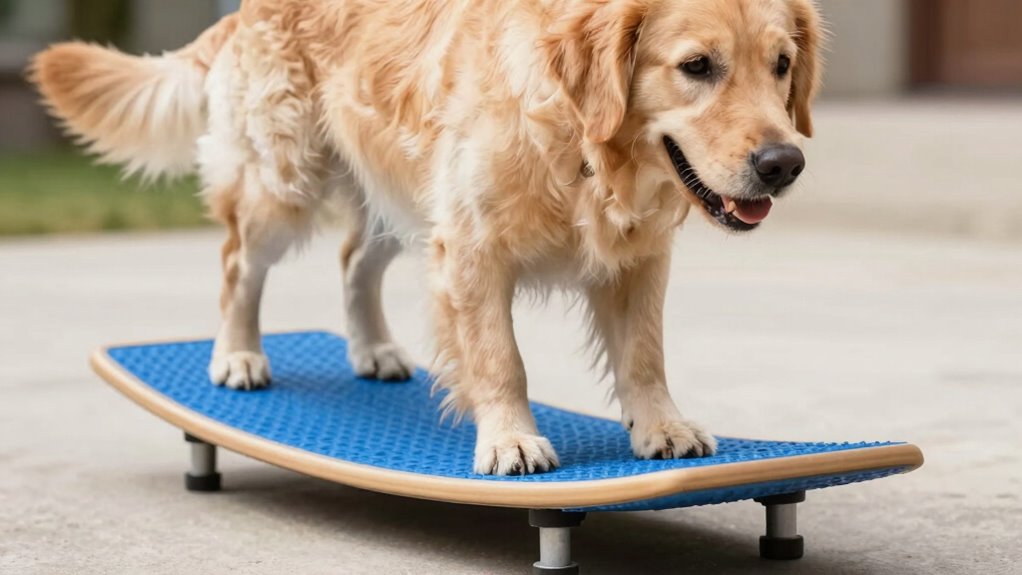
Wobble boards for dogs have become a popular tool for enhancing your pet’s balance, coordination, and overall fitness. If you’re considering incorporating one into your dog’s routine, it’s important to understand how they work and the best ways to use them. Proper training techniques are essential for ensuring your dog benefits safely from the wobble board. Start with simple exercises, allowing your dog to get comfortable standing on the board without any movement. Use treats or positive reinforcement to encourage them, and keep sessions short to prevent frustration or fatigue. As your dog gains confidence, gradually introduce slight movements, always monitoring their response to avoid overexertion or imbalance.
Before starting any new activity with your dog, it’s wise to consult your veterinarian. Veterinary assessments can help determine whether a wobble board is suitable for your dog, especially if they have existing health issues, joint problems, or balance concerns. Your vet can advise on appropriate exercises and set limits to prevent injury. Remember, a wobble board isn’t a one-size-fits-all solution; some dogs may need more gradual progress or specific modifications based on their age, breed, or medical history.
Consult your veterinarian first to ensure a wobble board suits your dog’s health and needs.
Using a wobble board as a confidence tool means you’re helping your dog develop trust in their body and spatial awareness. As they become more familiar with balancing on the board, you’ll notice increased confidence in other activities, like walking on uneven surfaces or navigating stairs. For rehabilitation purposes, a wobble board can be invaluable when guided by a vet or canine physical therapist. They’ll recommend tailored exercises that target specific areas needing strength or stability, ensuring your dog recovers safely from injury or surgery. Incorporating biodiversity principles into your training routine can also promote overall well-being and resilience. Recognizing the importance of proper technique can make a significant difference in your dog’s progress and safety.
It’s vital to recognize that the effectiveness of wobble boards depends on proper implementation. Overdoing it or pushing your dog too quickly can cause setbacks or injuries. Always observe your dog’s reactions and stop if they show signs of discomfort or fatigue. Consistency is key, but patience is just as important—progress might be slow at first, but with steady effort, your dog can build better balance and confidence. Additionally, understanding dog behavior can help you better interpret your pet’s responses and ensure a positive experience. Also, incorporating training patience can help your dog adapt gradually and reduce anxiety during new exercises. Ultimately, a wobble board can be a versatile addition to your dog’s training and recovery toolkit, provided you use it thoughtfully, under professional guidance, and with your dog’s well-being as the top priority.
dog wobble board for balance and rehabilitation
As an affiliate, we earn on qualifying purchases.
As an affiliate, we earn on qualifying purchases.
Frequently Asked Questions
Are Wobble Boards Suitable for All Dog Breeds?
Wobble boards aren’t suitable for all dog breeds, especially if you consider breed-specific balance needs and training prerequisites. Smaller or older dogs may struggle with the instability, while active or larger breeds might excel. It’s essential to assess your dog’s size, age, and health before introducing a wobble board. Always start with supervised, gradual training to guarantee safety and effectiveness for your dog’s individual needs.
How Long Should a Dog Use a Wobble Board Daily?
Ever wonder how much balance training your dog needs? Usually, you should start with just 5 to 10 minutes daily, gradually increasing as they build confidence and strength. Using a wobble board provides excellent mental stimulation and helps improve balance, but overdoing it might cause fatigue. Keep sessions short, positive, and engaging, and always watch for signs of tiredness or discomfort. Is your pup enjoying their daily challenge?
Can Wobble Boards Prevent Future Injuries in Dogs?
Yes, wobble boards can help prevent future injuries by improving your dog’s balance and stability. When your dog regularly uses a wobble board, it strengthens core muscles and enhances coordination, which reduces the risk of falls or strains. Incorporating balance improvement exercises with wobble boards into their routine supports injury prevention, keeping your dog healthier and more confident in their movements.
What Are Signs of Overexertion in Dogs Using Wobble Boards?
You’ll notice signs of overexertion like muscle fatigue and joint strain when your dog pushes too hard on the wobble board. These symptoms contrast sharply with their usual energy, signaling they’ve gone beyond safe limits. Watch for limping, reluctance to continue, or heavy panting. If you see these, it’s time to stop, let your dog rest, and reassess the intensity of their exercises to prevent injury.
Are Wobble Boards Safe for Senior or Disabled Dogs?
Wobble boards can be safe for senior or disabled dogs when used as part of an alternative therapy and balance training program under your veterinarian’s guidance. You should start slowly, monitor your dog’s comfort, and avoid overexertion. These boards help improve stability and confidence, but always prioritize your dog’s individual needs. If any discomfort or signs of fatigue appear, stop immediately and consult your vet for tailored advice.
Conclusion
Whether you see wobble boards as confidence builders or rehab tools, the truth is they serve both purposes. Like a stepping stone, they help your dog gain balance and strength, but they also boost confidence, pushing fears aside. The difference isn’t in the tool itself, but in how you use it. So, whether your pup needs recovery or reassurance, wobble boards are versatile, empowering tools that can transform fear into confidence—one wobble at a time.
Halloween Picks
halloween
As an affiliate, we earn on qualifying purchases.