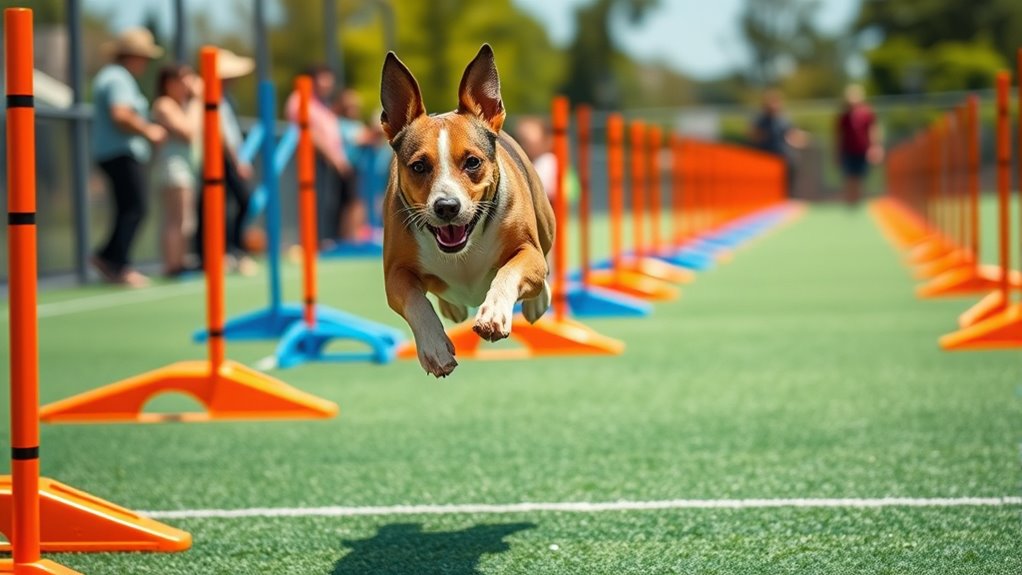

Flyball is an exciting, fast-paced team sport perfect for high-energy dogs. It channels their enthusiasm by combining speed, agility, and teamwork, helping them stay physically fit and confident. As you introduce your dog to basic obedience and agility, you’ll prepare them for the sport’s specific skills like retrieving from the flyball box. Socialization and consistent training boost enjoyment and performance, and if you keep exploring, you’ll discover how to enhance your dog’s skills and safety even further.

Get pet supplies delivered free with Prime
- Fast, free delivery on millions of items
- Prime Video, Amazon Music and more included
- Member-only deals all year
Key Takeaways
- Flyball channels high energy through a fast-paced team sport that combines speed, agility, and teamwork.
- It enhances physical fitness, coordination, and confidence in dogs through structured training and positive reinforcement.
- Foundational skills like obedience and agility are essential for mastering flyball-specific elements.
- Socialization and teamwork are crucial for dogs to adapt, stay motivated, and perform well in a team environment.
- Consistent training and safety-focused exercises improve performance and reduce injury risk during high-speed runs.

If you have a high-energy dog that’s always ready to play, flyball offers a perfect outlet for their energy and enthusiasm. This fast-paced team sport combines speed, precision, and teamwork, making it an excellent way to channel your dog’s boundless energy. To get started, you’ll want to focus on dog agility and obedience training. These foundational skills prepare your pup for the quick, controlled movements required in flyball. Dog agility teaches your dog to maneuver through obstacle courses with speed and accuracy, which directly translates to better performance in flyball. Meanwhile, obedience training guarantees your dog responds promptly to commands such as “sit,” “stay,” and “come,” which are essential during the rapid shifts in a flyball race.
Once your dog has a good grasp of basic obedience, you can begin introducing the specific elements of flyball. It’s important to start slow, breaking down each component of the sport. You’ll want to teach your dog to approach and retrieve the tennis ball from the flyball box, a key skill that requires both confidence and precision. Consistent training and positive reinforcement help your dog understand what’s expected, building their confidence and enthusiasm. As your dog becomes more comfortable, you can gradually increase the speed and complexity of drills, mimicking the fast-paced nature of actual races.
Flyball also emphasizes teamwork, so it’s essential that your dog learns to work well with other dogs. Socialization and group training sessions are beneficial here, as they help your pup get accustomed to the environment and the presence of other dogs racing simultaneously. This social aspect keeps your dog motivated and engaged, making training sessions more enjoyable for both of you. You’ll find that practicing with a team enhances your dog’s focus and responsiveness, which are critical during races.
Incorporating dog agility exercises into your training routine can improve your dog’s coordination, balance, and confidence. These skills transfer seamlessly to flyball and help prevent injuries during high-speed runs. Additionally, understanding how to create a productive work environment at home can help maintain your training consistency and keep your dog motivated. Remember to be patient and consistent, celebrating small successes along the way. With dedicated obedience training and agility practice, your high-energy dog will thrive in flyball, harnessing their enthusiasm in a way that’s fun, challenging, and rewarding. Soon enough, you’ll see your dog not only excel in the sport but also develop into a more disciplined, well-rounded companion.
As an affiliate, we earn on qualifying purchases.
Frequently Asked Questions
How Can I Introduce My Dog to Flyball Safely?
To introduce your dog to flyball safely, start with positive reinforcement and basic training techniques, ensuring your dog is comfortable with fetch and jumping. Use safety precautions like soft surfaces and low hurdles initially. Gradually increase difficulty while monitoring your dog’s reactions, and always keep sessions short and fun. This approach helps your dog build confidence, prevents injuries, and fosters a love for the sport.
What Breeds Excel in Flyball Competitions?
Bold Border Collies, speedy Springer Spaniels, and spirited Shetland Sheepdogs excel in flyball competitions. These breeds suit flyball’s fast-paced, focused format due to their high energy, quick learning, and agility. While breed suitability matters, training requirements are equally crucial; consistent, dedicated training helps harness their natural talent. If you choose the right breed and commit to proper training, your dog can thrive in flyball’s fast, fun environment.
Are There Age Restrictions for Participating in Flyball?
Age restrictions for flyball vary depending on the organization, but generally, your dog should be at least 12 months old to participate in dog agility or canine sports like flyball. Most clubs recommend waiting until your dog is fully matured to prevent injury. Always check specific rules of your local flyball league, and verify your dog is healthy and ready for the fast-paced, energetic nature of this exciting sport.
How Do I Find Local Flyball Teams or Clubs?
To find local flyball teams or clubs, start by searching online for training programs and club memberships in your area. Visit national flyball organizations’ websites, which often list local clubs and contact details. Attend local dog events or competitions to meet experienced handlers, and ask for recommendations. Joining a club provides regular training, team practice, and support, helping your high-energy dog excel in this fast-paced sport.
What Equipment Is Necessary to Start Practicing at Home?
Ready to set up your own flyball home setup? You’ll need essential flyball gear like hurdles, a spring-loaded box, and a ball launcher. Start with lightweight, adjustable hurdles to create a safe, challenging course. A sturdy, non-slip surface is vital for safety. As your dog masters each element, you’ll discover the excitement builds—soon, you’ll be training like a pro right in your backyard. The perfect setup awaits!
Conclusion
As you watch your dog leap over hurdles and chase that ball, you realize flyball isn’t just a sport—it’s a thrill that pushes both of you to the limit. With every race, the excitement builds, and you wonder just how far your high-energy companion can go. Will they master the course or surprise you with a sudden burst of speed? One thing’s certain: this game keeps the adrenaline alive, and the adventure is only just beginning.
Halloween Picks
halloween
As an affiliate, we earn on qualifying purchases.