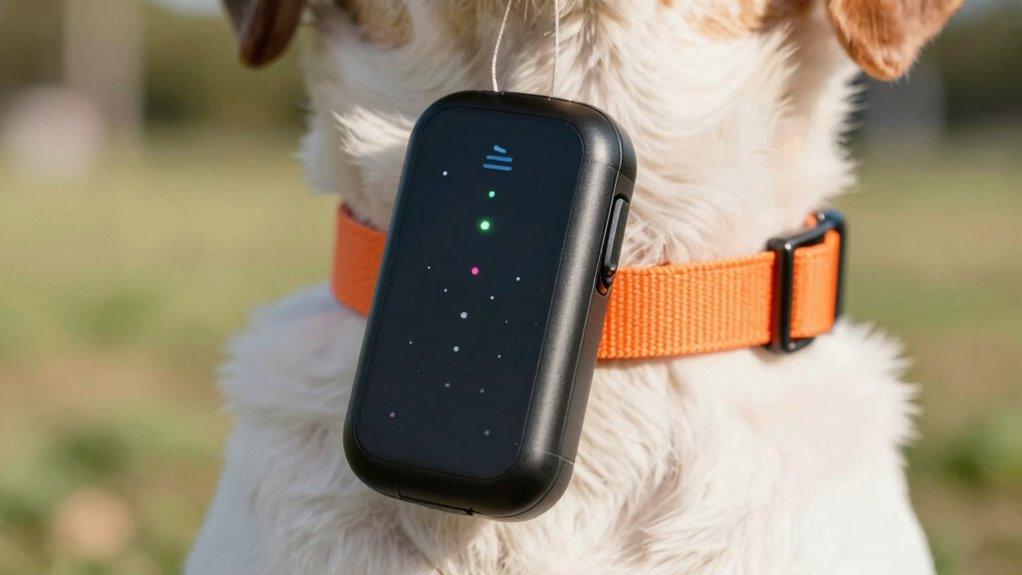
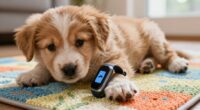
GPS dog trackers work by connecting to satellites to pinpoint your pet’s location, but their accuracy can be affected by obstacles like buildings, trees, or terrain. Battery life varies based on usage and features, with some lasting days while others need frequent charging. Signals depend on good satellite and network coverage; environmental conditions can cause delays or inaccuracies. To learn how to get the most reliable results, explore further details below.

Get pet supplies delivered free — and shop member deals
- Fast, free delivery on millions of items
- Access to Prime Big Deal Days deals on October 6–7
- Prime Video, Amazon Music and more included
Key Takeaways
- GPS dog trackers use satellite triangulation for precise, real-time location updates, influenced by environmental factors like obstructions and terrain.
- Signal strength varies with environmental conditions; clear sky view ensures better accuracy, while obstacles like buildings or forests can cause inaccuracies.
- Device quality, settings, and firmware updates optimize tracking performance and battery life, with durable, waterproof collars enhancing reliability.
- Battery life ranges from hours to days, depending on usage; power-saving features and adjustable intervals help extend device operation.
- Combining satellite and cellular networks improves location accuracy, but environmental interference can still impact signal quality and data transmission.
GPS dog tracker with long battery life
As an affiliate, we earn on qualifying purchases.
As an affiliate, we earn on qualifying purchases.
How Do GPS Dog Trackers Find Your Pet’s Location?
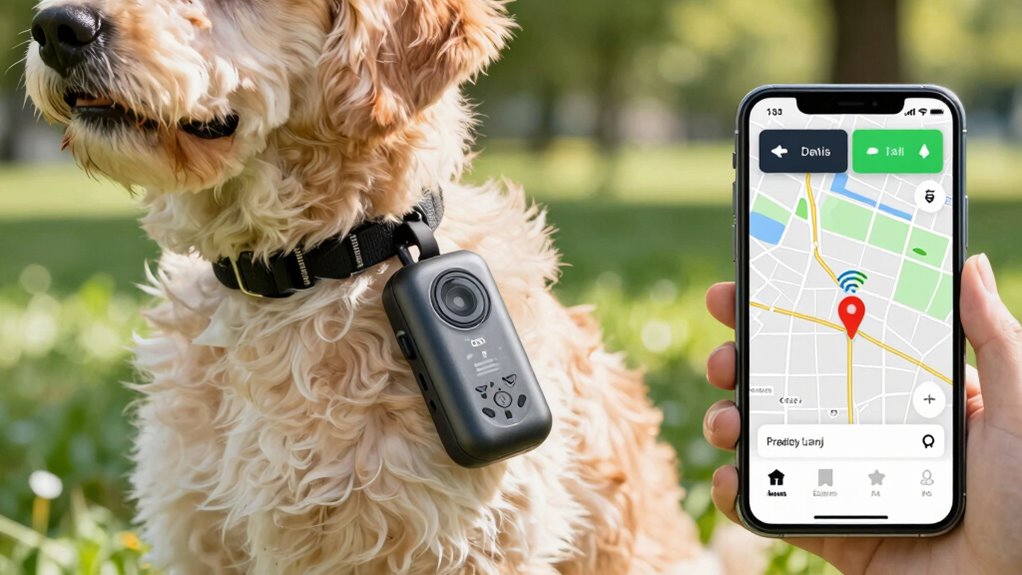
GPS dog trackers determine your pet’s location by connecting to satellites orbiting the Earth. This technology allows the device to pinpoint your dog’s position with remarkable accuracy. As you choose a tracker, consider collar comfort because a bulky or heavy device can bother your pet and influence their behavior. A comfortable collar encourages your dog to wear the tracker consistently, ensuring reliable tracking. The GPS system works by triangulating signals from multiple satellites, determining the precise location of the device. This process happens in real-time, so you can monitor your pet’s whereabouts instantly. Understanding privacy policies related to GPS tracking is important to ensure your pet’s data is protected. For added peace of mind, choose a device with secure data encryption to safeguard your pet’s location information. Additionally, being aware of the accuracy limitations of GPS technology can help you interpret tracking data more effectively. Being informed about signal interference sources can also improve your tracking reliability in different environments. Regularly updating your device’s firmware can further enhance its performance and reliability.
What Affects the Accuracy and Reliability of GPS Dog Trackers?
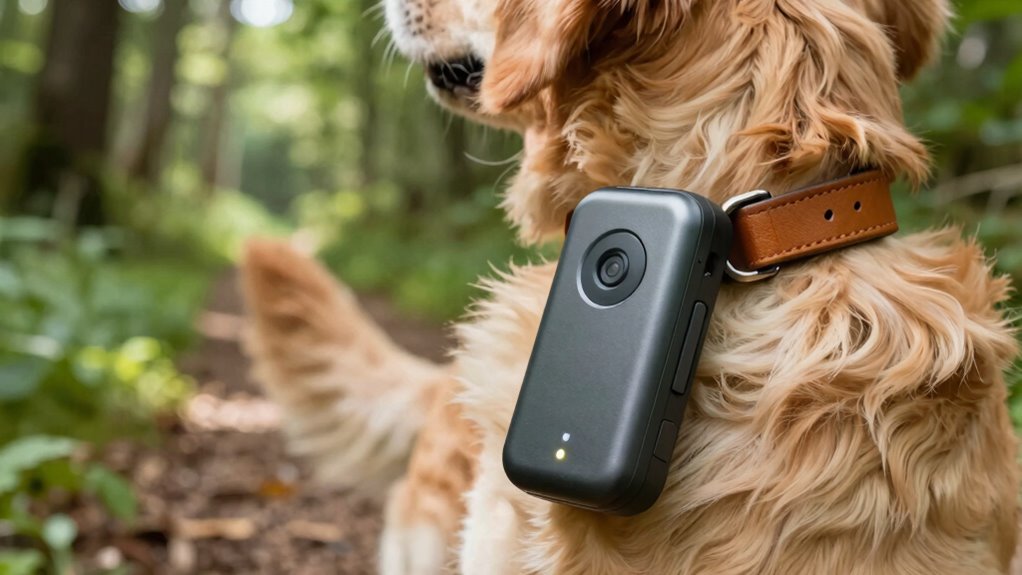
The accuracy of your GPS dog tracker depends on several factors, like the strength of satellite signals and the terrain you’re in. Obstructions such as buildings or dense foliage can block signals and reduce reliability. Additionally, the quality of your device and its settings play a vital role in ensuring consistent tracking performance. Incorporating high-precision technology can significantly improve the overall accuracy of GPS trackers. Factors like signal interference from electronic devices or weather conditions can also impact performance, emphasizing the importance of choosing a device with robust capabilities. Ensuring your device is equipped with advanced signal processing can help mitigate some of these issues and enhance reliability. Being aware of environmental conditions that affect signal strength can help you better understand and improve your device’s accuracy. Moreover, selecting a device with robust hardware can further enhance its resilience in challenging environments.
Satellite Signal Strength
Satellite signal strength plays a crucial role in determining how accurately and reliably your dog’s tracker works. Strong satellite signals ensure the device receives precise location data, reducing errors. Conversely, weak signals can cause delays or inaccuracies in tracking. Signal interference from nearby electronic devices, dense foliage, or even atmospheric conditions can weaken the satellite signal strength. This interference disrupts communication between the GPS device and satellites, leading to less reliable updates. To maintain peak performance, ensure your tracker has a clear view of the sky and avoid environments with high electronic interference. Additionally, understanding Free Floating technology can help you choose devices that better adapt to varying signal conditions. Recognizing the importance of satellite signal strength can help you optimize your device for the best results. Regularly updating your device’s firmware and choosing models with advanced signal processing capabilities can further enhance tracking reliability. Being aware of satellite coverage areas and their limitations can also help you plan for more consistent performance. For example, some trackers utilize multi-constellation support to connect with multiple satellite systems simultaneously, improving accuracy in challenging environments. Remember, consistent satellite signal strength is essential for real-time, accurate tracking, giving you peace of mind knowing your dog’s location is reliably monitored.
Obstructions and Terrain
Obstructions and terrain can markedly impact the accuracy and reliability of your dog’s tracker. Terrain challenges like hills, valleys, and dense forest cover block signals, causing GPS inaccuracies or dropouts. These obstacles interfere with satellite signals, making it harder for your device to pinpoint your dog’s location precisely. Understanding how terrain affects tracking helps you set realistic expectations and choose the right device for your environment. Being aware of water damage risks can also help ensure your tracker remains functional in outdoor conditions.
Device Quality and Settings
Choosing a high-quality GPS dog tracker and properly adjusting its settings are essential for guaranteeing accurate and reliable tracking. Device durability and material quality directly impact how well your tracker withstands daily wear and tear, especially for active dogs. A sturdy, well-made device resists damage from water, scratches, and impacts, maintaining consistent signal performance. Make certain the tracker’s settings are optimized for your dog’s environment—adjust update intervals, enable or disable features like geofencing, and calibrate the device as needed. Proper configuration helps improve accuracy and battery life. Investing in a tracker with durable materials and customizing its settings ensures reliable performance, giving you peace of mind knowing your pet’s location is consistently accurate and accessible in various conditions. Device quality and materials directly influence how well your GPS tracker performs over time, especially in outdoor or active scenarios. Additionally, selecting a device with proven signal strength and compatibility with your environment can significantly enhance overall reliability. Regularly checking and updating your device’s firmware can also help maintain optimal tracking performance, ensuring your tracker adapts to new challenges or environment changes. For best results, consider the environmental conditions in which you’ll be using the tracker, as these can greatly influence signal effectiveness.
How Long Does the Battery Last on a GPS Dog Tracker?
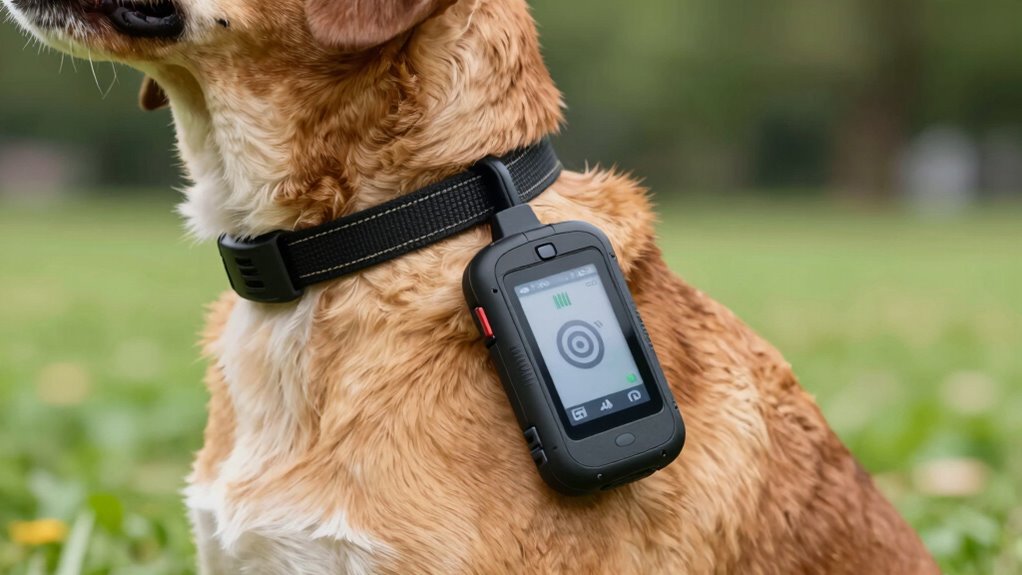
The battery life of your GPS dog tracker varies depending on several factors, like how you use it and its power-saving features. Daily activity levels and tracking frequency can deplete the battery faster, so understanding these impacts helps you plan better. Knowing what affects battery duration ensures you get the most out of your tracker without surprise power loss. Additionally, battery optimization techniques can extend the device’s operational time between charges. For example, utilizing smart power management settings can significantly prolong the tracker’s battery life during regular use. Choosing a tracker with an eco-friendly high-quality glass exterior can also contribute to durability and longevity over time. Properly configuring tracking intervals and settings can help conserve battery life and maximize the device’s efficiency. Being aware of battery lifespan expectations can help you maintain consistent performance and plan for replacements when necessary.
Battery Life Duration
Battery life duration varies depending on the model and usage, but most GPS dog trackers last anywhere from a few hours to several days on a single charge. How long your tracker lasts depends on factors like activity level and features used. If you want longer battery life, look for models with efficient power management. Keep in mind that a lightweight, comfortable collar with the tracker ensures collar comfort and reduces discomfort during extended wear. Bright color visibility also helps you spot your dog easily without constantly checking the tracker’s screen. To maximize battery life, consider switching to lower GPS update frequencies during less active times. Additionally, selecting a battery-efficient model can significantly improve performance and longevity. Remember, a well-charged tracker keeps your dog safe and makes outings more enjoyable for both of you. Choosing the right model can also significantly impact battery efficiency and overall performance.
Power-Saving Features
Power-saving features can remarkably extend the battery life of your GPS dog tracker, especially during long outings. Many trackers offer solar charging options, allowing you to harness sunlight to replenish the battery on the go, reducing the need for frequent recharges. Additionally, a waterproof design helps protect the device in various weather conditions, ensuring it stays functional without draining extra power due to water damage or corrosion. Some models automatically enter power-saving modes when the dog remains stationary or in low-activity periods, conserving energy. These features work together to maximize battery longevity, giving you peace of mind during extended walks or hikes. Investing in a tracker with solar charging and waterproof design can remarkably reduce the frequency of charging, keeping your dog connected longer.
Usage Impact Factors
Several factors influence how long a GPS dog tracker’s battery lasts during use. The frequency of updates, collar comfort, and waterproof features all play a role in battery life. If your dog moves around a lot or the tracker sends frequent signals, expect the battery to deplete faster. A comfortable collar ensures your dog won’t try to remove it, preventing interruptions. Waterproof features allow the tracker to withstand rain or splashes without losing power, but they can also slightly increase battery consumption. To maximize battery life, consider:
- Reducing update frequency when possible
- Choosing a tracker with adjustable settings
- Ensuring the collar fits snugly for better signal and comfort
Being mindful of these factors helps you balance long-lasting battery life with your dog’s safety and comfort.
How Do GPS Trackers Communicate With Satellites and Networks?
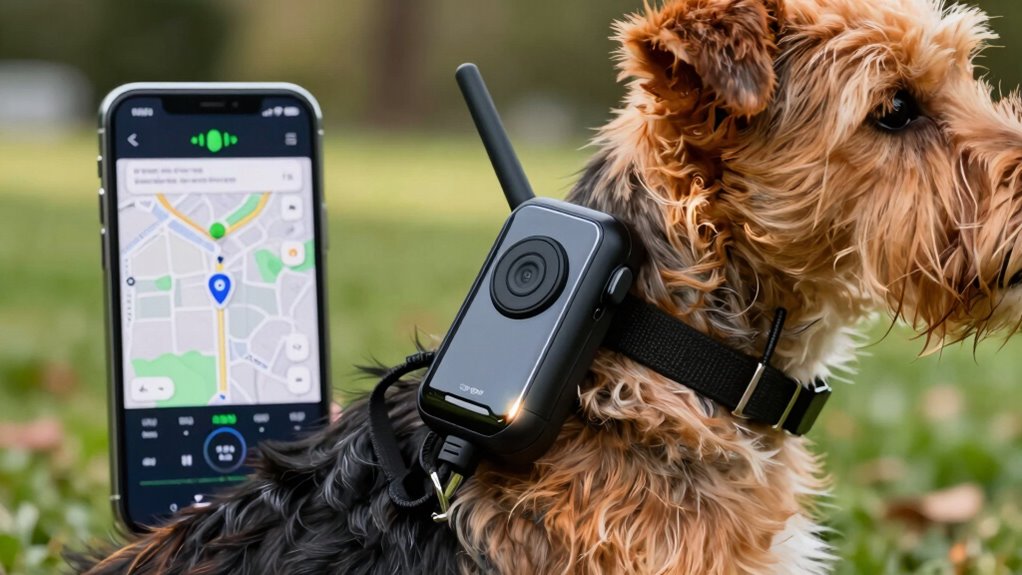
GPS trackers communicate with satellites and networks through a combination of radio signals and cellular connections. Satellite communication involves the device sending and receiving signals from orbiting satellites, which helps determine your pet’s precise location. This process requires strong network connectivity to transmit the data from satellites to your smartphone or tracking platform. When your tracker has a clear view of the sky, it can quickly connect to multiple satellites, improving accuracy. If signal strength drops or network coverage is limited, the device may struggle to relay information. Cellular networks play a vital role, especially indoors or in areas with limited satellite visibility. Together, satellite communication and network connectivity ensure real-time updates and reliable tracking of your dog’s whereabouts.
What Should You Consider When Choosing a GPS Dog Tracker?
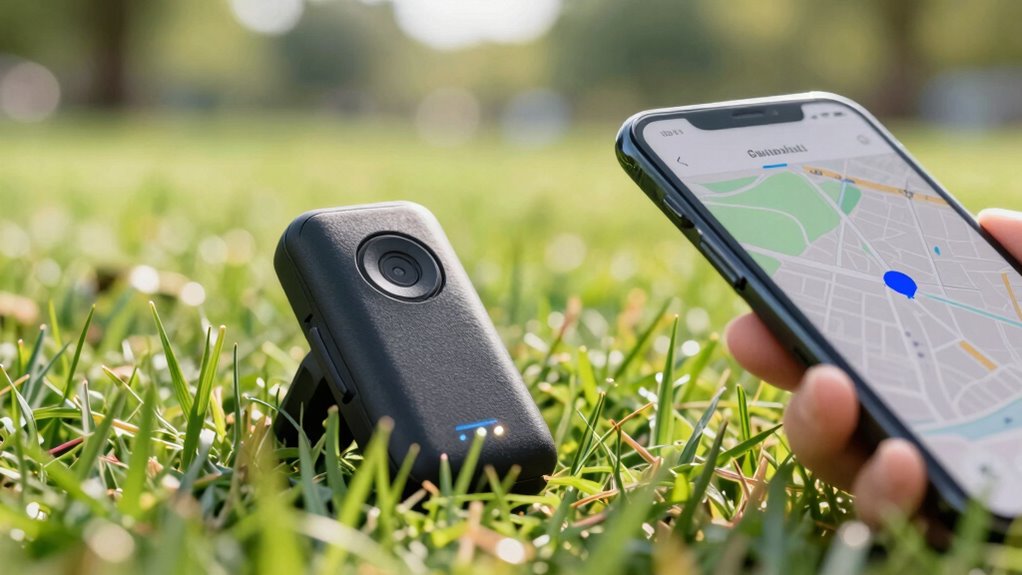
When selecting a GPS dog tracker, it’s important to take into account how well the device fits your pet’s needs and your lifestyle. Consider collar comfort to guarantee your dog stays comfortable without irritation or chafing. Device durability is essential, especially if your dog is active or tends to chew. Think about the environment: will your dog be indoors, outdoors, or both? Battery life also matters; a longer-lasting battery means fewer charges and less worry. Here are key factors to keep in mind:
- Collar comfort for your dog’s daily activity
- Device durability for rough conditions
- Battery life to suit your routines
How Can You Ensure Your Dog’s GPS Tracker Works Well?
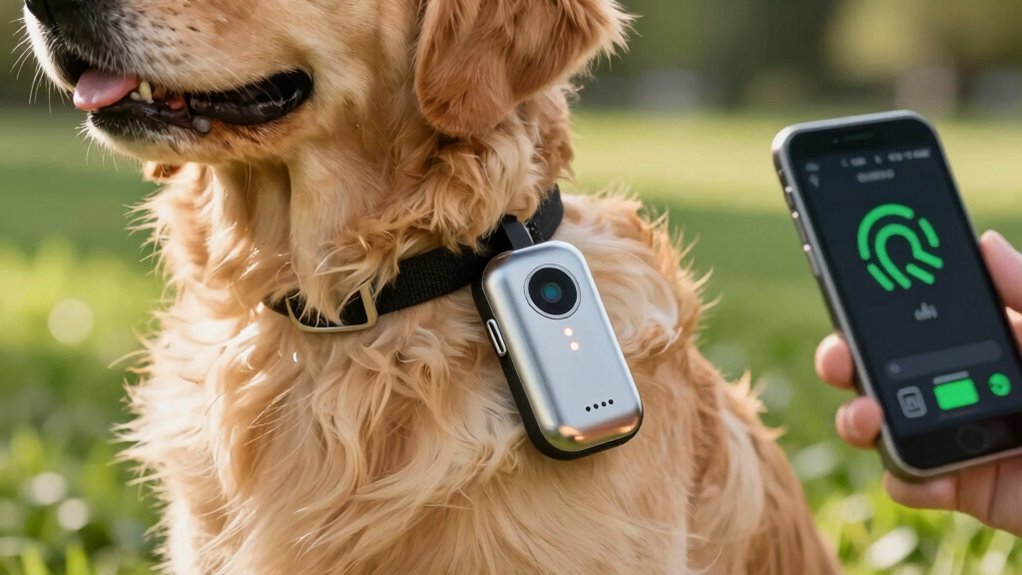
To guarantee your dog’s GPS tracker works well, you need to keep the device properly maintained and regularly check its performance. Ensure the tracker’s battery life is sufficient for daily use and recharge it as needed. Test the signal strength in different areas to identify any blind spots. Incorporate consistent leash training so your dog becomes comfortable with controlled walks, making it easier to monitor their location. Use the tracker during training sessions to familiarize your dog with its presence, reducing anxiety and encouraging obedience. Regularly update the tracker’s firmware and clean the device to prevent dirt or debris from affecting signals. Staying proactive with maintenance and training helps ensure your GPS device remains reliable and effective for keeping your dog safe.
Frequently Asked Questions
Can GPS Dog Trackers Work Indoors?
GPS dog trackers generally struggle indoors because of limited indoor signals, which affect their accuracy. Walls and furniture can block satellite signals, making it hard for the device to pinpoint your dog’s location. While some trackers combine GPS with Wi-Fi or Bluetooth for better indoor coverage, remember that GPS limitations mean indoor tracking isn’t always reliable. For precise indoor monitoring, consider trackers with hybrid technology options.
Are GPS Trackers Safe for Dogs?
You’re probably wondering if GPS trackers are safe for your dog. The good news is, most trackers are designed with collar comfort in mind, and over 90% of pet owners report no issues. These devices use low-energy signals, making them safe and non-invasive. As long as you choose a well-fitted collar and prioritize tracking accuracy, your dog stays safe, comfortable, and easily locatable.
How Waterproof Are Typical GPS Dog Trackers?
Most GPS dog trackers have waterproof ratings of IP65 to IP67, meaning they resist water splashes and rain, and can handle brief immersion. They’re made with waterproof materials to protect the electronics inside. You can confidently use these trackers outdoors, even in wet conditions, but avoid prolonged submersion or swimming with them, as higher waterproof ratings like IP68 are needed for full underwater use.
Do GPS Trackers Require a Monthly Service Plan?
While some GPS dog trackers come with a monthly fee, others don’t require a subscription cost. You might find that opting for a tracker with a subscription plan offers more features and reliable service, but it does mean committing to a monthly fee. Consider your budget and needs carefully. If seamless tracking and updates are essential, a tracker with a subscription could be worth the investment, providing peace of mind each month.
What Features Should I Look for Beyond Accuracy and Battery Life?
When choosing a GPS dog tracker, look for training features like virtual fences, behavior alerts, and activity monitoring to enhance your training routine. Also, consider size considerations—ensure the device is lightweight and comfortable for your dog. These features help you manage and train your pet effectively, making the tracker more versatile and user-friendly. Prioritize ease of use and durability to get the most out of your investment.
Conclusion
Now that you know the basics of GPS dog trackers, you’re better equipped to choose the right one for your furry friend. Keep in mind, no device is perfect, so stay vigilant and maintain it regularly. Remember, a good tracker is your best friend in a pinch, but it’s only as reliable as how well you look after it. Stay sharp, and your pup will be safe and sound—because a watched dog is a happy dog.
Halloween Picks
halloween
As an affiliate, we earn on qualifying purchases.