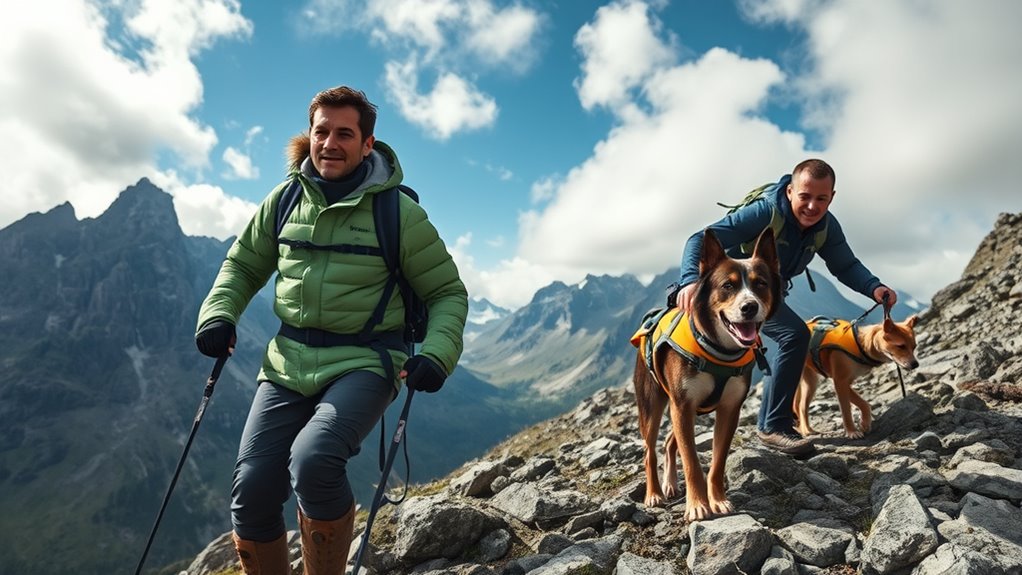

To prepare your dog for higher elevations, start by gradually acclimating them with shorter, lower hikes to prevent altitude sickness and monitor for signs of fatigue or distress. Make sure they’ve had a veterinary checkup, updated vaccinations, and are fit for the adventure. Pack essentials like a harness, sturdy leash, water, treats, and a dog jacket if needed. Staying vigilant and attentive to your dog’s needs will help you both enjoy a safe, memorable mountaineering experience.
Key Takeaways
- Gradually acclimate your dog by increasing elevation and duration of hikes to prevent altitude sickness.
- Ensure your dog is in good health with vet checkups and up-to-date vaccinations before mountain adventures.
- Use proper gear like harnesses, jackets, and a collapsible water bowl to protect your dog from environmental elements.
- Monitor your dog closely for signs of fatigue, overheating, or distress during higher elevation hikes.
- Carry a dog-specific first aid kit and be prepared to address potential health issues promptly.

Mountaineering with dogs can be a rewarding experience, but it requires careful planning and preparation. Before you set out on your adventure, ensuring your furry companion’s well-being is paramount. One of the first things you should focus on is dog health. Higher elevations pose unique challenges, such as thinner air and increased physical exertion, which can impact your dog’s stamina and safety. It’s essential to consult your veterinarian beforehand to confirm your dog is fit for mountain hikes and discuss any health concerns. Make sure your dog is up-to-date on vaccinations and consider a health checkup to identify potential issues like heart or respiratory problems that could be exacerbated at altitude. Carrying a basic first aid kit tailored for dogs is wise, including items like antiseptic wipes, bandages, and any medications your dog might need.
Equally important is gathering the right gear essentials for your adventure. Proper gear not only keeps your dog comfortable but also helps safeguard them against the elements and unexpected situations. A well-fitted harness or collar with an ID tag is a must, along with a sturdy leash to maintain control in unpredictable terrain. Consider investing in a dog jacket or sweater if you’re heading to colder elevations, as dogs can quickly become chilled, especially if they have short fur. A collapsible water bowl and extra water are essential for hydration, as mountain air can be dehydrating, and dogs often need more water than you think. Don’t forget to pack some dog-friendly snacks or energy treats to maintain their energy levels during the hike. Additionally, being aware of common cold medications can be helpful in case your dog shows signs of illness or discomfort during your trip.
When preparing for higher elevations, it’s essential to gradually acclimate your dog to increased activity and altitude. Start with shorter hikes at lower elevations to gauge their endurance and observe any signs of fatigue or discomfort. Keep a close eye on your dog throughout the trek—watch for excessive panting, limping, or signs of distress, which could indicate altitude sickness or exhaustion. Regularly check their paws for cuts or irritation from rough terrain, and make sure they’re not overheating or freezing. Remember, your dog’s safety depends on your attentiveness and preparedness. With the right health checks and gear essentials, you’ll be ready to enjoy your mountaineering adventure together, creating unforgettable memories while keeping your loyal companion safe and comfortable at every step.

ONETIGRIS Dog Backpack for Medium & Large Dogs, Nylon Backpack for Dogs Tactical Pet Backpack with Side Pockets for Hiking Walking Training Running (Orange, Medium)
OneTigris MAMMOTH Dog Pack: Durable 1000D nylon with mesh lining for breathability to maximize function and comfort on…
As an affiliate, we earn on qualifying purchases.
As an affiliate, we earn on qualifying purchases.
Frequently Asked Questions
How Do I Train My Dog for High-Altitude Trekking?
To train your dog for high-altitude trekking, start with training techniques that build endurance gradually, like long walks on varied terrain. Incorporate acclimatization strategies by slowly increasing elevation over time, allowing your dog to adjust comfortably. Make sure to monitor their breathing and energy levels closely. Consistent training combined with gradual altitude changes helps your dog adapt safely, ensuring they’re ready for the challenges of higher elevations.
What Are the Signs of Altitude Sickness in Dogs?
Altitude sickness in dogs can hit like a lightning bolt, so watch for symptoms like labored breathing, weakness, vomiting, or loss of appetite. These are clear dog health warning signs that indicate your pup isn’t coping well with high elevations. If you notice any of these altitude sickness symptoms, lower your dog to a safer altitude immediately and seek vet care. Early intervention can save your dog’s life.
How Much Water Should My Dog Drink During Climbs?
You should monitor your dog’s hydration habits closely during climbs, ensuring they drink about half a cup of water every 30 minutes to stay properly hydrated. Keep fresh water available at all times and encourage frequent drinking, especially if they’re active or in higher elevations. Adjust their water intake based on their size, activity level, and weather conditions. Proper hydration helps prevent altitude sickness and keeps your dog energized throughout the climb.
Are Specific Dog Breeds Better Suited for Mountain Adventures?
Certain dog breeds are better suited for mountain adventures due to their mountain dog characteristics. You should look for breeds with strong endurance, thick coats, and good stamina, like Border Collies, Bernese Mountain Dogs, or Alaskan Malamutes. These breeds handle high altitudes and rugged terrain well. When selecting a dog breed for mountain adventures, consider their fitness, temperament, and ability to adapt to cold and variable conditions to guarantee a safe, enjoyable experience.
What Safety Gear Is Essential for Dogs at High Elevations?
You should always bring essential safety gear for your dog at high elevations, including a canine harness for secure control and support. Keep your dog hydrated with plenty of water to prevent altitude sickness and dehydration. Consider a dog vest for warmth and visibility, especially in colder or foggy conditions. Always monitor their behavior closely, and have a first aid kit on hand in case of injuries or emergencies.
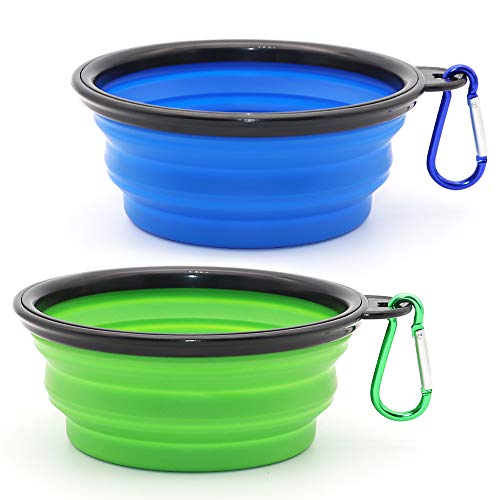
Dog Bowl Pet Collapsible Bowls, 2 Pack for Cats Dogs, Portable Pet Feeding Watering Dish for Walking Parking Traveling with 2 Carabiners (Small, Blue+Green)
COLLAPSIBLE DESIGN: These collapsible dog bowls are designed for space saving,easy to expand and fold away,portable and handy,foldable…
As an affiliate, we earn on qualifying purchases.
As an affiliate, we earn on qualifying purchases.
Conclusion
As you prepare for higher elevations with your dog, remember that acclimatization is key to a safe and enjoyable climb. Did you know that dogs can start showing signs of altitude sickness at elevations above 8,000 feet? Staying vigilant and taking breaks helps prevent issues and keeps your furry friend happy and healthy. With proper planning, your mountaineering adventures can be memorable for both of you—so gear up, stay cautious, and enjoy the breathtaking views together!

MUYAOPET Waterproof Pet Clothes for Dog Winter Warm Jacket Coat Dog Hooded Jumpsuit Snowsuit (L, Black)
ONLY FOR SMALL DOGS – There are 5 sizes of our dog coats for small dogs. Not suitable…
As an affiliate, we earn on qualifying purchases.
As an affiliate, we earn on qualifying purchases.

ARCA PET Cat & Dog First Aid Kit for Car – Pet Emergency Kit for Home Office Travel – Dog Camping Essentials with Digital Thermometer, Muzzle & Mini First Aid Pouch
ENSURE PET SAFETY ON THE GO with our dog travel accessories, dog must haves in pet travel. Our…
As an affiliate, we earn on qualifying purchases.
As an affiliate, we earn on qualifying purchases.