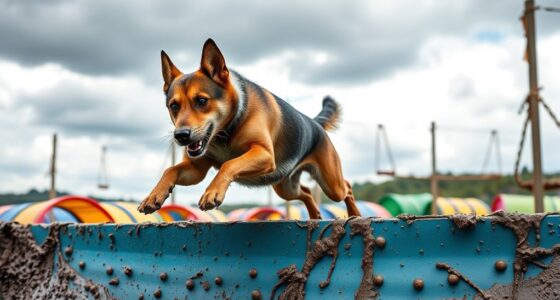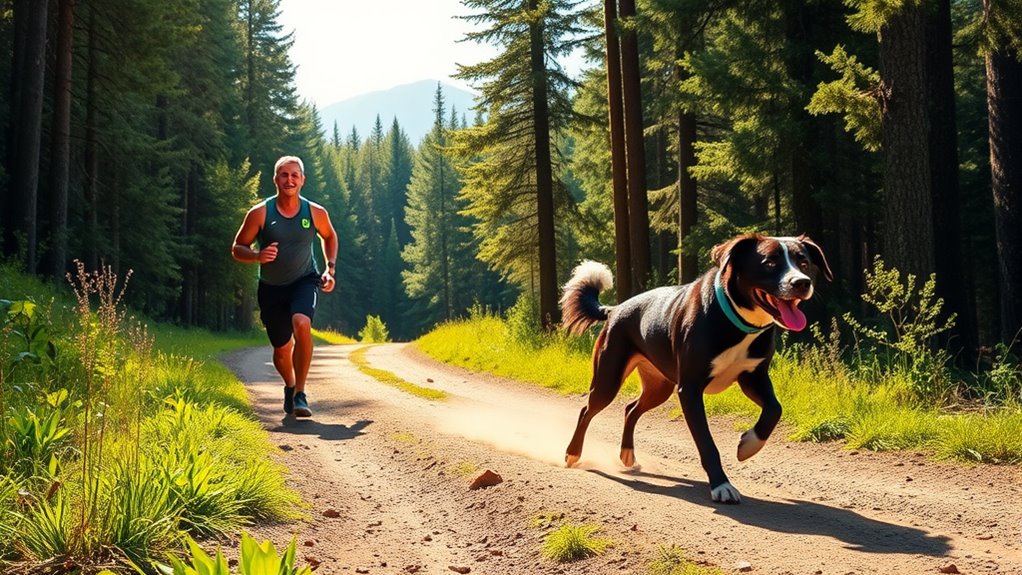

When trail running with your dog, focus on gradual conditioning to build their stamina safely and avoid injuries. Start with shorter, less challenging routes and gradually increase distance and terrain difficulty. Keep an eye on your dog’s behavior, watch for signs of fatigue or overheating, and take regular breaks to hydrate and cool down. Proper training for commands like “come” and “leave it” also keeps your dog safe. To learn more about ensuring safe and enjoyable trail runs, keep exploring these tips.
Key Takeaways
- Gradually increase distance and terrain difficulty to safely build your dog’s stamina and prevent injuries.
- Keep dogs well-hydrated with frequent water breaks and monitor for signs of dehydration.
- Use proper training to ensure reliable commands for safety and control during trail runs.
- Inspect paws regularly for cuts, abrasions, or foreign objects, and consider protective booties if needed.
- Carry a pet first aid kit and be aware of local wildlife and plants that could pose risks.

Trail running with dogs can be an exhilarating way to enjoy the outdoors and stay active together. As you hit the trails, it’s essential to prioritize your dog’s hydration needs. Dogs lose water quickly through panting and exertion, so bringing plenty of fresh water is a must. Consider a collapsible bowl or a hydration pack designed for dogs to ensure they stay well-hydrated throughout your run. Keep an eye on signs of dehydration, such as excessive panting, drooling, or lethargy, and take breaks to let your pup sip water and cool down.
Prioritize your dog’s hydration with plenty of water and regular breaks during trail runs.
Trail etiquette plays a significant role in making your adventure enjoyable and safe for everyone. Respect other trail users by keeping your dog on a leash or under voice control, especially in crowded or sensitive areas. Not everyone is comfortable around dogs, and some wildlife can be disturbed by your pet’s presence. Always clean up after your dog, packing waste bags to leave the trail as pristine as you found it. Stick to designated paths and avoid creating new trails to prevent erosion and habitat destruction. Being mindful of trail etiquette not only keeps your dog safe but also ensures that others can enjoy the outdoors without issues.
When conditioning your dog for trail running, start with shorter, easier routes to build stamina gradually. Pay attention to your dog’s pace and avoid pushing them beyond their limits, especially in hot or humid conditions. Incorporate regular rest periods and check their paws for cuts or abrasions, which can happen on rough or rocky terrain. It’s also wise to train your dog to respond reliably to commands like “come,” “stop,” and “leave it,” especially when wildlife or other trail users are nearby. This helps prevent accidents and keeps your dog under control in unpredictable situations.
Safety is paramount when trail running with dogs. Always carry a basic first aid kit designed for pets, and know how to handle minor injuries. Be aware of local wildlife and plants that could pose risks, such as snakes or toxic flora. If you’re running in remote areas, let someone know your route and estimated return time. Consider your dog’s age and health; older or less fit dogs might need more frequent breaks or shorter routes. Additionally, choosing a high-quality home theatre projector with good contrast ratios can make your post-run relaxation more enjoyable. By paying attention to your dog’s needs, practicing good trail etiquette, and ensuring proper hydration, you create a safe and enjoyable experience for both of you. Trail running with your dog can strengthen your bond and fuel your shared love for adventure, provided you prioritize safety and respect for the environment.

Ruffwear, Trail Runner Running Vest, Performance Dog Running Harness with Hydration Flasks, Reflective Trim & Light Loop, Lightweight Bounce-Free Running Dog Pack, Blue Pool, Large/X-Large
RUN LIGHT, HYDRATE SMART. Designed for high-mileage runs, this lightweight dog hydration vest keeps your running partner cool,…
As an affiliate, we earn on qualifying purchases.
As an affiliate, we earn on qualifying purchases.
Frequently Asked Questions
What Are the Best Breeds for Trail Running With Dogs?
You should choose breeds known for their trail running stamina and suitability for active outdoor adventures. Labrador Retrievers, Border Collies, Australian Shepherds, and Vizslas excel because they have high energy levels and strong endurance. These breeds enjoy long runs, adapt well to different terrains, and are generally healthy for trail running. Keep in mind, always consider your dog’s individual health and temperament before hitting the trails.
How Can I Train My Dog for Off-Leash Trail Running?
You can train your dog for off-leash trail running by starting with basic obedience and incorporating dog agility exercises to boost coordination. Gradually increase distance and introduce trail hydration routines to keep your pup energized. Always practice recall commands in safe, enclosed areas first, then progress to open trails. Consistent training and patience will help your dog confidently and safely join you on off-leash adventures.
What Should I Do if My Dog Gets Injured During a Run?
If your dog gets injured during a run, stay calm and assess the injury quickly. Use your knowledge of dog first aid to stabilize wounds or address bleeding. Prevent further harm by stopping the run and keeping your dog calm. Always carry a basic first aid kit and focus on injury prevention through proper training and conditioning. If the injury is serious, seek veterinary care immediately to guarantee your dog’s safety and recovery.
Are There Specific Trail Rules Regarding Dogs I Should Know?
Imagine your dog as a swift shadow, dancing along the trail, but you need to follow the trail rules to keep that shadow safe. Many parks have leash regulations and trail access policies to protect wildlife and other hikers. Always check local regulations before heading out, as some trails require dogs to be leashed, while others may have designated off-leash areas. Observing these rules ensures everyone enjoys the adventure safely.
How Can I Prevent My Dog From Overheating on Hot Days?
To prevent your dog from overheating on hot days, make certain you use proper hydration strategies like carrying water and offering frequent breaks. Keep them cool with a lightweight, breathable dog vest and avoid running during peak sun hours. Use sun protection such as pet-safe sunscreen on exposed areas, and always watch for signs of heat exhaustion. Your attentive approach keeps your dog safe and comfortable on the trail.

ARCA PET Cat & Dog First Aid Kit for Car – Pet Emergency Kit for Home Office Travel – Dog Camping Essentials with Digital Thermometer, Muzzle & Mini First Aid Pouch
ENSURE PET SAFETY ON THE GO with our dog travel accessories, dog must haves in pet travel. Our…
As an affiliate, we earn on qualifying purchases.
As an affiliate, we earn on qualifying purchases.
Conclusion
Trail running with your dog is like a dance—you both move in harmony, enjoying the rhythm of the trail. By conditioning your pup and prioritizing safety, you create a symphony of trust and adventure. Remember, a well-prepared partner makes every stride smoother and more enjoyable. So, gear up, stay alert, and let your bond grow stronger with each trail. After all, the journey is brighter when you run it together, side by side.

Non-stop dogwear Protector Booties, 4-Pack of Dog Booties for Hot Pavement and Rough Surfaces with Anti-Slip, Waterproof and Comfortable for Medium Dogs
Paw protection – These durable dog booties provide effective protection against warm asphalt, glass, barnacles, salt, snow, and…
As an affiliate, we earn on qualifying purchases.
As an affiliate, we earn on qualifying purchases.

Starmark Pro-Training Dog Collar Large
Age Range Description: All Life Stages
As an affiliate, we earn on qualifying purchases.
As an affiliate, we earn on qualifying purchases.