
When your puppy is young, a collar works well for identification and short walks, but make sure it fits snugly without causing discomfort. As they grow and start pulling, switching to a harness is safer, distributing pressure evenly and preventing injuries. Proper training with positive reinforcement helps your puppy learn leash manners at each stage. Keep safety in mind and adjust equipment as your puppy matures. Stay with us to discover tips for a smooth progression at every phase.

Get pet supplies delivered free with Prime
- Fast, free delivery on millions of items
- Prime Video, Amazon Music and more included
- Member-only deals all year
Key Takeaways
- Use collars for identification and short walks when puppies are small; ensure a snug but comfortable fit.
- Transition to harnesses as puppies grow to distribute pressure and reduce neck injury risks.
- Choose gentle training techniques with positive reinforcement to encourage proper leash manners at each stage.
- Regularly check and adjust equipment fit to ensure safety and comfort during growth.
- Prioritize safety by supervising equipment use and avoiding long unsupervised periods with collars or harnesses.
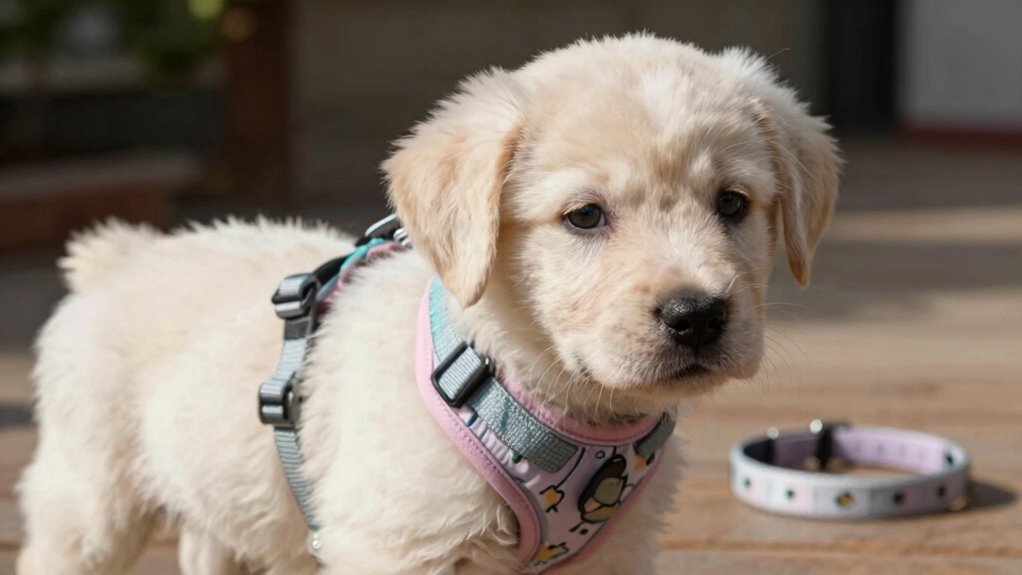
Choosing between a collar or harness for your puppy can feel overwhelming, but understanding their differences helps you make the best choice. As your puppy grows, so do their needs, and selecting the right option depends on their size, behavior, and your training goals. Both collars and harnesses serve important roles, but each comes with specific training techniques and safety considerations you should keep in mind.
Choosing the right collar or harness depends on your puppy’s size, behavior, and training goals for safe, positive walks.
When your puppy is very young, a collar can be useful for identification tags and easy control during short walks. However, it’s critical to ensure the collar fits properly—snug but not tight—to avoid choking or discomfort. Using a collar at this stage requires gentle training techniques to encourage your puppy to walk beside you without pulling. Keep training sessions positive, using treats and praise to reinforce good behavior. Safety considerations are vital here; never leave a collar on your puppy unsupervised for long periods, especially if they tend to chew or scratch at it. Puppies are curious, and a poorly fitted collar can pose a risk of entanglement or choking if they get caught on something. Incorporating proper fit and safety into your routine helps prevent injuries and ensures your puppy’s comfort during walks. Additionally, understanding how indoor air quality impacts your puppy’s health can be important for overall well-being, especially in confined spaces. Regularly checking the collar’s fit as your puppy grows is essential to maintain safe and comfortable control.
As your puppy matures and begins to learn leash manners, transitioning to a harness can offer added safety and control. Harnesses distribute pressure more evenly across the chest and shoulders, reducing the risk of injury, especially for small or delicate breeds. They’re also a safer option for puppies prone to pulling, as they discourage excessive strain on the neck. Training techniques with a harness often involve teaching your puppy to walk calmly without pulling, using leash rewards and consistent commands. Because harnesses are generally more secure, they prevent accidental escapes, which is a key safety consideration for active or curious puppies. Proper harness selection is essential to ensure your puppy remains comfortable and safe during walks.
During the early stages of training, you might start with a harness to help manage pulling and keep your puppy safe. As they develop better leash manners, you can switch back to a collar for more casual outings or when identification is needed. Remember, the goal is to create a safe, comfortable, and positive experience for your puppy. Whether you choose a collar or harness at each stage, always prioritize proper fit and gentle training techniques. Keeping safety considerations at the forefront will help you avoid injuries and ensure your puppy associates walks with positive reinforcement, making each stage of growth a rewarding journey for both of you.
puppy collar with identification tags
As an affiliate, we earn on qualifying purchases.
As an affiliate, we earn on qualifying purchases.
Frequently Asked Questions
When Should I Transition From a Collar to a Harness?
You should shift from a collar to a harness around 12 weeks old, once your puppy starts leash training and shows signs of pulling or discomfort. A harness offers better control and reduces strain during puppy training, especially for small or delicate breeds. Switch gradually, allowing your pup to get used to the harness, and make certain it fits snugly without causing chafing. This helps make leash training safer and more comfortable.
Are There Specific Harness Styles Better for Certain Breeds?
Think of harness styles as a tailored suit for your pup’s breed—sleek for small breeds, sturdy for larger ones. For breeds with delicate puppy grooming needs, choose harnesses with soft, breathable materials that won’t irritate their skin. No one-size-fits-all here; instead, match the harness style to your dog’s breed and activity level, ensuring comfort and control. Your pup’s comfort is the foundation for happy, well-behaved walks.
How Do I Know if My Puppy’s Collar Fits Properly?
You’ll know your puppy’s collar fits properly if you can comfortably slide two fingers between the collar and their neck, ensuring it’s snug but not tight. Use positive training techniques to get your puppy used to wearing it, and incorporate collar checks into grooming routines. Regularly adjusting the fit helps prevent discomfort and promotes safe, comfortable wear as your puppy grows.
Can a Harness Cause Any Discomfort to a Puppy?
A harness can cause discomfort if it’s too tight or made from rough material. For example, a puppy with sensitive skin might experience irritation from a cheap, stiff harness, highlighting the importance of puppy collar safety and choosing soft, breathable harness material. Always guarantee the harness fits well and is made from gentle fabric to prevent discomfort, allowing your puppy to move freely without chafing or restriction.
Is a Martingale Collar Suitable for Puppies?
A martingale collar can be suitable for puppies, especially during training, because it provides gentle correction without choking. It helps with collar safety by preventing escapes and discouraging pulling. When using it for puppy training, make sure the collar fits well—snug but not tight—and monitor your puppy’s comfort. Always supervise your puppy wearing any collar, including martingale collars, to promote safe and effective training.
Conclusion
Choosing between a collar or harness for your puppy might seem simple, but it’s like picking the right tool to tame a wild storm—crucial for their safety and your sanity. Get it right early on, and you’ll save yourself from endless tugging, tantrums, and heartbreak. Remember, this decision shapes their entire journey of trust and training. So, pick wisely—because a well-chosen harness or collar isn’t just gear; it’s the gateway to a lifelong bond with your furry best friend.
Halloween Picks
halloween
As an affiliate, we earn on qualifying purchases.